


Buying a house on Lake Como is far more than a real estate investment: it means choosing an exceptional place to live, surrounded by crystal-clear water, picturesque villages, and Alpine scenery. Nestled in the heart of Lombardy, this Y-shaped lake draws millions of visitors every year from across the globe, and a growing number of international buyers looking to put down roots here, whether for a holiday home, a rental project, or year-round living.But Lake Como is also a demanding property market, with prices that vary enormously by area, Italian legal specificities, and strong international demand. This guide is designed to give you everything you need to buy with confidence, while avoiding the classic pitfalls. You will find the most sought-after areas, realistic price ranges, the steps involved in buying in Italy, the applicable tax rules, and the rental potential of this Lombard gem.
Table of Contents
- Why buy a house on Lake Como in 2026?
- The best areas to buy on Lake Como
- Lake Como property prices: what to expect
- The steps to buying a house on Lake Como as a foreign buyer
- Tax rules and advantages for foreign buyers on Lake Como
- Investing on Lake Como: what rental potential?
- Practical tips before you take the plunge
- FAQ – Your questions about buying on Lake Como
Why buy a house on Lake Como in 2026?

Lake Como is not simply beautiful — it is strategically well placed. Less than an hour from Milan, two hours from Zurich, and within easy reach of major European cities via Malpensa airport, it offers rare accessibility for a destination this unspoiled.
According to data from the Como-Lecco Chamber of Commerce, the two combined provinces welcome more than 5 million tourists every year, the large majority of them international visitors. Germans, Americans, Swiss, and British nationals consistently feature in the top five nationalities represented.
Buying here means joining a mature property market underpinned by steady international demand, while enjoying an unmatched quality of life:
- Alpine and lakeside scenery right on your doorstep
- Medieval villages preserved in time, such as Varenna, Bellagio, and Menaggio
- Lombard cuisine at its finest (risotto, lavarello, regional wines)
- Modern infrastructure: hospitals, international schools, transport links
- Safety and the gentle pace of Italian life
In 2026, the market remains active, driven by a shortage of quality supply against growing international demand. This keeps prices high in the most coveted areas, while leaving interesting opportunities in zones outside the premium tier. Before getting started, we recommend reading our guide to buying a house in Italy, which walks through every step of the purchase process for foreign buyers.
The best areas to buy on Lake Como
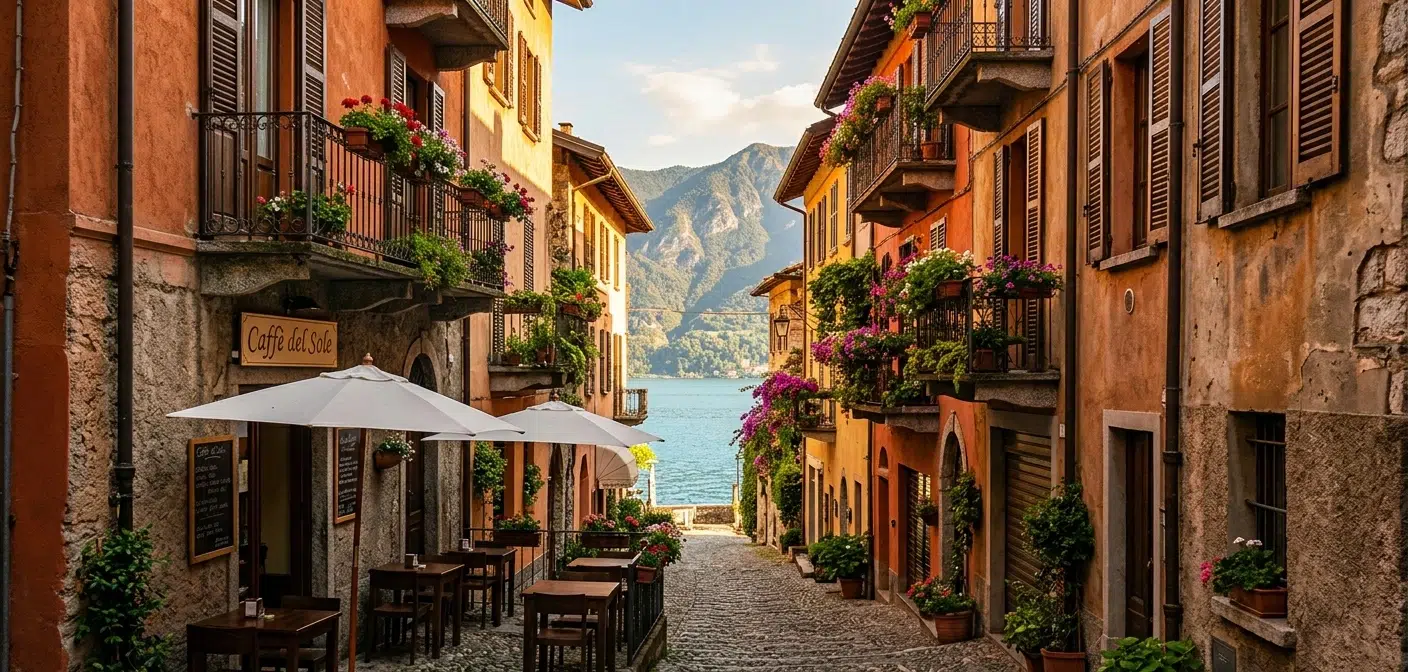
Lake Como is made up of three distinct branches, each with its own character, price level, and potential. Understanding this geography is the first step before any purchase.
The west shore and central Como – the premium area
The west shore, running from Como up to Menaggio, is the most expensive and most sought-after stretch. Cernobbio, Tremezzo, and Bellagio (at the centre of the lake) concentrate the historic villas with private docks, luxury hotels, and 19th-century palazzi. Prices here easily reach €5,000 to €10,000 per m² for properties with lake views, and go well beyond that for exceptional villas.
Varenna and the east shore – the best value for money
The east shore, less frequented by mass tourism, offers authentic villages such as Varenna, Bellano, and Dervio. Prices are more accessible, often between €2,500 and €4,500 per m², while still offering stunning views and a genuinely preserved Italian atmosphere. This is the area most favoured by buyers looking for a reasonable balance between quality and price.
The Lecco branch – the most affordable prices
The eastern branch of the lake, leading to Lecco, is the least touristy and the most affordable. Lecco province still shows average prices of around €1,500 to €1,700 per m² in certain areas. This is where you will find apartments in excellent condition from €100,000 to €150,000, or properties to renovate at even more competitive prices. It is an ideal entry point for a first investment or a renovation project.
Como city centre – for urban rental income
The centre of Como is largely composed of apartments, with strong year-round rental demand driven by businesses, students, and tourists passing through on their way to the lake. Budget from €200,000 for a well-maintained apartment, which works well for a B&B or short-term rental project.
Lake Como property prices: what to expect
The Lake Como property market is one of the most varied in Italy. Prices can differ tenfold depending on the municipality, the view, the condition of the property, and its proximity to the water. Here is an overview of the main trends observed in 2025-2026:
| Area | Average price per m² | Estimated minimum budget |
|---|---|---|
| Como city centre (apartments) | €2,500 – €4,000 | €200,000 |
| West shore / Cernobbio / Tremezzo | €5,000 – €10,000+ | €400,000 |
| Bellagio | €4,000 – €8,000 | €350,000 |
| Varenna / East shore | €2,500 – €4,500 | €180,000 |
| Lecco branch | €1,500 – €2,500 | €100,000 |
| Villas with private dock (all areas) | From €8,000 | €800,000+ |
These ranges are indicative, based on market data available in 2025-2026. They may vary depending on the condition, orientation, and features of the property.
One thing worth noting: the market has seen a significant rise in rental rates since 2020, particularly for short-term lets. This mechanically supports sale prices in areas with strong tourist potential.
The steps to buying a house on Lake Como as a foreign buyer
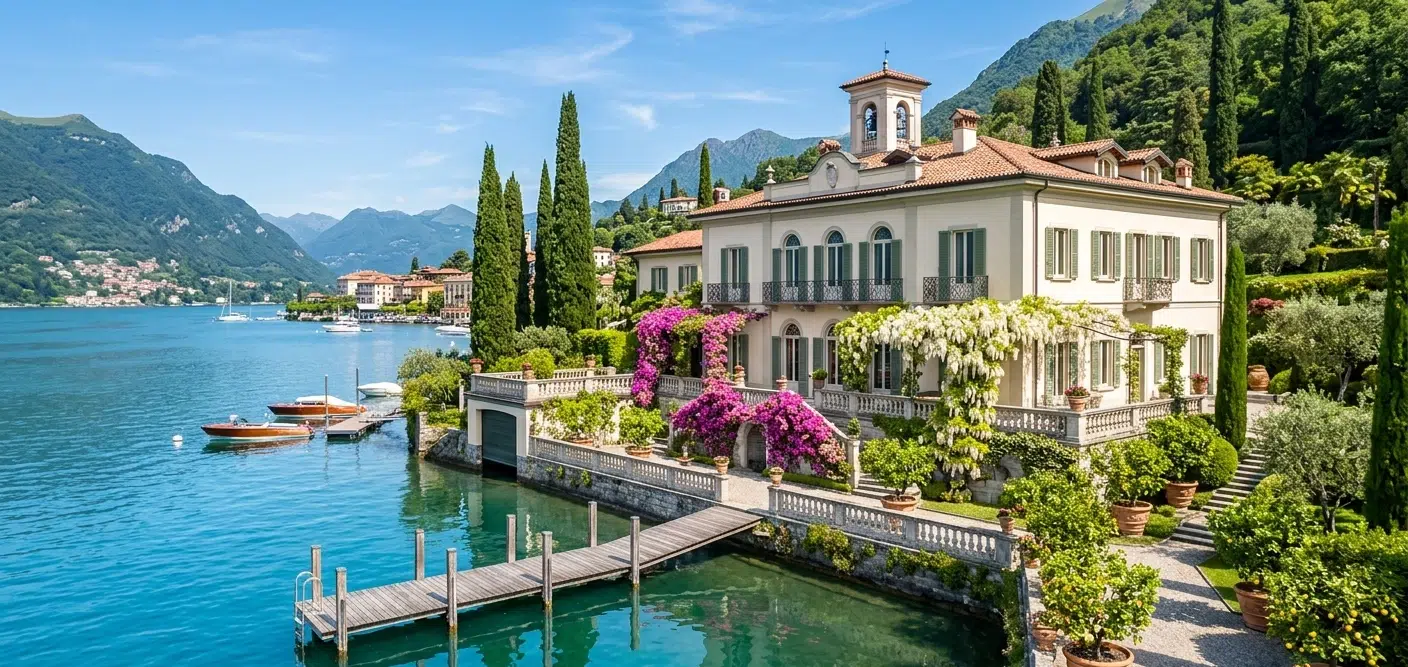
Buying in Italy as a foreign national means getting to grips with the local process. The main steps are similar across Italian regions, but the Lake Como market has its own particularities, notably the speed at which the best properties move. Here is the typical sequence:
1. Obtain your codice fiscale (Italian tax number)
This is the absolute prerequisite for any purchase in Italy. You can obtain it through your nearest Italian consulate or directly in Italy at the Agenzia delle Entrate. It is free and fast.
2. Define your project and budget
Primary residence, holiday home, or rental investment? Your goal will determine the right area, the type of property, and the applicable tax regime. Factor in the additional costs from the outset: notary fees, estate agent commission, potential renovation work, and purchase taxes.
3. The proposta d’acquisto (purchase offer)
Once you have found the property, you submit a written offer accompanied by a deposit (usually 10% of the price). If the seller accepts, this offer is legally binding on the buyer.
4. The compromesso (preliminary contract)
The contratto preliminare di compravendita is the formal preliminary agreement that sets out the final conditions of the sale. A deposit of 10 to 30% is paid at this stage. If the buyer pulls out, the deposit is forfeited; if the seller withdraws, they must return double the amount.
5. The notarial deed (rogito)
The final deed is signed before a notaio (notary). In Italy, the notary is appointed by the buyer. They carry out the standard checks: planning compliance, absence of mortgages, and land registry accuracy. Never sign without these checks being completed.
6. Costs to budget for
- Transfer tax: 9% on the cadastral value for a second home (2% for a primary residence in Italy)
- Notary fees: 1 to 2% of the sale price
- Estate agent commission: 3 to 4% (sometimes shared between buyer and seller, sometimes borne by the buyer alone)
- Miscellaneous: translations, technical survey, bank fees if using a mortgage
Tax rules and advantages for foreign buyers on Lake Como
Italian property taxation is something to plan for carefully. It differs considerably from most other countries’ systems, and includes some notable advantages for foreign investors who choose to settle in Italy.
The 7% flat tax for retirees
Italy offers foreign retirees who relocate to certain municipalities with fewer than 20,000 inhabitants a flat tax of 7% on all their foreign-source income. If you are planning to buy on Lake Como for retirement, this scheme can be particularly attractive. Some municipalities around the lake are eligible, though this needs to be checked case by case.
IMU – Italian property tax
IMU (Imposta Municipale Unica) is the Italian equivalent of an annual property tax. It applies to second homes and rental properties. The rate varies by municipality, generally between 0.76% and 1.06% of the cadastral value. Check the rate applied in your target municipality before buying.
IRPEF on rental income
Rental income earned in Italy is subject to IRPEF (Italian income tax). You can opt for the cedolare secca, a flat withholding tax of 21% (or 10% for certain types of lease). This simplifies tax administration and can be advantageous depending on your overall income level.
Investing on Lake Como: what rental potential?
Lake Como is one of Italy’s most profitable destinations for seasonal rentals. Its international appeal, concentrated season (88% of arrivals fall between April and October), and scarcity of available properties create ideal conditions for attractive rental yields.
The most represented nationalities among visitors are Germans (in first place), followed by Americans, Swiss, and British nationals. This high-spending international clientele is willing to pay premium rates for quality accommodation with lake views.
What types of property to rent out?
- Apartments with terrace and lake view: strong demand, summer weeks often booked months in advance
- Villas with private dock: ultra-premium segment, very wealthy clientele, very high rental rates
- Small village houses: good potential for medium-length stays, authentic Italian atmosphere
What yields can you expect?
The gross yield on a well-located property on Lake Como generally sits between 5 and 8%, depending on location, amenities, and management approach. A two-room apartment in good condition in Varenna or one of the east shore villages can generate between €25,000 and €45,000 in annual rental income over a good season, if managed well.
That said, you need to plan for the constraints: local regulations on tourist rentals, registration with the municipality, taxation of rental income, and management costs (concierge, cleaning, and so on).
Practical tips before you take the plunge
Drawing on experience with hundreds of international buyers, here are the most common mistakes to avoid and the right habits to build:
Have the property’s planning compliance checked
In Italy, many properties have had works carried out without a permit, or show discrepancies between their actual state and the land registry plans. Before signing anything, commission a technical survey from an independent geometra or architect. This check can save you from very costly surprises down the line.
Do not rely solely on listing sites
Idealista, Immobiliare.it, and Casa.it are the main platforms in Italy. But the best opportunities on Lake Como often circulate off-market, through specialist local agencies. Having access to a trusted local network is a genuine competitive advantage.
Set a realistic renovation budget
Many of Lake Como’s older properties require substantial renovation work. Construction costs in Lombardy are high — budget between €1,000 and €2,000 per m² for a full renovation. Build this into your figures from the start.
Work with bilingual professionals
A bilingual lawyer, a notary, and an estate agent with strong local market knowledge: this trio is indispensable for securing your purchase. At Aller en Italie, we support international buyers at every stage, from property search through to signing at the notary.
FAQ – Your questions about buying on Lake Como
What budget do you need to buy a house on Lake Como?
Budget from €100,000 to €150,000 for an apartment requiring renovation in the peripheral villages or along the Lecco branch. For a property with lake views in good condition in Como or Varenna, prices generally exceed €300,000. Luxury villas with direct lake access reach several million euros.
Can a foreign national buy a house on Lake Como?
Yes. Citizens of EU countries and most other nationalities can purchase property in Italy freely, with no specific restrictions. You simply need an Italian tax number (codice fiscale). Working with a bilingual lawyer and a notary is strongly recommended to secure the transaction from start to finish.
Is it profitable to buy to let on Lake Como?
Lake Como welcomes more than 5 million visitors across its two provinces every year, the large majority of them international travellers with significant spending power. Seasonal rental can be very profitable, with gross yields between 5 and 8% depending on location. The strong concentration of demand between April and October makes seasonal management efficient and predictable.