

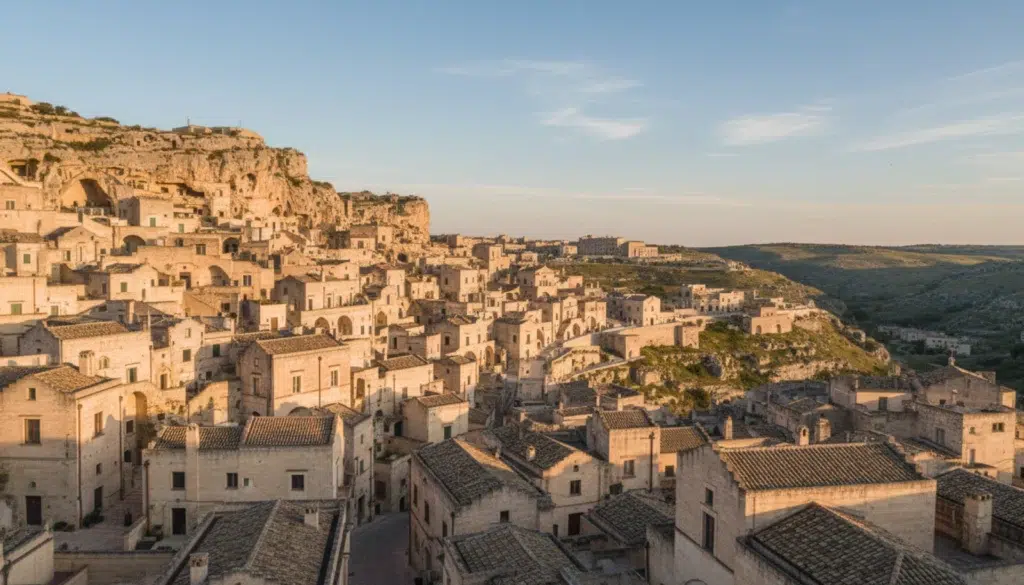
Matera is becoming an increasingly attractive destination for foreign investors looking to buy property in Italy outside the usual real estate hotspots. Carved into the rock and listed as a UNESCO World Heritage Site, the city offers a truly unique setting and lifestyle — but purchasing property here requires a clear understanding of the local context before making a commitment.
Buying in a city with such distinct historic architecture raises several practical questions: which neighborhoods to consider, what regulations apply in the Sassi districts, what total budget to plan for, and how to secure each administrative and notarial step of the purchase.
This guide provides the essential information to move forward with confidence: an overview of the different areas and their characteristics, the main steps of buying property in Italy, the fees and taxes to anticipate, key considerations when dealing with historic buildings, and the necessary checks to complete before signing any contract.
Understanding the Sassi and Their Impact on Buying Property in Matera
Matera is a city literally carved into the rock. A large part of its buildings are excavated directly into the cliff or built against limestone walls, forming an urban landscape that has been inhabited continuously for thousands of years. For foreign investors considering a property purchase in Matera, understanding this physical and historical context is essential before moving forward.
Buying property in such a unique environment involves specific considerations: the structure of cave dwellings, accessibility, preservation rules, and the constraints linked to historic buildings.
Sasso Barisano, Sasso Caveoso and Civita: the three key areas of the historic center
The Sassi districts form a natural amphitheater divided into two main areas: Sasso Barisano and Sasso Caveoso. Between them lies the Civita, the central ridge that structures the entire historic district.
Sasso Barisano is generally more connected to the modern city, with slightly easier pedestrian access from the town center and a higher concentration of renovated properties.
Sasso Caveoso descends more steeply toward the ravine and offers spectacular views over the canyon, but with steeper slopes and narrow streets that can make access more complex.
The Civita plays a strategic role: it influences property views across both Sassi, shapes tourist flows, and can affect the level of activity and noise depending on the time of day.
What Cave-Style Architecture Means for Property Buyers in Matera
A property in the Sassi districts is not a typical apartment. The troglodyte architecture requires careful attention to several technical aspects before moving forward with a purchase.
Humidity is the first element to examine. Walls in direct contact with the rock can be exposed to moisture infiltration or salt deposits. During visits, it is important to check the condition of walls, ceilings, and floors, and to request an independent technical inspection before making any commitment.
Ventilation and natural light can vary significantly from one property to another. This depends on factors such as the orientation of the space, the depth of the excavated rooms, and whether there are external openings. Some cave rooms receive limited daylight, which makes it important to assess the comfort level based on your intended use of the property.
Accessibility is another practical consideration. Many streets in the Sassi are pedestrian-only, steep, or very narrow, which can affect daily life and property management. This has direct implications for:
- Parking, which is often not available near the property
- Renovation logistics, including the delivery of materials and access for contractors
- Daily mobility, especially for people with reduced mobility
Renovation constraints are also significant in a UNESCO World Heritage Site. Any work on façades, roofs, or structural elements may require authorization from the Soprintendenza, the heritage protection authority. Before purchasing, it is essential to verify whether previous modifications have been carried out and whether they were properly approved.
Finally, the presence of rock churches or historic cave spaces near a property can influence the surrounding environment. These sites may attract visitors during the tourist season, which can affect noise levels and foot traffic, while the maintenance of surrounding areas may depend on public or religious institutions.
How to Evaluate a Property in the Sassi During a First Visit
Viewing a property in the Sassi districts requires a different observation approach than visiting a typical city apartment. Here are the key elements to check on site:
- Condition of the rock walls: look for signs of moisture, efflorescence (white salt deposits), cracks, or peeling plaster.
- Indoor air quality: a musty or closed smell may indicate chronic ventilation problems.
- Water supply and drainage systems: in older cave properties, plumbing may have been installed or renovated at different times, resulting in varying levels of quality.
- Natural light throughout the day: if possible, visit both in the morning and in the afternoon to evaluate the actual level of sunlight.
- Access from the nearest road: mentally measure the walking distance with luggage or groceries — this is the route you will likely take daily.
- Immediate surroundings: check whether nearby properties are occupied or vacant, whether they are used for tourism or residential purposes, and the level of activity in the area in the evening.
This on-site evaluation does not replace a technical inspection by an independent professional, but it helps you approach property visits with clear criteria and ask the right questions to the seller or the real estate agent.
Buying a House in Basilicata: The Process Step by Step
Buying property in Italy follows a different process than in many other countries. For foreign investors considering a purchase in Matera, understanding the key steps helps avoid unexpected issues and ensures that every stage of the transaction is secure.
Preparing the Purchase: Budget, Objectives, Visits and the First Offer
The first step is to clearly define how you plan to use the property: primary residence, second home, or rental investment. This decision will influence your budget, the type of property you target, the neighborhoods you consider, and the taxes applicable at the time of purchase.
Before scheduling property visits, it is important to establish a global budget that includes not only the purchase price but also acquisition costs, potential renovation work, and future maintenance expenses. These cost elements are explained in detail in the section dedicated to prices and purchase costs.
During property visits, pay close attention to several key factors:
- The overall condition of the building (walls, ceilings, floors, windows and doors)
- Natural light and ventilation, especially in properties built against or into rock
- Practical accessibility, including stairs, narrow streets, and distance to parking
- Visible humidity or salt deposits that may indicate moisture issues
Once a suitable property has been identified, a written purchase offer is submitted. In Italy, this proposta di acquisto can already be legally binding for both parties depending on its structure, which is why it is strongly recommended not to sign it without consulting a local legal professional first.
Essential Checks Before Any Commitment (Planning, Compliance, Charges, Easements)
Before signing a preliminary agreement, several document checks are essential. These verifications help prevent discovering problems after the purchase that could have been identified earlier.
The elements that should be reviewed by a professional (such as a notary or lawyer) include:
- Title of ownership: confirm that the seller is the legal owner and that the property is free from disputes.
- Mortgage status: ensure there are no mortgages or financial charges attached to the property.
- Cadastral compliance: verify that the cadastral plans correspond to the actual physical layout of the property.
- Urban planning compliance: check that any construction work or modifications have received the required authorizations.
- Possible easements: such as rights of way, neighbor rights, or shared access.
- Condominium fees and obligations: if the property is part of a condominium, verify current charges and ensure the seller has no outstanding debts toward the condominium.
For older properties in Matera — particularly those built in stone or partially carved into rock — it is also advisable to request a technical inspection from an independent professional. This should cover the condition of the structure, utilities (water, electricity, drainage systems), and any issues related to moisture or humidity.
Legal and Notarial Process for Buying Property in Matera
In Italy, the notary (notaio) plays a central role in every real estate transaction. While the function is somewhat similar to that of a notary in other European countries, the procedure and certain legal practices are different. For foreign investors purchasing property in Matera, understanding the key steps of the Italian notarial process is essential to ensure a secure transaction.
The Four Main Steps of the Italian Notarial Process
1. The Codice Fiscale
Before anything else, a foreign buyer must obtain a codice fiscale, the Italian tax identification number. It is required to sign legal documents, open a bank account in Italy, and pay taxes related to the purchase. It can be obtained through an Italian consulate or directly from the Italian Revenue Agency (Agenzia delle Entrate) and is usually issued within a few days.
2. The Proposta di Acquisto (Purchase Offer)
The written purchase offer is the first formal step in the transaction. Once accepted by the seller, it can become legally binding for both parties depending on its structure. International buyers often underestimate this stage, so it is strongly recommended not to sign any offer without reviewing it with a local legal professional, even if the document appears simple.
3. The Compromesso (Preliminary Contract)
The preliminary contract (contratto preliminare) sets out the main terms of the sale: the purchase price, conditions, timelines, and payment terms. At this stage, the buyer usually pays a deposit (caparra confirmatoria) of around 10–20% of the purchase price. Italian law sets strict rules: if the buyer withdraws, the deposit is lost; if the seller withdraws, they must repay double the deposit. The period between the preliminary contract and the final deed typically ranges from two to four months.
4. The Rogito (Final Deed of Sale)
The final deed (atto di compravendita or rogito) is signed before the notary. This is when the remaining balance of the purchase price is paid and ownership is officially transferred to the buyer. The notary verifies the legal status of the property, confirms that there are no outstanding mortgages or legal issues, and registers the transaction with the Italian Land Registry (Conservatoria dei Registri Immobiliari).
Key Considerations for Buying Property in Matera’s Historic Center
When purchasing property in Matera’s Sassi districts or other protected historic areas, several specific factors require extra attention during the legal and notarial process.
Compliance of previous renovation work
In historic centers, any structural modifications — such as extensions, changes in layout, or changes of use — generally require specific permits. If renovations were carried out without proper authorization, this can create problems later, including difficulties when reselling the property or costly legalization procedures for the buyer.
Possible pre-emption rights
In certain protected areas, local authorities or the state may hold a right of first refusal on property transactions. The notary is responsible for verifying this, but it is advisable to confirm it explicitly before proceeding.
Excavated spaces and undefined volumes
Many properties in the Sassi include cave spaces or excavated rooms that may not always be clearly defined in cadastral records. It is important to clarify the legal status and boundaries of these spaces before signing any contract.
Language of legal documents
All notarial deeds in Italy are drafted in Italian. As a foreign buyer, you have the right to request a professional interpreter or obtain translations of key documents before signing to ensure full understanding of the transaction.
Do You Need a Lawyer in Addition to the Notary?
In Italy, the notary is a public official responsible for ensuring the legal validity of the transaction. However, the notary acts as a neutral party representing both the buyer and the seller, not exclusively the buyer.
For foreign investors — especially those purchasing property in Italy for the first time or dealing with properties that have specific legal complexities (such as protected heritage areas, easements, or undeclared renovation work) — it can be beneficial to appoint an avvocato (lawyer) to represent your personal interests before signing any documents.
The additional cost is usually relatively modest compared to the level of legal security it provides during the purchase process.
Property Prices in Matera and the Total Purchase Budget (Taxes, Fees, Renovations)
Before visiting a property, it is important to understand the real cost of buying real estate in Matera. The price listed in a property advertisement is rarely the final cost. Several additional expenses must be considered, and these are often underestimated by international buyers.
Acquisition Costs in Matera: Notary, Taxes, and Agency Fees
In Italy, as in many European countries, the final deed of sale is signed before a notary (notaio). However, the structure of purchase costs differs. Here are the main expenses to anticipate:
- Registration tax (Imposta di Registro): The amount depends on whether the property will be your primary residence (prima casa) and whether the seller is a private individual or a professional. 2% of the cadastral value for a primary residence; 9% of the cadastral value for a second home. For non-resident buyers, access to the prima casa tax regime is subject to specific conditions that should be verified with the notary.
- Notary fees: Typically between €1,500 and €4,000, depending on the complexity of the transaction and the value of the property.
- Real estate agency commission: In Italy, agency fees are usually shared between buyer and seller. Buyers should generally expect to pay between 2% and 4% if they purchase through an agent.
One notable aspect of the Italian system is that taxes are often calculated based on the cadastral value rather than the market price. Since the cadastral value is frequently lower than the market value, this can reduce the tax burden for the buyer — but it must be verified on a case-by-case basis with the notary.
Overall, total acquisition costs usually represent between 8% and 15% of the purchase price, depending on the buyer’s profile and the type of property.
Renovation and Maintenance Costs in Historic Properties
In Matera, a large portion of the properties available for sale are historic buildings, sometimes centuries old. This means buyers should carefully plan for post-purchase renovation and maintenance costs.
For properties in the Sassi districts or the historic center, renovation projects may face specific constraints:
- Limited site access, with narrow streets, stairways, and little or no parking for delivery vehicles
- Heritage preservation rules, which may restrict materials and renovation techniques
- Specialized local contractors, whose availability may be limited and whose work may involve longer timelines
These constraints do not make renovation impossible, but they can increase costs and extend project timelines.
Before committing to a historic property, it is advisable to:
- Request a technical inspection from an independent professional
- Obtain realistic renovation estimates from local contractors
- Include a contingency budget of at least 20% for unexpected expenses
It is also essential to verify whether previous renovation work was properly authorized. Unauthorized renovations can lead to legal complications or difficulties when reselling the property in the future.
Areas and Trade-Offs: Where to Buy Property in Matera
Matera is not limited to the Sassi. The city includes several distinct areas, each with a different profile depending on your goals, budget, and relationship to heritage property. Here are the main zones to consider when buying in Matera.
The Sassi (Sasso Barisano and Sasso Caveoso): Heritage Value, Constraints, and Rental Potential
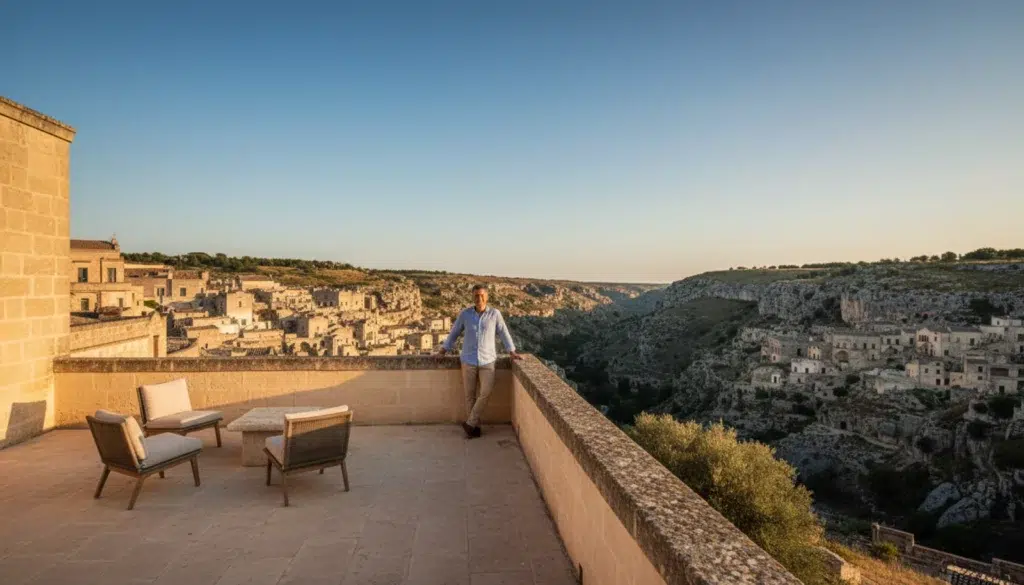
This is Matera’s UNESCO-listed historic core and the area that attracts most foreign investors. Properties here are often rupestrian homes carved into the rock or stone buildings built against the cliff, sometimes fully renovated as private homes or tourist accommodation.
Main advantages: The Sassi offer a truly exceptional heritage setting, with properties located in one of the most unique historic landscapes in Europe. This UNESCO-listed area attracts a large number of visitors every year, which creates strong potential for short-term rental investments. Many of the properties available on the market have already been carefully restored, particularly in the mid-range and higher-end segments, combining historic character with modern comfort.
Key points to watch: At the same time, buying in the Sassi requires careful consideration. Property prices are generally higher than in other parts of Matera, reflecting the area’s international appeal. Renovation projects are also subject to strict heritage regulations, which can limit certain modifications and increase costs. Accessibility can be challenging due to narrow pedestrian streets and stairways, and during peak tourist seasons the high number of visitors may affect the level of privacy and everyday comfort for owners living there year-round.
Between the two districts, Sasso Barisano is usually easier to access and more commercially active, while Sasso Caveoso is quieter, often offers more dramatic views over the ravine, and has steeper elevation changes.
Civita and the Immediate Surrounding Area
Civita is the highest point of the central ridge, home to the cathedral and a limited number of properties. It is the most heritage-focused and tourist-exposed part of Matera. Properties here are rare and highly sought after. The setting is exceptional, but visitor traffic is almost constant during the high season.
This area is generally better suited to a high-end rental investment than to year-round residential use.
The Piano (Modern Matera): A More Practical and Accessible Alternative
The Piano refers to the modern part of the city built above the Sassi. This is where most permanent residents of Matera live, with shops, services, schools, and transport connections.
Property prices here are significantly lower than in the Sassi. The building stock is generally more recent, mainly dating from the 1960s to the 1990s. It is less picturesque, but far more practical for year-round living. This is an option worth serious consideration if you plan to live in Matera permanently rather than use the property only a few weeks a year.
Outskirts and Countryside: Village Houses and Rural Properties
Around Matera, the countryside of Basilicata offers a very different type of property market compared to the historic center. Buyers can often find larger homes at lower entry prices, including village houses in nearby municipalities, traditional farmhouses (masserie), and rural properties with land. These homes tend to attract buyers who are looking for more space, greater privacy, and a quieter lifestyle surrounded by nature.
However, choosing the countryside also comes with a different set of practical considerations. Living in these areas generally means relying heavily on a car for everyday activities, as services, shops, and schools are often located several kilometers away. Many rural properties are also quite old, which can mean more substantial renovation work and longer project timelines.
Despite these challenges, entry prices can be very appealing for buyers willing to take on a renovation project. In addition, some municipalities in Basilicata have introduced programs and incentives designed to encourage property restoration and attract new residents to rural areas.
How to Choose the Right Area
The best location depends above all on how you will actually use the property.
- If you want a short-term rental investment: The Sassi are the most relevant area, provided you secure the necessary authorizations and budget realistically for renovation and rental management costs.
- If you are looking for a second home to use a few weeks per year: The Sassi or the immediate surrounding areas usually offer the most attractive setting, with sufficient accessibility for occasional use.
- If you plan to live in Matera year-round: The Piano deserves serious consideration for day-to-day comfort, even if it is less visually dramatic. A home on the edge of the Sassi, with a view but outside the main tourist flow, can also be a strong compromise.
- If you want more space with a controlled budget: The countryside and peripheral municipalities generally offer the best value in terms of size and price, in exchange for a more isolated rural lifestyle.
What to Keep in Mind Before Moving Forward
Buying property in Matera requires understanding the specific characteristics of the location. The historic structure of the Sassi, the heritage constraints that apply to many buildings, the differences between neighborhoods, and a legal process that may differ from what many foreign investors are familiar with all play an important role. These elements should not be seen as obstacles. When properly understood in advance, they simply become reference points that help buyers make informed and confident decisions.
A successful purchase generally relies on two essential foundations. First, it is important to carry out complete legal and technical checks on the property to ensure that everything is compliant and properly documented. Second, buyers should establish a realistic overall budget that includes not only the purchase price but also acquisition costs and a sufficient contingency for renovation work, which is often necessary in older properties. With the right preparation, the process is entirely manageable.
Before beginning or resuming property visits, it is helpful to take the time to clarify several key points. Define the real purpose of the purchase, whether it is for a primary residence, a second home, or a rental investment. Identify the areas that best match your criteria and lifestyle, determine your total budget, and prepare a list of documents and questions to request during the first viewing. Approaching each property with this level of preparation makes it much easier to evaluate opportunities with clarity and confidence.
For further guidance, you can explore Aller en Italie’s other practical resources on buying property in Italy. These guides cover the purchase process step by step, the documents you will need to prepare, the key questions to ask during property visits, and how to plan a realistic overall budget for your project.
FAQ — Buying Property in Matera
What does buying property in the Sassi of Matera mean for a future owner?
Properties in the Sassi districts are often carved directly into the rock or built against limestone cliffs. Before committing to a purchase, it is essential to assess several factors, including humidity levels inside the property, natural ventilation, and the amount of natural light depending on orientation and season. Accessibility also deserves close attention. Narrow stairways, sloping pedestrian streets, and limited nearby parking can make everyday logistics — such as deliveries or renovation work — more complex. In addition, renovation projects in this UNESCO-listed area are subject to heritage protection rules, which may require specific materials or construction techniques, potentially increasing costs and extending timelines.
Sasso Barisano or Sasso Caveoso: how should buyers choose?
The two districts offer different atmospheres and levels of accessibility. Sasso Barisano is typically easier to access and more lively, with more commercial activity and tourist movement. Sasso Caveoso, on the other hand, is often described as quieter and more authentic, although some areas can feel more secluded depending on the property’s exact location. Tourist activity varies widely from one street to another and across seasons. It is strongly recommended to visit the neighborhood at different times of day — morning, afternoon, and evening — to evaluate noise levels, pedestrian traffic, and overall daily comfort before making a decision.
Why does the Civita area matter when choosing where to buy?
Civita is the historic heart of Matera, located between the two Sassi districts. Its elevated position influences views from surrounding properties, the level differences between streets, and the main pedestrian routes used by visitors. Buying close to Civita also means living in one of the most heritage-sensitive parts of the city. This can affect renovation permissions as well as the immediate environment, since several landmarks and historic sites nearby attract visitors throughout the year.
What specific checks should be made when buying a cave property?
For properties carved into or built against rock, several technical elements should be carefully reviewed. These include the overall structural condition of the building, signs of moisture or salt deposits on the walls, the functionality of essential systems such as water, electricity, and drainage, and the quality of insulation. It is advisable to request a complete history of any renovation work from the seller and to have a professional confirm that all modifications were properly authorized. This step is particularly important in historic properties where undeclared works could later complicate resale or create legal disputes.
Do nearby cave churches or historic sites affect daily life?
The presence of rock churches or excavated heritage spaces near a property can have practical effects on daily life. These sites often attract a steady flow of visitors, which can lead to increased foot traffic and noise at various times of the day. Maintenance of the surrounding areas may also depend on public authorities or religious institutions rather than the property owner. During peak tourist season, some streets in the Sassi can be busy from morning until late evening. If you plan to use the property regularly or live there full time, visiting the area during the high season — such as July or August — can help you better understand the real level of activity in the neighborhood.
Can foreign buyers obtain a mortgage in Italy?
Yes, Italian banks do offer mortgages to foreign buyers, although conditions are generally stricter than for Italian residents. Lenders usually require a larger down payment — often 30% to 40% of the property value — as well as proof of income translated into Italian and officially certified. The property itself must also be assessed by a bank-approved valuer. Some international buyers choose to finance their purchase through a loan in their home country, secured against an existing property. This option is worth discussing with your bank before signing a preliminary agreement, as financing timelines can influence the overall transaction schedule.