

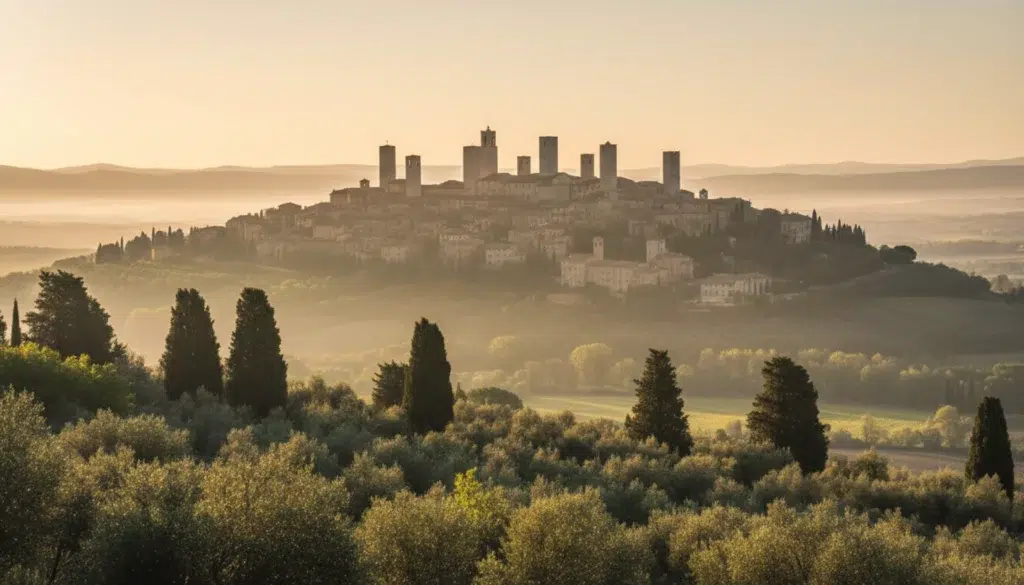
 Buying property in San Gimignano means entering a highly specific segment of the Tuscan real estate market. This medieval hill town, recognized as a UNESCO World Heritage Site, is characterized by a limited housing supply, strict preservation rules within the historic center, and property prices that frequently exceed both Siena province and wider Tuscany averages.For international buyers, purchasing a home in San Gimignano is not only about identifying the right apartment, village house, or countryside property. It also involves understanding the true total budget required to buy property in Tuscany, recognizing how real estate prices in San Gimignano vary by location and property type, and navigating the Italian property buying process, which can differ substantially from procedures in other countries.This guide explains what buyers need to know before investing in San Gimignano real estate. It covers typical price ranges per square meter, the differences between apartments in the historic center and houses in the surrounding countryside, the role of micro-locations within the town, the main steps involved in buying property in Italy, and the additional costs and potential risks that should be considered before committing to a purchase.
Table of contents
San Gimignano: Overview and Key Insights for Buying Property
San Gimignano attracts international buyers every year — whether they want to buy property in San Gimignano as a second home in Tuscany, move to Italy permanently, or invest in a short-term rental property.
However, because the town is a UNESCO-listed medieval hill town, the local real estate market works differently from a typical property market. Supply is limited, historic preservation rules apply in many areas, and prices can be higher than the provincial and regional averages in Siena.
For international buyers, the main challenge is not a lack of information, but misleading or poorly calibrated information. It is easy to misunderstand price levels between different areas, underestimate the constraints of buying in a historic center, or apply assumptions from another country to the Italian property purchasing process.
Before visiting your first property, it is useful to understand why two apartments located just a few streets apart may have very different prices — and why factors such as property condition, accessibility, and local regulations can be just as important as square footage.
This guide is designed to help you buy property in San Gimignano with a clearer understanding of the market, covering the key elements you need to know before making a purchase.
In this guide you will discover:
- Typical price ranges per square meter depending on property type (apartments and houses) and how they vary across different areas
- How the San Gimignano property market compares with Tuscany and Siena averages
- The main steps to buy property in San Gimignano and in Italy, and how the process works for international buyers
- The additional costs to include in your total purchase budget
- Common risks and important points to check, especially when buying property in historic Tuscan towns
San Gimignano and the Tuscan Property Market: What Shapes Supply, Demand, and Scarcity
San Gimignano is a town in Tuscany located in the province of Siena. Its historic center, listed as a UNESCO World Heritage Site, is one of the most sought-after medieval towns in the region. As a result, the local property market follows a specific dynamic typical of historic centers: limited supply combined with strong and consistent demand.
This unique context plays an important role for anyone looking to buy property in San Gimignano, as the availability of properties and pricing patterns are influenced by factors that differ from more typical real estate markets.
Why Tuscan Historic Centers Attract Buyers — and What It Means for You
Buyers interested in real estate in San Gimignano come from very different backgrounds. Some are local residents, others are international buyers looking for a second home in Tuscany, people planning to relocate permanently to Italy, or investors interested in short-term rental opportunities.
This diverse demand keeps pressure on property prices, even when the number of available properties remains relatively low.
In a protected historic center, the supply of properties is naturally limited. New buildings cannot be constructed within the old town, and renovation projects must comply with strict local regulations, including approvals from heritage authorities and municipal planning rules.
For buyers, this has a direct consequence: properties can vary significantly in condition and price. Two apartments located on the same street may have very different values depending on factors such as renovation status, accessibility, layout, and structural condition.
It is not uncommon to see price differences of 40% to 60% for properties of the same size, simply because one is fully renovated while another requires significant restoration.
Understanding these dynamics is essential if you want to buy property in San Gimignano with a realistic view of the market and its constraints.
What Influences Property Prices in San Gimignano
In a medieval town such as San Gimignano, the factors that determine the value of a property are quite different from those found in suburban or urban areas. Several local elements can significantly affect both the price of a property and the practicality of everyday living.
- Property Condition: The general condition of the property is one of the most important factors. In historic buildings, the difference between a fully renovated apartment and one that requires partial renovation — or even a full restoration — can be substantial. In San Gimignano’s historic center, a complete renovation can often exceed €1,000 per square meter in construction costs, depending on the structural condition and heritage constraints.
- Views and Natural Light: Views and exposure also play a major role in determining value. A property overlooking the medieval towers or the Tuscan countryside will command a very different price compared with an apartment facing a narrow inner courtyard or a small street with limited natural light.
- Accessibility and Parking: Accessibility is another key consideration. The historic center of San Gimignano is subject to a ZTL (Limited Traffic Zone), which restricts vehicle access. Buyers should carefully verify the rules regarding car access, nearby parking options, and whether special permits are available before committing to a purchase.
- Building Management and Shared Costs: When purchasing in a historic building, it is also important to review the condominium situation. Maintenance costs, the condition of shared areas, and upcoming collective works — such as façade restoration, roof repairs, or staircase maintenance — can represent significant and sometimes unexpected expenses. For this reason, it is advisable to request the minutes of the last three condominium meetings, which can reveal planned works or financial issues that may affect future costs.
Understanding San Gimignano’s Micro-Areas and Their Pricing Logic
Even within a relatively small medieval town, location matters significantly. In San Gimignano, the exact position of a property — whether inside the historic walls, just outside the ramparts, or in the surrounding residential areas and countryside — has a direct impact on both the price per square meter and the potential use of the property.
Price variation can be particularly significant for apartments, where values may range from around €1,400 to more than €3,000 per square meter, depending on the micro-location.
In general, the market can be summarized as follows:
- Historic center inside the walls (Piazza della Cisterna, Via San Matteo, Via San Giovanni): This area typically commands the highest prices, driven by views, historical prestige, and strong potential for short-term rentals. However, renovation work is often subject to stricter heritage regulations.
- Areas just outside the historic walls: Prices are usually slightly lower, and accessibility by car is often easier. Condominium costs can also be more moderate compared with properties located in the historic center.
- Nearby villages and countryside: Properties are generally more affordable and often larger, including farmhouses or country homes. However, buyers should take into account the distance from the town center and the greater reliance on a car for daily life.
Investing in San Gimignano: Key Decisions, Buying Process, and Costs to Anticipate
Buying property in San Gimignano is not simply about finding a property and negotiating a price. For international buyers, several important aspects should be carefully considered before committing to a purchase: choosing the right area, understanding the administrative steps specific to Italy, anticipating additional costs that are often underestimated, and avoiding common mistakes associated with buying property in historic town centers.
San Gimignano vs Other Tuscan Towns: How to Compare Before Buying Property
San Gimignano’s real estate market typically sits above the average price level in the province of Siena and slightly above the overall Tuscan regional average. This positioning reflects two key factors: the limited supply of properties within the historic center and the town’s strong international appeal.
That said, Tuscany includes many municipalities where property prices are significantly lower, particularly in less-known or more remote rural areas. On the other hand, some highly sought-after destinations — such as Montepulciano or the central Chianti region — can reach similar or even higher price levels. In this context, San Gimignano generally falls into the upper-middle price range within the province.
How to Evaluate Your Options Before Buying
Rather than comparing properties based solely on price per square meter, it is advisable to evaluate several key factors together before making a decision:
- Intended use of the property: primary residence, second home, or rental investment
- Accessibility: reliance on a car, parking availability, proximity to transport
- Property condition and renovation costs, which should always be included in the total acquisition budget
- Actual rental potential, depending on seasonality and local regulations regarding short-term tourist rentals
- Exact location: historic center inside the walls, just outside the walls, or countryside nearby
In some cases, a property located outside the historic center or in a nearby village may offer a significant price difference. However, these properties often come with different trade-offs: less historic character, easier car access, and sometimes lower maintenance costs.
Ultimately, choosing the right location in Tuscany is less about finding the lowest price and more about balancing your priorities — lifestyle, accessibility, investment potential, and the type of property you truly want to live in or manage.
Key Steps to Buy Property in Italy
The property purchase process in Italy follows a different structure from many other countries, and understanding the steps in advance is essential when planning to buy property in San Gimignano or elsewhere in Tuscany.
1. Obtain a Codice Fiscale: The codice fiscale is the first and essential step. It is the Italian tax identification number and is required to sign any legal documents, open a bank account in Italy, or pay taxes related to the purchase. It can be obtained through an Italian consulate abroad or directly at an office of the Agenzia delle Entrate (the Italian tax authority).
2. The Proposta di Acquisto (Purchase Offer): Before any preliminary contract is signed, a written purchase offer (proposta di acquisto) may be submitted to the seller. If the seller accepts the offer, it becomes legally binding for both parties. This step is often underestimated by international buyers. Because the offer can already create legal obligations, it is highly recommended to seek professional advice before signing.
3. The Compromesso (Preliminary Contract): The contratto preliminare, commonly called the compromesso, is the preliminary contract between buyer and seller. It confirms the agreed price, any conditions attached to the sale, and the timeline for completing the transaction. At this stage, the buyer usually pays a deposit called the caparra confirmatoria, typically between 10% and 20% of the purchase price.
- If the buyer withdraws from the agreement, the deposit is generally forfeited.
- If the seller withdraws, they must usually return double the deposit.
The period between the compromesso and the final deed typically ranges from two to four months.
4. The Rogito (Final Deed): The final contract of sale, known as the rogito, is signed in front of an Italian notaio (notary). The notary plays a central legal role in the transaction. They verify the legal status of the property, ensure that there are no undeclared mortgages or restrictions, register the deed with the authorities, and handle the payment of the relevant taxes. At this stage, the remaining balance of the purchase price is paid, and the ownership of the property is officially transferred to the buyer.
An Important Point for San Gimignano
In historic towns such as San Gimignano, urban planning compliance is particularly important. The official cadastral plans must correspond exactly to the current physical layout of the property. If modifications were made without proper registration, this can lead to significant regularization costs or even create issues when selling the property in the future.

Additional Costs to Include in Your Budget When Buying Property in San Gimignano
The listed price of a property is never the total acquisition cost. When buying property in San Gimignano, additional expenses typically represent between 8% and 15% of the purchase price, depending on the buyer’s profile and the type of property. Below are the main costs to anticipate.
- Registration Tax (Imposta di Registro): This is the main property transfer tax. For residential purchases, it is calculated on the cadastral value of the property rather than the sale price when the buyer qualifies for the prima casa regime: 2% for a primary residence, 9% for a second home or investment property. For buyers who are not residents in Italy, the prima casa tax benefit is subject to specific conditions.
- Notary Fees (Notaio): Notary fees generally range from €1,500 to €4,000, depending on the complexity of the transaction and the value of the property. In Italy, the notary is usually chosen by the buyer and plays a key role in verifying the legal status of the property and registering the transaction.
- Real Estate Agency Fees: Unlike in some countries where agency fees are often paid by the seller, in Italy the commission is typically shared between buyer and seller. Buyers should usually expect to pay between 2% and 4% of the purchase price.
- Renovation Budget: For properties located in historic towns such as San Gimignano, renovation costs should always be evaluated before signing the preliminary contract (compromesso). Obtaining an estimate from a local contractor beforehand is strongly recommended.
- Annual Property Tax (IMU – Imposta Municipale Unica): The IMU is the annual municipal property tax applied to second homes. The amount varies depending on the municipality and the cadastral value of the property.
- Translator and Legal Assistance: Although optional, hiring a translator or legal advisor is strongly recommended for international buyers who are not familiar with Italian legal terminology. Costs generally range between €500 and €2,000, depending on the level of assistance required.
Buying Property in San Gimignano: Key Takeaways Before You Start
San Gimignano is one of Tuscany’s most sought-after property markets. Prices are generally above the provincial and regional averages, with significant variations depending on the exact location and type of property. An apartment in the historic center and a house on the outskirts follow very different pricing dynamics and practical considerations.
Successfully buying property in San Gimignano starts with clear planning from the beginning: define the intended use of the property, the preferred area, the condition of the property, and the total budget — including renovation costs and additional purchase expenses.
Equally important are the legal and technical checks that must be completed before committing to a purchase. Urban planning compliance, cadastral records, condominium charges, and any easements affecting the property should all be verified before signing any binding document, not afterward.
Three Key Principles to Keep in Mind:
- Do not compare properties based only on price per square meter. Always consider the property’s condition and the specific micro-location.
- Verify cadastral and urban planning compliance before signing any purchase offer (proposta di acquisto).
- Plan for additional costs from the start, as they represent a significant part of the total acquisition budget.
If you are planning to buy property in San Gimignano or elsewhere in Italy, you may find it helpful to explore the other practical guides from Aller en Italie. These resources cover the buying process, required documents, key questions to ask during property visits, and how to estimate the total budget needed for a purchase.
FAQ: Buying Property in San Gimignano (Prices, Areas, Rentals)
Is San Gimignano more expensive than the rest of Tuscany?
Average property prices in San Gimignano are generally slightly above the regional average in Tuscany. The gap becomes more noticeable when compared with the average for the province of Siena, which is lowered by less sought-after municipalities. However, real price differences depend heavily on the exact location and the condition of the property. Two apartments in San Gimignano can have significantly different prices even if they are located just a few streets apart.
What are the average property prices per square meter in San Gimignano in 2026?
Average prices typically range between €2,346 and €2,565 per square meter, which should be considered as an indicative benchmark rather than a fixed price level.
- Apartments average around €2,675/m²
- Houses average around €2,462/m²
These averages hide a wide range of variations, depending on the micro-location, the condition of the property, and specific features such as views, accessibility, or renovation status. Significant price differences within a few hundred meters are common.
Why do apartment prices vary so much in San Gimignano?
Apartment prices can range roughly from €1,400 to €3,080 per square meter, mainly due to several combined factors. Location within the historic center plays a major role. The floor level, views of the medieval towers or the Tuscan countryside, natural light, and accessibility can all influence the price. Another factor is the heterogeneity of historic buildings. Fully renovated apartments may sit next to properties that require major renovation work, and condominium costs can vary considerably depending on the building.
Are property prices increasing in San Gimignano?
Over the past 12 months, price movements have been moderately positive, with increases of approximately 1.5% to 1.7% for both houses and apartments. Over longer periods, the trend has been more mixed. Houses have shown a slight upward tendency, while apartment prices have fluctuated depending on market cycles. These figures indicate a relatively stable market rather than a guaranteed increase in property values.
What rental income can you expect in San Gimignano?
Average rental levels are typically around €8.86 to €10.9 per square meter per month. This benchmark can be useful when comparing buying versus renting, or when estimating a potential gross rental yield for an investment property. Actual rental income depends strongly on the property’s location, amenities, and seasonality. As San Gimignano is a popular tourist destination, short-term rentals can sometimes generate higher returns than long-term rentals, provided the property complies with local regulations and the necessary authorizations are obtained.
What checks are essential before signing a preliminary agreement in San Gimignano?
Urban planning and cadastral compliance: The official cadastral plans must match the current physical layout of the property. Any undeclared modification — such as moved walls, expanded surfaces, or changes of use — may lead to costly regularization procedures.
Absence of hidden liabilities: Mortgages, legal claims, or easements affecting the property must be verified. While the notary conducts these checks, it is advisable to request written confirmation even before signing a purchase offer (proposta di acquisto).
Condominium situation: Request the minutes of the last three condominium meetings and verify the seller’s balance of charges. If major works have already been approved but not yet carried out, the cost may fall on the buyer after the purchase.
Local regulations related to your intended use: In particular, short-term tourist rentals (such as Airbnb) may require authorization in historic Tuscan towns. Always confirm that the property is eligible before basing your financial plan on rental income.