

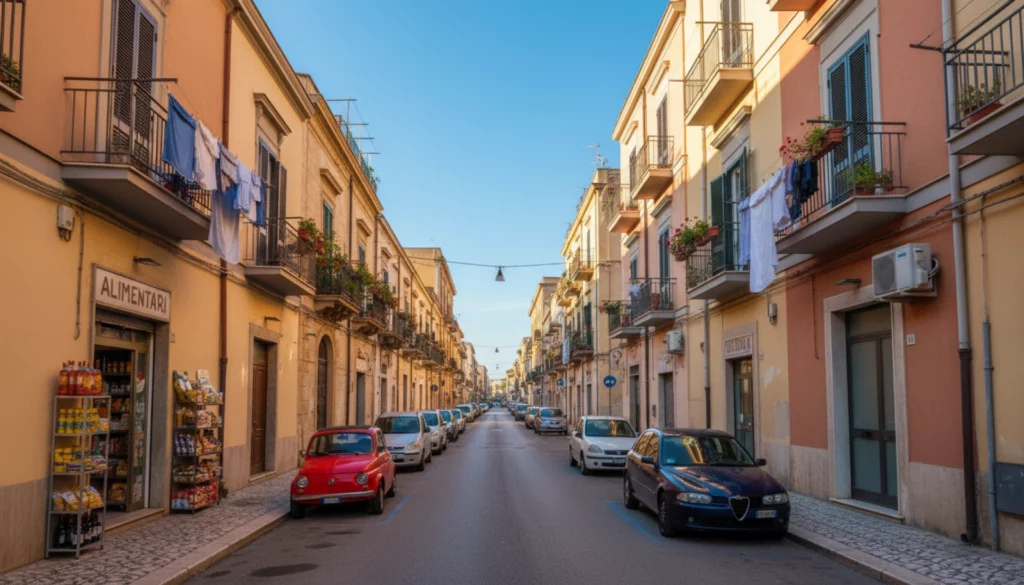
Calabria is attracting more and more people who are looking to rent an apartment and settle there long term. The region offers a lifestyle that is different from Italy’s large cities, with a property market that is often more affordable—but also with its own rules, timelines, and important things to watch out for.
This guide covers the essentials in a practical way: how the local rental market works, which areas to consider based on your daily life, the budget to plan for, administrative steps, types of leases, and common risks.
Table of Contents
Renting an Apartment in Calabria: What to Expect from the Rental Market
Calabria is one of the Italian regions where real estate is generally more affordable compared to more competitive areas such as Tuscany, Lombardy, or Lazio. This also applies to the rental market: rents are often lower, which is a real advantage for foreigners moving there with a limited budget.
That said, this does not mean everything is simple or consistent. The offer is quite varied: some apartments are well renovated, while others show clear signs of age and wear. Before signing anything, visiting the property in person is essential.
Seasonality, Furnished/Unfurnished, Duration
The rental market in Calabria is highly seasonal, especially in coastal areas. During the summer, many available properties shift to short-term tourist rentals, which reduces the supply of long-term rentals and increases negotiation prices.
It is better to search outside the high season-between October and March—to have more options and more room to negotiate.
Furnished apartments (arredati) do exist, but their quality varies greatly: make sure to check the actual condition of the furniture, appliances, and bedding before committing.
Unfurnished properties (vuoti) offer more flexibility, but require planning for some purchases when you move in. There are also semi-furnished properties (parzialmente arredati), which are often equipped with a kitchen and wardrobes.
What Affects Rental Prices in Calabria
Plusieurs facteurs influencent directement le montant du loyer en Calabre :
Several factors directly influence rent levels in Calabria:
-
Property condition: a recently renovated apartment will cost more than one in its original state, even with the same size and location
-
Location: city centers and seaside areas are more expensive than inland or suburban areas
-
Heating system: independent heating allows you to control your consumption, while central heating depends on the building’s management
-
Exposure and insulation: a damp or poorly exposed apartment can lead to higher costs in winter, especially inland
-
Timing of your search: outside peak season, landlords are often more open to negotiation
Areas to Consider Based on Your Lifestyle
City Center vs Suburbs
A property in the city center gives you walking access to shops, public transport, healthcare services, and administrative offices. This is a significant advantage if you don’t have a car or want to limit your travel.
In suburban areas, rents are lower and properties are larger, but having a car becomes almost essential. Calabrian residential suburbs are often quiet and green—a good compromise for families or remote workers who do not need frequent access to urban services.
Seaside
Coastal areas (Tropea, Soverato, Scalea, Pizzo, Vibo Marina) are the most in demand and the most expensive. During the high season, competition with short-term tourist rentals is strong. However, outside the peak season, it is possible to find quality properties at very attractive prices—landlords often prefer a long-term tenant rather than leaving a property empty from November to April.
Inland Areas and Interior Cities
Inland cities-Catanzaro, Cosenza, and Crotone-offer a good balance between available services and affordable rents. Catanzaro and Cosenza are the region’s main university and administrative hubs, with a diverse rental market. More remote inland areas (such as Sila and Aspromonte) offer very low prices, but require a car and a willingness to live in relative isolation.
| Areas |
|
Advantages |
Points to watch |
|---|---|---|---|
| Tyrrhenian Coast (Tropea, Pizzo) | 600 – 900 € |
Exceptional setting, social life |
Strong seasonality, higher prices |
| Ionian Coast (Soverato, Crotone) | 400 – 650 € |
Beaches, services, peace and quiet |
Limited transport outside the center |
| Catanzaro / Cosenza | 350 – 550 € |
University, hospitals, shops |
Less sea view |
| Reggio Calabria | 300 – 500 € |
Lowest prices, access to Sicily |
Traffic, mixed reputation |
| Inland / Sila Area | 200 – 380 € |
|
|
Initial Budget to Plan For
In Italy, the security deposit (deposito cauzionale) is usually equivalent to 2 or 3 months’ rent, sometimes combined with 1 to 3 months of rent paid in advance. Depending on the landlord, you may need to pay between 3 and 6 months’ rent at the time of signing. This is the main cost to plan for upfront.
The deposit must be returned at the end of the lease, minus any damages identified during the move-out inspection. It is often held in a standard bank account by the landlord, with no legal requirement for a separate account.
Agency Fees
If you go through a real estate agency (agenzia immobiliare), fees will apply. Local practices vary, but you can expect to pay between one and two months’ rent as a commission, sometimes shared between the landlord and the tenant depending on the agreement. Some agencies charge only the landlord—always check who is responsible for the commission before starting visits.
⚠️ Be careful: some agencies in Calabria charge a fee just to access their listings. Avoid them, this is not standard practice and may be a sign of scams.
Lease Registration
All rental contracts in Italy must be registered with the Agenzia delle Entrate within 30 days of signing. Registration fees (generally between €67 and a few hundred euros, depending on the lease duration and rent) are shared equally between the landlord and the tenant, unless agreed otherwise.
Monthly Budget
Beyond the rent, you should plan for regular expenses:
- Electricity + gas: €80–150/month depending on the season and heating system
- Water: €20–40/month
- Internet (fiber): €25–35/month
- Condominium fees (spese condominiali): vary depending on the building—always check before signing
Essential Administrative Steps
The Codice Fiscale: your key document in Italy
The codice fiscale (Italian tax code) is the most important document to obtain before signing a lease. Without it, no contract can be registered in Italy. It is free and quick to obtain: either at the Agenzia delle Entrate once you are in Italy (with your passport), or directly at the Italian consulate in your city before departure. Make sure to get it as early as possible—it will be required from the very first steps.
Documents to Prepare for Your Rental Application
Italian landlords generally require:
Italian landlords generally require:
- A valid ID (passport or identity card)
-
Codice fiscale
-
Proof of income: payslips, tax returns, employment contract, or pension statement
-
Sometimes: bank statements from the last 3 months
-
Sometimes: a guarantor (garante) or a guarantee letter
If your income is paid from abroad, some landlords may be more cautious. Proof of sufficient savings (3 to 6 months of rent in your bank account) or a local guarantor can help reassure them. Providing simple translations of your key documents can also make the process easier.
Residence Registration
Once you are settled, you will need to register with the local municipality (comune) to obtain your residenza anagrafica. This step is mandatory if you stay in Italy for more than 3 months.
It is required to access a general practitioner under the public healthcare system (SSN), certain administrative services, and to open a local bank account.
For full support with all relocation procedures, see our guide on moving to Italy.
Types of Leases and Clauses to Watch
Italian rental law is governed by Law No. 431 of 1998. There are five types of contracts, but three are relevant for long-term stays:
The standard 4+4 contract (contratto a canone libero)
This is the most common contract. The landlord commits to renting for 4 years, automatically renewable for another 4 years. The rent is freely agreed between the parties. The landlord can only refuse renewal for specific legal reasons (personal use, sale, major works). The tenant can leave at any time by giving 6 months’ notice.
The agreed rent contract 3+2 (contratto a canone concordato)
This contract lasts 3 years, renewable for 2 more years, and offers rent below market rates. The rent is calculated based on local agreements between landlord and tenant associations. In return, the landlord benefits from tax advantages, particularly through the cedolare secca. This option is interesting if you are looking for stability at a lower cost.
The temporary contract (contratto transitorio)
Duration: 1 to 18 months, justified by a temporary reason (work assignment, renovation of your main residence, etc.). Useful if you want to test an area before committing long term. The tenant must provide a valid reason for the temporary stay.
The cedolare secca: what it is
The cedolare secca is an optional tax regime for landlords that replaces standard income tax (IRPEF) on rental income with a flat rate (21% for standard contracts, 10% for agreed rent contracts). If the landlord chooses this regime, the tenant is exempt from lease registration fees. Always ask the landlord if they opt for this system—it is beneficial for you.
Clauses to Review Carefully Before Signing
-
Notice period (usually 6 months for tenants in a 4+4 contract)
-
Deposit amount and return conditions
-
Distribution of costs: who pays for repairs?
-
Rent indexation: annual adjustment linked to the ISTAT index?
-
Building rules: pets, subletting, permitted works
-
Early termination clause (recesso anticipato): under what conditions can you leave before the end of the lease?

Working in Calabria: What to Know Before Choosing Your Home
The Local Job Market: Tourism, Hospitality, and Services
Job opportunities in Calabria are often concentrated in a few urban areas and specific sectors. Tourism, hospitality, and services represent a large share of available jobs, especially during the summer. This means strong seasonality: opportunities can be plentiful from April to September, then decrease significantly.
If you are aiming for a seasonal local job, keep in mind:
- Fixed-term contracts are common in these sectors
- A quieter period outside the tourist season—consider a temporary lease instead of a long-term commitment
- Modest salaries: the average net monthly salary in Reggio Calabria is around €1,250
Remote Work from Calabria
Remote work from Calabria is an option many people choose, and it is entirely realistic—provided you check a few key points before signing a lease:
-
Internet connection: test the actual speed on-site, not just whether fiber is available in the area. Fiber (fibra ottica) is present in urban centers, but coverage can be uneven in suburban and inland areas
-
Mobile network: check 4G/5G coverage in the property, especially if fixed internet is unavailable or unstable
-
Workspace: a suitable home for remote work should have a space properly insulated from noise (street, neighbors, animals)
-
Local mobility: outside urban centers, a car is essential for daily needs
Job Search and Local Procedures
To apply for jobs in Calabria, prepare a CV in the Italian format, more concise and factual, typically including a photo, local contact details, and written in Italian if you are targeting local employers. The main Italian job platforms are Indeed.it and LinkedIn. Response times can be longer than in other countries—polite follow-ups and direct contact are common practice.
Our guide on moving to Italy also covers administrative aspects related to employment (work permits, social contributions, etc.).
Common Risks and How to Avoid Them
Renting in Calabria without proper preparation can lead to avoidable mistakes. Here are the most common situations:
Fraudulent listings. Be cautious of high-end properties offered at unusually low prices, especially on general platforms. Never pay a deposit before visiting the property and meeting the owner or agent. Scams targeting expats do exist—a property that cannot be visited is a clear red flag.
Unregistered leases. A lease that is not registered with the Agenzia delle Entrate offers little to no legal protection. Avoid any informal arrangements, even if the landlord offers a lower rent in exchange. A registered lease is your only real protection in case of disputes.
No move-in inspection report. Always request a written move-in report (verbale di consegna) and take dated photos of every room when you move in. Without this, the landlord may withhold your deposit at the end of the lease without solid justification.
Hidden condominium fees. Spese condominiali can range from €30 to €100 per month depending on the building. Always ask for the average annual amount before signing—they are not always included in the advertised rent.
Confusion between short-term and long-term rentals. In coastal areas, some landlords offer contracts that appear to be long-term leases but include clauses allowing them to reclaim the property in summer. Read every clause carefully, or seek professional assistance.
Viewing Checklist Before Signing
Use this checklist for each property you visit to make an informed decision:
-
Internet: test the actual speed on-site (run a speed test)
-
Mobile network: check 4G/5G coverage in every room
-
Heating: independent or central? What type of fuel? Estimated winter cost?
-
Humidity: check ceiling corners, behind furniture, under windows
-
Windows and insulation: double glazing? Drafts?
-
Water pressure: test taps and shower
-
Natural light: orientation, floor level, facing buildings
-
Parking: private space or street? Cost?
-
Condominium fees: ask for the average annual amount in writing
-
Meters: record water, gas, and electricity readings upon entry
-
Overall condition: take dated photos of each room and note any existing issues
-
Neighborhood: visit during the week and on weekend evenings to assess noise levels

Frequently Asked Questions About Renting in Calabria
Is Calabria generally cheaper than other Italian regions for housing?
Yes, overall Calabria is one of the most affordable regions in Italy. The average property price is €953 per square meter and the average rent is €8.34 per square meter per month (Immobiliare.it, September 2025). However, this does not mean prices are always low. Proximity to the sea, the actual condition of the property, and the season can significantly influence rental prices. It is important to compare similar properties within the same area.
What documents are usually required to rent in Calabria from abroad?
Landlords typically request a valid ID, a codice fiscale, and proof of income such as payslips, tax returns, or pension statements. In some cases, bank statements may also be required. If these documents are not available, proof of sufficient savings or a guarantor can help reassure the landlord. Providing simple translations of key documents can also make the process smoother and avoid delays.
What should you check before signing a lease in Calabria?
Before signing a lease, it is essential to verify the type and duration of the contract, the notice period, the amount of the security deposit, and how costs and repairs are shared. It is also important to confirm the amount of condominium fees. During the visit, check for humidity, the condition of the heating system, the quality of the internet connection, and the water pressure. Taking photos from the first day and requesting a written move-in report will help protect you in case of disputes.
Is it difficult to find a long-term rental in coastal areas?
In some tourist coastal areas, a large part of the housing supply is used for short-term rentals during the high season, which reduces long-term availability between June and September. The most effective approach is to search outside the summer period, between October and March, or to consider nearby inland towns where more long-term options are available.
Can you work remotely from Calabria without issues?
Remote work is entirely possible in Calabria, but it requires careful checks before signing a lease. It is important to test the actual internet connection on-site and verify mobile network coverage, as quality can vary significantly depending on the area or even the building. Choosing a property with a suitable workspace and planning a backup internet solution, such as a SIM card with a generous data plan, can help avoid problems.
What if the landlord refuses to register the lease?
You should avoid any informal arrangement. An unregistered lease is legally invalid and does not provide proper protection. If the landlord insists, this is a serious warning sign. Italian law allows tenants to request the registration themselves through the Agenzia delle Entrate, which legally forces the landlord to regularize the situation.
How much should you budget upfront to rent in Calabria?
At the time of signing, you should generally expect to pay between three and six months of rent. This usually includes the security deposit, advance rent, and possibly agency fees. For a rent of €500, this represents a total upfront budget of approximately €1,500 to €3,000.
Conclusion
Renting an apartment in Calabria is entirely accessible if you are well prepared. By understanding how the local market works, choosing your location based on your real lifestyle, planning your initial budget, carefully reviewing each clause of the lease, and using a thorough checklist during visits, you can avoid most common pitfalls.
The three keys to a successful move are simple: prepare a complete rental file before your arrival, ensure the lease is properly registered with a written move-in report, and choose your location based on your actual daily needs—not just what you have seen online.
If you want to go further with your relocation project, explore our full guide on moving to Italy and our article on the cost of living in Italy to better plan your budget.