

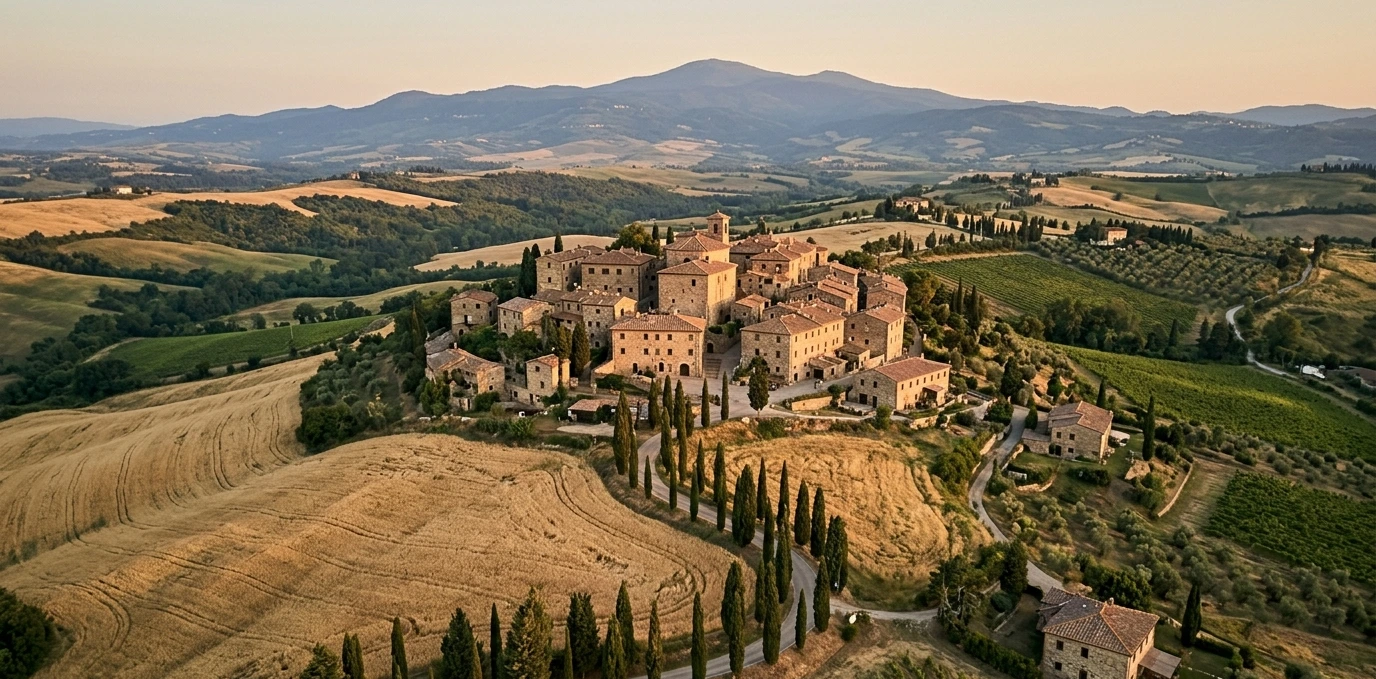
Every year, thousands of French nationals cross the Alps — or board a low-cost flight — with one clear idea in mind: settling down in Italy. The dolce vita, the pizza, the sunshine, the architecture… but increasingly, a genuine life project. Today, it is estimated that around 70,000 French citizens are officially living on the peninsula, and that number keeps rising.
But moving to Italy is not just about choosing a beautiful view. It means finding the right region, navigating the administrative formalities, knowing where to send your children to school, identifying the associations that will help you settle in — and sometimes, buying a home. This guide covers all of these topics with practical, up-to-date information for 2026.
Table of contents
- How many French people live in Italy in 2026?
- French expats’ favourite regions in Italy
- Living in Italy as a French national: advantages and challenges
- French associations in Italy: Milan Accueil, Turin Accueil and other networks
- French schools in Italy: where to educate your children?
- French shops and services in Italy
- Buying a house in Italy as a French national
- Property taxes and purchase costs you need to know
- Conclusion
- FAQ — Your most frequently asked questions
How many French people live in Italy in 2026?

The exact figure is hard to pin down, since registering with the consulate is voluntary. Estimates place the French community in Italy at around 70,000 people, though the real number is likely higher — many expats never register with the consulate.
What is certain, however, is the trend: more and more French nationals are choosing Italy. According to official data from the French Ministry of Foreign Affairs, on 31 December 2024, a total of 1,754,688 French citizens were registered abroad — a 3.6% increase year-on-year. The 8th consular district, which covers Italy, Greece, Turkey, Cyprus and Israel, alone recorded +6,448 new registrations between 2024 and 2025, one of the strongest growth rates in Europe.
This community is diverse: young professionals and executives in the major northern cities, families in Tuscany, retirees drawn by the sunshine and favourable tax regime in the South, entrepreneurs and digital nomads settling in medium-sized towns. Italy is now chosen by a very wide range of profiles, far beyond the fantasy of the dolce vita alone.
French expats’ favourite regions in Italy
The geographic distribution of French nationals in Italy is far from uniform. It follows a clear logic: economic opportunities in the North, quality of life and tax advantages in the Centre and South. Here are the main areas of concentration.
Lombardy: the densest French community
Milan almost certainly has the largest francophone community in Italy. The country’s economic capital attracts executives, entrepreneurs, consultants and international profiles. Finance, design, fashion, luxury goods and tech are particularly dynamic here. Salaries are higher than elsewhere in Italy, international connections are excellent (direct flights to Paris, high-speed trains to Lyon and Paris), and the range of French-language services — associations, a French school, restaurants — is the most comprehensive on the peninsula.
Piedmont and Liguria: closeness to France
Turin, less than 2 hours from Nice and 3.5 hours from Lyon, naturally attracts French nationals working in the automotive industry, engineering or manufacturing. The city is human-scaled, cheaper than Milan, with an excellent food and cultural scene. Liguria (Genoa, the Riviera di Ponente, the Cinque Terre) appeals to those looking for the sea without straying too far from the border. The bilingual Valle d’Aosta has long been home to a historic francophone community.
Tuscany: the quintessential French dream
Florence, Lucca, Siena, the Chianti, the Sienese hills… Tuscany is the preferred region for French families seeking the ideal combination of quality of life, cultural heritage and outstanding natural surroundings. It attracts remote workers, wealthy retirees and buyers of holiday homes alike. Property prices are higher here than in the rest of central and southern Italy, but still well below those in Paris or the French Riviera.
Rome: for institutional and cultural profiles
Rome remains a key hub for diplomats, European officials, academics, journalists and artists. The capital offers a unique Mediterranean quality of life, a vibrant cultural scene and easy access to French institutions (embassy, cultural institutes, schools). It is, however, more expensive to rent than secondary cities, and its bureaucracy is particularly present.
The South: the new eldorado
Sicily, Calabria, Puglia, Campania, Basilicata — the South is attracting a growing number of French nationals, drawn by very affordable property prices (sometimes under €1,000/m²), exceptional sunshine and, for retirees, a highly attractive 7% flat tax on foreign income. The one-euro house programmes in Calabrian and Sicilian villages have given these regions enormous media exposure among French-speaking audiences, though these offers should be carefully assessed before making a commitment.
Living in Italy as a French national: advantages and challenges
Italy consistently ranks in the top 10 favourite destinations for French-speaking expats. But before taking the plunge, it pays to have a clear-eyed view of what awaits you — the good and the less good.
What really attracts people
Geographic proximity: less than 2 hours by air from Paris, direct high-speed train links to Milan and Turin, and a land border accessible from Nice or Grenoble. Staying connected to family back home is simple and affordable.
A different pace of life: the pausa pranzo, evenings with family, the culture of the piazza, a more relaxed relationship with time. This is not slowness — it is a different way of living, one that French residents consistently describe as more balanced.
The food: voted the world’s best cuisine by Taste Atlas in 2024, Italian cooking is a daily experience. Local markets, small producers, regional wines… eating well and inexpensively remains entirely achievable, especially outside the major cities.
A lower cost of living than Paris (outside Milan): a monthly public transport pass costs around €35, an average restaurant meal €15. Food shopping is generally cheaper than in France.
The healthcare system: the Servizio Sanitario Nazionale (SSN) covers residents, including registered EU citizens. The quality of care is good in the major cities, with GP consultations at around €20.
Exceptional heritage: with 58 UNESCO World Heritage Sites — a world record — Italy gives its residents permanent access to history, art and architectural beauty unmatched anywhere else in Europe.
The challenges to prepare for
Bureaucracy: Italian burocrazia has a well-deserved reputation for complexity and can wear down even the most patient. Registering at the town hall, obtaining a codice fiscale, opening a bank account, registering a vehicle — every step takes time and often requires the help of a local professional.
Italian language skills: essential once you leave the major cities. Unlike many northern European countries, few Italian businesses operate in English. Investing in language learning, before and after moving, is crucial to a successful integration.
The job market: challenging in certain regions, particularly in the South. Average salaries remain lower than in France, and precarious contracts are common for young workers. International profiles, freelancers and remote workers generally fare better.
Housing in Milan: Lombardy has rents comparable to Paris, sometimes with less floor space for the same budget. Expect to pay between €1,400 and €2,500 a month for a 3-room flat in the city centre.
Indicative monthly budget for a couple: between €1,700 and €2,800, depending on the city (Milan being the most expensive, the South the cheapest). This figure includes rent, food, transport, healthcare and leisure.
French associations in Italy: Milan Accueil, Turin Accueil and other networks
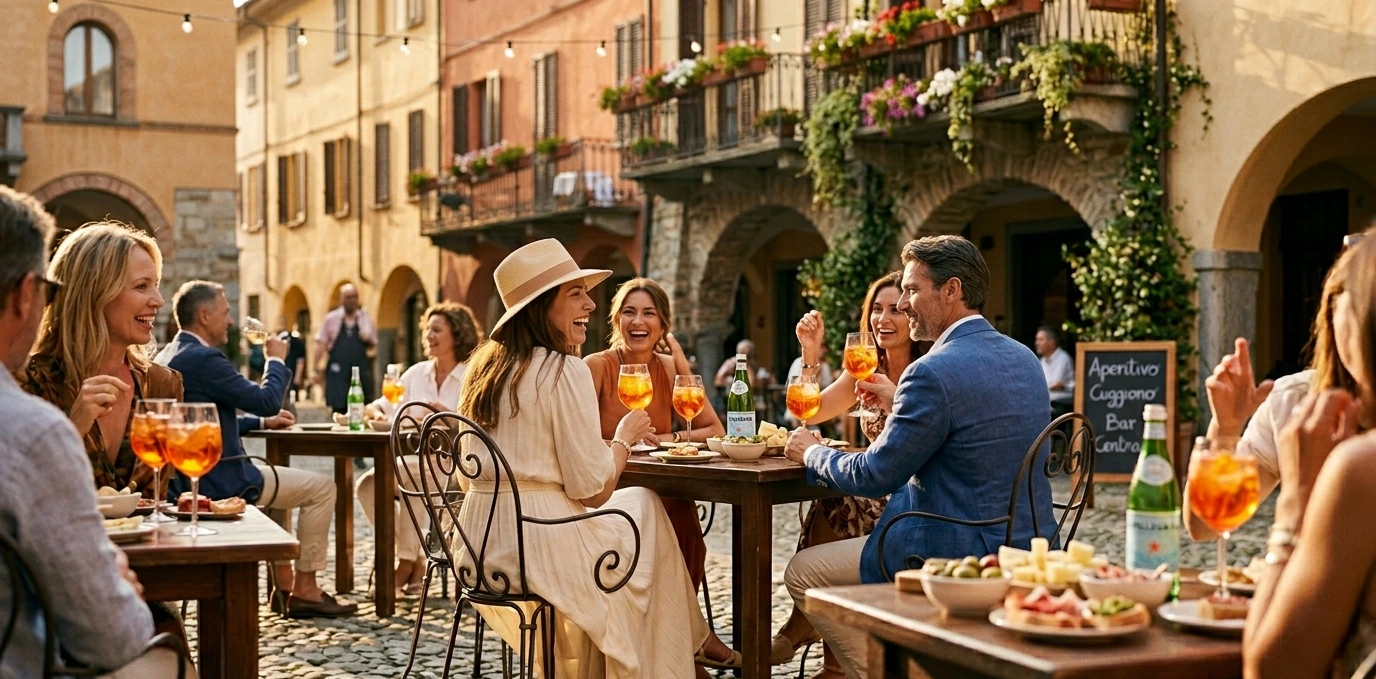
One of the first things to do when you arrive in Italy? Join a French community association. These organisations play an essential role in helping you settle in: they let you meet fellow French nationals (and Italian francophones), share tips, navigate the local bureaucracy — and simply avoid feeling alone in a foreign country.
Milan Accueil — The reference for French speakers in Milan
Founded in 1979, Milan Accueil is the flagship association of Milan’s francophone community. A member of the FIAFE network (Fédération Internationale des Accueils Français et Francophones d’Expatriés), it currently has around 400 member families — approximately 1,200 people. Among them: French expats, Italians who have returned after living in France, and Franco-Italian families.
The association offers a wide range of activities throughout the year: a back-to-school café, neighbourhood dinners, cultural outings, Milan discovery tours, family activities, sewing classes, wine evenings… It also publishes a bimonthly bulletin (le Tam Tam), distributed at the Institut français de Milan and at the Lycée Stendhal. Its premises are at viale Ranzoni 17, close to De Angeli, Buonarroti and Amendola metro stations. More at milanaccueil.com.
Turin Accueil — The francophone network in Turin
Turin Accueil is the Piedmontese equivalent of Milan Accueil, also a member of the FIAFE network. Its role is twofold: first, helping newcomers understand how the city works (housing, neighbourhoods, schools, administrative procedures); second, facilitating integration through convivial events — coffee mornings, cultural and sporting activities, aperitivi, family weekend outings. It caters to working professionals (evening events) as well as families. More at turinaccueil.com.
Florence Accueil — The francophone community in Tuscany
Florence Accueil is the reference association for French speakers living in Florence and Tuscany. A FIAFE member, it brings together around 80 member families and offers a varied programme of activities: coffee mornings, aperitivo, cultural visits, Italian conversation, a book club, Italian-language cinema, a professional network (Menu del giorno)… The annual membership fee is very affordable — €25 per family, €15 for students and interns under 26. Website: florenceaccueil.org.
Rome Accueil & Union des Français de Rome — Two pillars in Rome
In Rome, two associations work together to welcome and connect the francophone community.
Rome Accueil, founded in 1986, exists to ease the arrival of French families in the capital and support them throughout their stay. It organises events, neighbourhood coffee mornings and meet-ups to help newcomers quickly build a social network. Contact: romeaccueil.com.
The Union des Français de Rome et du Latium, created in 1923 at the Palazzo Farnese, is one of the oldest French associations in Italy. It offers charitable activities, cultural events, walks and guided tours — including the only authorised public visits to the Palazzo Farnese. Website: francaisderome.com.
Other associations and networks worth knowing
The UFE (Union des Français de l’Étranger) has branches in several Italian cities, including Rome and Milan. It represents the interests of French nationals abroad and organises networking events.
The Société Française de Bienfaisance de Milan et Lombardie (SFBML) is the oldest French association in the region. It supports French nationals facing financial, health or social difficulties in northern Italy.
Institut Français Italia has branches in Milan, Florence, Naples and Palermo, in addition to the main office in Rome. It offers French language courses, DELF-DALF certifications, cultural events and opportunities for the French and Italian communities to meet. It is often the first point of contact for newly arrived French speakers.
The Alliances françaises: there are 37 of them in Italy, spread across large and small cities. They offer language courses, cultural events and meeting points for the local francophone community.
The FLAM network (Français LAngue Maternelle), supported by the French Ministry of Foreign Affairs, funds associations that offer French-language activities for children aged 3 to 18 who are not enrolled in an accredited French school. There are FLAM groups in Rome, Turin, Genoa and Milan.
French schools in Italy: where to educate your children?
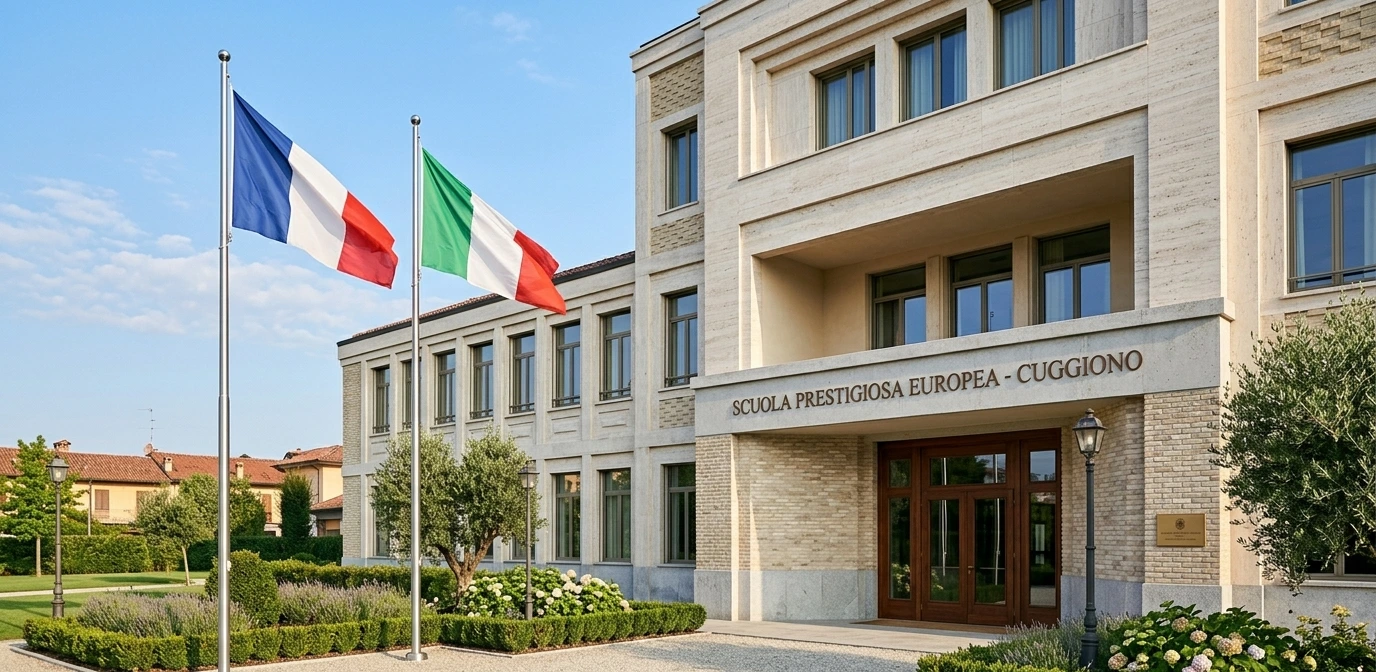
This is usually one of the first questions asked by French families considering a move to Italy: where can my children be educated in French? The answer is reassuring: Italy has a comprehensive network of schools accredited by the French Ministry of National Education, from nursery through to the final year of secondary school.
The 7 French-accredited schools in Italy
The Agence pour l’Enseignement Français à l’Étranger (AEFE) directly manages or accredits seven schools in Italy, spread across five cities. These schools follow the French national curriculum, prepare pupils for the baccalauréat and, for most of them, for the joint French-Italian qualification known as the EsaBac.
- Milan — Lycée Stendhal (via Laveno 12, Milan): the largest and most iconic. Founded in 1948 at the initiative of the French Chamber of Commerce, it today enrols over 1,170 pupils from 37 nationalities, from nursery to Year 13. Directly managed by the AEFE, it offers trilingual French-Italian-English teaching, with German or Spanish as an option from Year 7. The Lycée Stendhal prepares pupils for both the French baccalauréat and the EsaBac. Website: lsmi.it.
- Turin — Lycée Jean Giono: the reference school for French families in Piedmont, from nursery to Year 13, with preparation for the baccalauréat and the EsaBac.
- Florence — Lycée Victor Hugo: ideal for families based in Tuscany, with the dual French-Italian diploma available.
- Rome — Lycée Chateaubriand: the French school in the capital, historically linked to the French Embassy, one of the oldest French institutions abroad.
- Rome — Institut Saint Dominique: an accredited institution also offering preparation for the baccalauréat.
- Rome — La Petite École: nursery and primary school welcoming the youngest children (from age 3) in the tradition of the French école maternelle. Affiliated with the AEFE network, it offers full French-language teaching in a secure and stimulating multilingual environment.
- Naples — École française Alexandre Dumas (via Francesco Crispi 86, 80121 Naples): for families based in Campania, from nursery to primary school, with educational continuity towards the Lycée Chateaubriand in Rome.
Together, these seven schools educate around 4,500 pupils, according to data from the French Embassy in Italy.
A French school in Sanremo? The Ligurian situation
Sanremo, a few kilometres from the French border, is home to a significant Franco-Italian community and many French nationals living on the Riviera di Ponente. The town does not have an AEFE-accredited lycée, but several options exist for francophone families:
- The Alliance française de Gênes is the main hub for French learning and DELF-DALF certification across Liguria, with an active network throughout the region.
- French children enrolled in Italian schools in Sanremo can use the FLAM programme to maintain their level of French, via local associations or online courses.
- For families wanting an accredited French education, the Lycée Jean Giono in Turin (approximately 2 hours from Sanremo) is the nearest option, accessible for families who are mobile or via boarding.
- The immediate proximity to France (Nice is 45 minutes away) also allows some families to enrol their children in French schools on the Côte d’Azur (Nice, Menton) while living in Sanremo.
FrancÉducation labels and the FLAM scheme
If you live far from an accredited lycée, two alternatives exist. First, the 19 FrancÉducation-labelled schools in Italy, which offer bilingual French-language streams without being fully accredited. Second, the FLAM scheme (Français Langue Maternelle), funded by the French Ministry of Foreign Affairs, which supports associations offering French as a mother tongue to children not enrolled in an accredited school — ideal if your child attends an Italian school but you want to maintain a strong link with the French language.
French shops and services in Italy
Living in Italy means adapting to another culture — but sometimes, having access to a French product or service is reassuring, practical or simply enjoyable. The good news: French commercial presence in Italy is very real, particularly in the major northern cities.
French supermarkets
Carrefour Italia is by far the most visible French commercial presence. The chain operates across all major Italian regions with its supermarkets and hypermarkets. It regularly stocks imported French products, particularly in its deli, cheese and wine sections. For French expats who miss a classic Carrefour, it is often the first port of call — and they are rarely disappointed.
French restaurants, crêperies and bakeries
Milan is the city with the most developed French food scene. Several establishments are run by French nationals or offer authentically French cuisine:
- La Maison bretonne (Milan): run by Davide and Roberto, master crêpe makers, offering around thirty buckwheat galettes and authentic Breton crêpes — a firm favourite with French expats.
- La Rotonda Bistrò (Milan): a restaurant run by Laurent Parenti, a regular partner of Milan Accueil, with a menu inspired by French bistronomie.
- Artisan French-style bakeries have also opened in recent years in Milan, Florence and Rome, run by French bakers living abroad or Italians trained in France (Le Carré français, Le Levain, Tibo Boulangerie…).
French delicatessens: the essential addresses
Finding real French cheese, foie gras, salted butter or a proper baguette is often one of the first practical questions for new expats. Several specialist food shops have risen to the challenge, founded by French entrepreneurs living in Italy.
- Maison Aubry by Flo (Milan — Via Felice Bellotti 8, Porta Venezia district): founded in 2022 by Nathalie Lorenzi, a Parisian expat in Milan, this gourmet delicatessen has established itself as the French reference in Milan. It brings together around thirty carefully selected French suppliers: Breton conserves by La Paimpolaise, Perle Noire caviar, fresh oysters, churned butter, crème fraîche, aged cheeses, foie gras, pâtés, Dijon mustards, childhood biscuits… Since 2025, it has joined forces with Florian Berger, a pastry chef with 18 years of experience, to also offer pastries, all-butter croissants and French baked goods on the premises. The shop also delivers its best-sellers weekly to the French community in Milan (Lycée Stendhal, Librairie William Crocodile…). Tel: +39 380 746 9773.
- La Francerie (online shop, delivery throughout Italy): created in May 2023 by four Franco-Italian associates including Jérémy Caire, a French entrepreneur who has lived in Italy since 1995, La Francerie offers over 250 authentically French products sourced from small producers across France: nonettes, rillettes, calissons from Aix, saucisson with Roquefort, frozen artisan baguettes, cheeses (camembert, Comté AOP, Petit Munster…), tableware. Delivery from Rome to Milan. Contact: info@lafrancerie.com / lafrancerie.it.
- Bel et Bon (Turin): a French delicatessen stocking quality French-imported products — cheeses, charcuterie, condiments and wines — for expats and French gastronomy enthusiasts in the Piedmontese capital. A discreet but highly appreciated address among the Turin francophone community.
French libraries and media centres in Italy
Italy has a complete network of French-language media centres, directly affiliated with the Instituts français and Alliances françaises. All give access to Culturethèque, the digital library of the French cultural network abroad, which brings together over 70,000 documents (books, comics, films, magazines, music, language courses) available online on computer or smartphone.
- Médiathèque de l’Institut français de Milan — Corso Magenta 63, Milan. Over 10,000 books, 1,620 DVDs, magazines, a children’s section, free WiFi. Tel: 02 48 59 19 40.
- Médiathèque de l’Institut français de Florence — Piazza Ognissanti 2, Florence. Collections covering literature, humanities, art, children’s books, comics and audiovisual materials. Free afternoon access, borrowing on subscription.
- Médiathèque de l’Institut français Centre Saint-Louis (Rome) — A library at the heart of the French community in Rome.
- Médiathèque de l’Alliance française de Turin — For French speakers in Piedmont, with access to print and digital collections via Culturethèque.
- Médiathèque de l’Institut français de Naples — The André Malraux media centre, the cultural reference point for the South.
- Médiathèque de l’Institut français de Palerme — For French speakers in Sicily.
💡 Good to know: Culturethèque registration is free for three weeks for any resident in Italy, then continues with a subscription to one of the network’s media centres.
French brands and bookshops
- Librairie William Crocodile (Milan): Milan’s reference French-language bookshop, a regular partner of Milan Accueil. French-language books for all ages, literary events and book signings.
- Fashion and beauty: Sephora, Galeries Lafayette (Rome), L’Occitane, Yves Rocher, Lacoste, The Kooples, A.P.C.
- Home and interiors: Maisons du Monde, present in several major Italian cities.
Buying a house in Italy as a French national
Good news: as a citizen of the European Union, a French national can freely purchase property in Italy, with no specific restrictions based on nationality. No visa or special permit is required. The same rules apply to you as to an Italian citizen.
The property market in 2026: what you need to know
According to Immobiliare.it data for 2026, the average property price in Italy is around €2,100 per square metre, up 2.6% year-on-year. But regional variations are enormous:
| Area / City | Average price per m² | Typical buyer profile |
|---|---|---|
| Milan / Florence / Lucca | > €5,000 | Investors, executives, wealthy families |
| Rome | €3,000 – €5,000 | Diplomats, institutional profiles |
| Turin / Bologna | €2,000 – €3,500 | Working professionals, young families |
| Sicily | ~ €1,170 | Retirees, holiday homes |
| Calabria | ~ €950 | Budget buyers, one-euro house schemes |
| Basilicata | ~ €1,330 | Retirees, remote workers |
The key steps of buying property in Italy
1. Obtain a codice fiscale (Italian tax identification number): an absolutely essential first step, even before signing any document. It can be obtained free of charge from the Agenzia delle Entrate or from the Italian consulate in France.
2. Sign the compromesso (preliminary contract): the Italian equivalent of a French compromis de vente. A deposit of 10 to 30% is paid at this stage. If the buyer withdraws without valid reason, the deposit is forfeited. If the seller withdraws, they must repay double the amount.
3. Legal and technical due diligence: it is strongly advisable to engage a Franco-Italian lawyer or a geometra (building surveyor) to verify the property’s planning compliance, absence of easements or mortgages, and consistency with the land registry.
4. Signing the rogito (notarial deed) with the notaio: the deed is drawn up and read aloud in full at the notary’s office. An interpreter may be required if your Italian is not sufficiently advanced. Payment is generally made by bank transfer on the same day.
Financing your purchase: the rules for non-residents
Italian banks do accept non-residents, but the conditions are stricter than for residents: a minimum 30% personal contribution is required, along with additional guarantees, and interest rates of between 3.5% and 4% in 2026. Some French buyers prefer to finance their purchase through a French mortgage or by using a Franco-Italian mortgage broker. In either case, opening an Italian bank account in advance is strongly recommended.
Property taxes and purchase costs you need to know
Italian property taxation works differently from the French system. Here are the key points to master before signing anything.
Purchase taxes according to your situation
The applicable tax rate depends on whether you are buying a primary or secondary residence, and on whether the seller is a private individual or a developer:
- Primary residence (Prima Casa): registration tax at 2% of the cadastral value + €50 mortgage tax + €50 cadastral tax.
- Secondary residence or investment property: registration tax at 9%.
- New-build from a developer: VAT at 4% (Prima Casa) or 10% (secondary residence).
- Notary fees: between 1% and 2.5% of the sale price, depending on the complexity of the transaction.
- Estate agent commission: between 2% and 4%, often shared between buyer and seller.
The Prima Casa scheme: how to benefit
If you commit to establishing your primary residence in the property’s municipality within 18 months of purchase, you qualify for the Prima Casa tax regime: a reduced rate of 2% instead of 9%. Condition: you must not already own a property benefiting from this same status. This scheme significantly reduces the overall tax cost of the purchase.
The 7% flat tax for foreign retirees
This is one of the most attractive tax measures in Europe for retirees from abroad. By settling in a municipality of fewer than 20,000 inhabitants in southern Italy (Sicily, Calabria, Sardinia, Campania, Basilicata, Abruzzo, Molise, Puglia), you can opt for a flat 7% tax rate on all foreign income for 10 years. A significant advantage if you receive a French pension.
One-euro houses: a real opportunity or a trap?
Several southern municipalities offer houses at a symbolic price to attract new residents. This is real — but these offers obligatorily require renovation work within a set deadline (usually 3 years), with a budget to plan for of between €20,000 and €50,000 depending on the condition of the property. It is not a free gift, but a genuine opportunity if you are prepared to invest for the long term.
Renovation tax incentives in 2026
Italy also offers significant tax incentives for renovation works, although some schemes have been scaled back in 2025–2026:
- Bonus ristrutturazioni: 50% tax deduction on renovation works, capped at €96,000.
- Bonus mobili: 50% deduction on furniture and appliances linked to a renovation, capped at €5,000 in 2026.
- Ecobonus: deductions for energy-efficiency works (insulation, windows, solar panels).
- Sismabonus: deductions for anti-seismic reinforcement (50% for primary residences, 36% for secondary residences).
Conclusion
Living in Italy as a French national has never been more accessible — and Italy has never been better equipped to welcome its francophone community. Active associations, French schools in five cities, French-language shops and services, a property market that remains affordable in many regions: all the conditions for a successful move are in place.
What to remember before you take the plunge: prepare your administrative formalities in advance (codice fiscale, consular registration, healthcare cover), choose your region according to your life goals (professionals in Milan or Turin, families in Tuscany, retirees in the South), and join a French association as soon as you arrive — this human network is often the key to a successful integration.
Our concrete recommendation: before signing anything, spend at least a month in the region that interests you. Italy is a country to be lived before it is bought — and this immersion will save you a great many regrets.
FAQ — Your most frequently asked questions about French people in Italy
How many French people live in Italy in 2026?
It is estimated that around 70,000 French nationals live in Italy, though consular registration is voluntary and the actual figure is almost certainly higher. The 8th consular district (which includes Italy) recorded a rise of +6,448 registrations between 2024 and 2025, confirming growing interest in the peninsula.
Which French associations should I join in Milan and Turin?
Milan Accueil (milanaccueil.com) has been the reference association for French speakers in Milan since 1979, with around 400 member families. Turin Accueil (turinaccueil.com) plays the same role in Turin. Both are part of the FIAFE network, which federates 200 associations in 90 countries. The Institut Français Italia and the 37 Alliances françaises complement this network across the whole country.
Can a French national buy a house in Italy without any restrictions?
Yes. As an EU citizen, a French national can freely purchase property in Italy. You will need a codice fiscale (Italian tax number), a local bank account and the assistance of a notaio to sign the final deed. No visa or special permit is required. The registration tax is 2% for a primary residence (Prima Casa) or 9% for a secondary residence.