

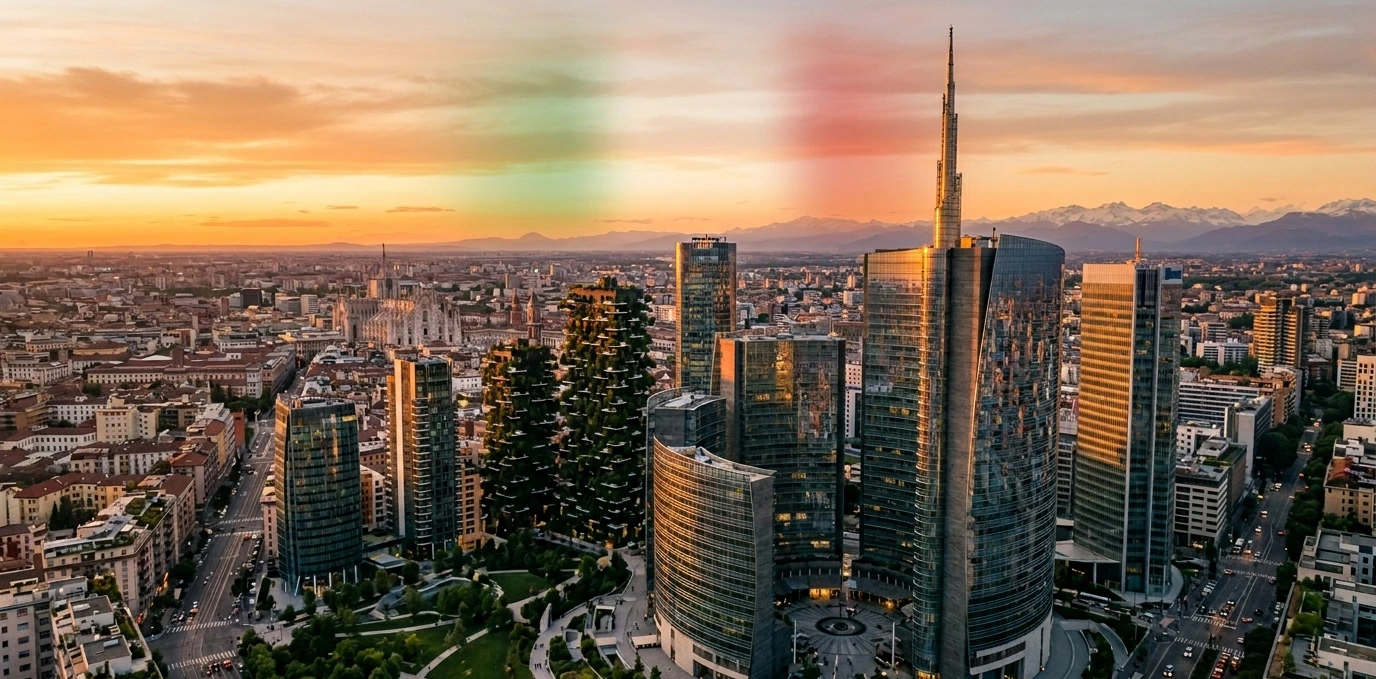
 Italy is often celebrated for its food, its art of living, and its cultural heritage. But the peninsula is also home to some of the most powerful companies in Europe, and several of them are equally recognised as outstanding places to work.
This article offers a complete overview of the best companies in Italy in 2026: those that dominate the Milan Stock Exchange, those that feature in the major global rankings, and those that their own employees rate as the best workplaces in the country.
Table of Contents
- The Italian economy at a glance
- The FTSE MIB: Milan’s stock exchange
- Top 10 by market capitalisation
- Top 10 by revenue
- Italian companies in the Fortune Global 500
- The big names to know
- Which sectors drive the Italian economy?
- Italy’s “hidden champions”
- Best Places to Work in Italy in 2026
- FAQ
The Italian economy at a glance

Italy is the third-largest economy in the eurozone and the eighth largest in the world, with a GDP of more than €2.1 trillion. Behind the tourist clichés lies an industrial fabric of remarkable resilience.
In 2023, the annual Mediobanca study counted 274 Italian companies with revenue above one billion euros, up from just 160 in 2003. That growth reflects the rising strength of the Italian business landscape, particularly in high-value niche sectors.
Another striking figure: in 2025, the Milan Stock Exchange index (the FTSE MIB) recorded a gain of around +25%, one of the strongest performances among Europe’s major stock markets. This momentum reflects solid economic fundamentals, driven primarily by the banking and defence sectors.
The FTSE MIB: Italy’s benchmark index
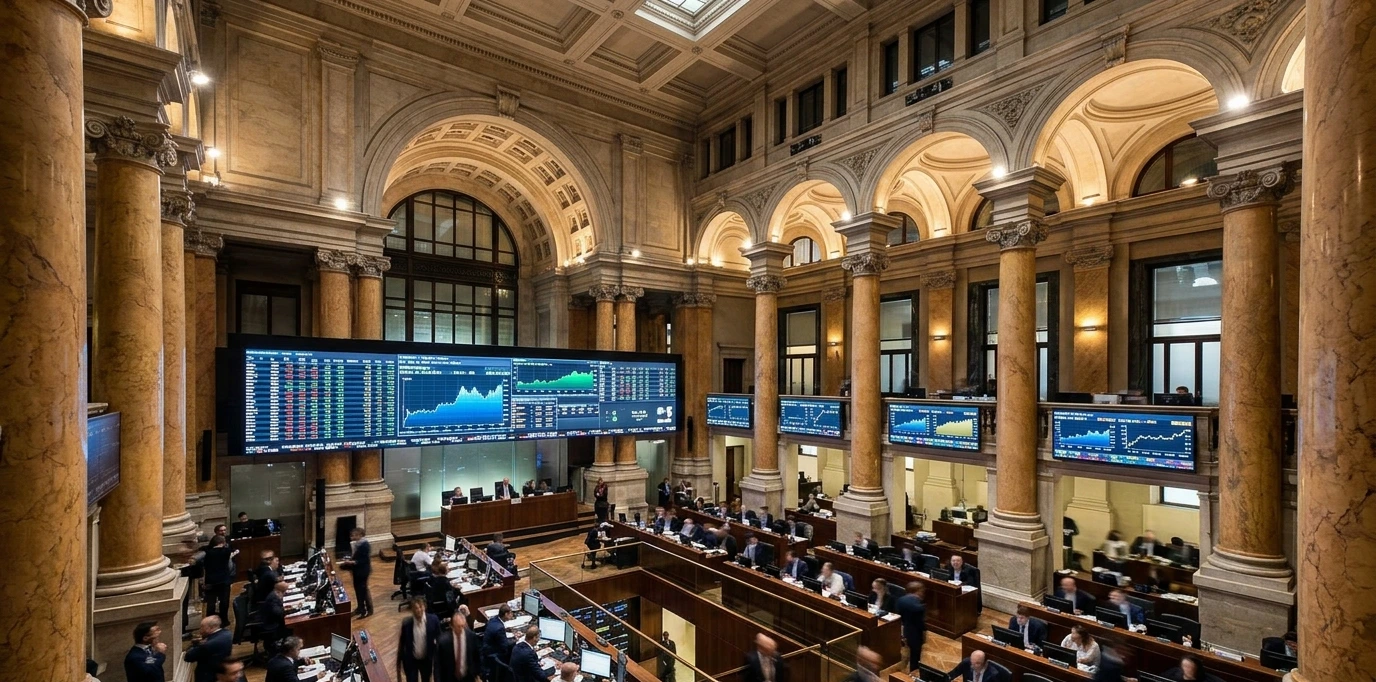
To understand which companies dominate the Italian economy, you first need to know the FTSE MIB (Financial Times Stock Exchange Milano Indice di Borsa). It is Milan’s benchmark stock index, made up of the 40 most capitalised and liquid companies on the Italian market — broadly equivalent to the FTSE 100 in the UK or the DAX in Germany.
These 40 companies together account for roughly 87% of the total market capitalisation of the Italian market. The financial sector is heavily represented: UniCredit and Intesa Sanpaolo alone make up more than 28% of the index.
The Milan Stock Exchange (Borsa Italiana) joined the Euronext group in 2021. It remains the fifth-largest stock exchange in Europe by total capitalisation.
Top 10 by market capitalisation (FTSE MIB, 2025–2026)
Below is the ranking of Italian companies by market capitalisation. The data comes from FinanzaOnline/Bloomberg and reflects levels reached at end-2025, a record year for several of these companies.
| # | Company | Sector | Market Cap | 2025 Trend |
|---|---|---|---|---|
| 1 | UniCredit | Banking | €104+ bn | 📈 All-time high |
| 2 | Intesa Sanpaolo | Banking | ~€98 bn | 📈 +30% in 12 months |
| 3 | Enel | Energy / Electricity | ~€70 bn | 📈 Solid |
| 4 | Ferrari | Luxury automotive | ~€68 bn | 📈 Record margins |
| 5 | Assicurazioni Generali | Insurance | ~€52 bn | ➡️ Solid |
| 6 | ENI | Oil and gas | ~€48 bn | ➡️ Stable |
| 7 | Stellantis | Automotive | ~€40 bn | 📉 Declining |
| 8 | Prysmian | Industrial cables | ~€22 bn | 📈 +28% EBITDA |
| 9 | Leonardo | Defence and aerospace | ~€20 bn | 📈 EU defence boom |
| 10 | Moncler | Fashion and luxury | ~€16 bn | ➡️ Resilient |
Worth noting: Ferrari and Stellantis are technically incorporated under Dutch law, but their history, their factories, and their identity are deeply Italian. Both are included in the FTSE MIB and are universally regarded as Italian companies.
Top 10 by revenue — Mediobanca Ranking 2025
Market capitalisation does not always reflect a company’s actual size. The annual Mediobanca study, in its 60th edition (2025, using 2024 data), covers 2,828 Italian companies and produces the following ranking:
| # | Company | Sector | Est. 2024 Revenue | Notable point |
|---|---|---|---|---|
| 1 | ENI | Oil and gas | ~€88.8 bn | Italy’s highest revenue |
| 2 | Enel | Electricity | ~€85 bn | €7 bn net profit (record) |
| 3 | GSE | Renewable energy | ~€55 bn | Major public group, little-known internationally |
| 4 | Stellantis Europe | Automotive | ~€21.3 bn | European arm under pressure |
| 5 | Leonardo | Defence | ~€17.8 bn | Record order books |
| 6 | Prysmian | Cables | ~€17 bn | Global leader in submarine cables |
| 7 | Ferrovie dello Stato | Rail | ~€15 bn | Up 4 places vs 2024 |
| 8 | Edison | Energy | ~€15 bn | EDF’s Italian subsidiary |
| 9 | Telecom Italia (TIM) | Telecoms | ~€14 bn | Ongoing restructuring |
| 10 | Hera / A2A | Multi-utility | ~€14–15 bn | Water, gas, waste |
One figure that often surprises people: Poste Italiane is Italy’s largest private employer, with 119,117 employees. Far beyond its postal origins, the group offers banking services, insurance, and digital services across its 12,500 offices nationwide.
Italian companies in the Fortune Global 500
The Fortune Global 500 ranks the world’s 500 largest companies by revenue each year. Italy appears with five companies incorporated under Italian law, plus two incorporated in the Netherlands with strong Italian roots:
- Stellantis (~31st) — ~$188 bn in revenue — born from Fiat, the world’s 4th-largest carmaker
- Enel (~59th) — ~$148 bn — the top strictly Italian company in the ranking
- ENI (~61st) — ~$145 bn — climbed more than 50 places in two years
- Exor (~317th) — ~$46 bn — the Agnelli-Elkann holding (Ferrari, Stellantis…)
- Intesa Sanpaolo (~383rd) — ~$35 bn
- Assicurazioni Generali (~420th) — ~$32 bn
- Poste Italiane (~450th) — ~$28 bn
The big names to know
UniCredit — The bank breaking all records
In September 2025, UniCredit crossed the €100 billion market capitalisation threshold for the first time in its history, becoming the most valuable company on the Milan Stock Exchange. That success is tied to the strategy of CEO Andrea Orcel: record results quarter after quarter, a generous dividend policy, and bold European expansion ambitions, including a bid for Germany’s Commerzbank. Present in 14 countries, UniCredit is one of the most important financial institutions on the continent.
Enel — The clean energy champion
Enel is Europe’s largest electricity producer. Its strength lies in a presence across more than 30 countries and an installed capacity of 62 gigawatts of renewable energy. The group is targeting carbon neutrality by 2040, well ahead of most competitors. In 2024, its net profit reached €7 billion, an absolute record. Its 2024–2026 plan calls for 12 GW of new renewable capacity.
ENI — The oil giant reinventing itself
ENI is Italy’s highest-revenue company (~€88.8 billion). Present in 67 countries, it is actively transforming: biofuels, hydrogen, and solar energy, with a carbon neutrality target of 2050. Its “satellite” transformation model — spinning off autonomous entities for each green segment — has been praised by analysts as one of the most intelligent transitions in the global oil sector.
Ferrari — The world’s most desirable brand
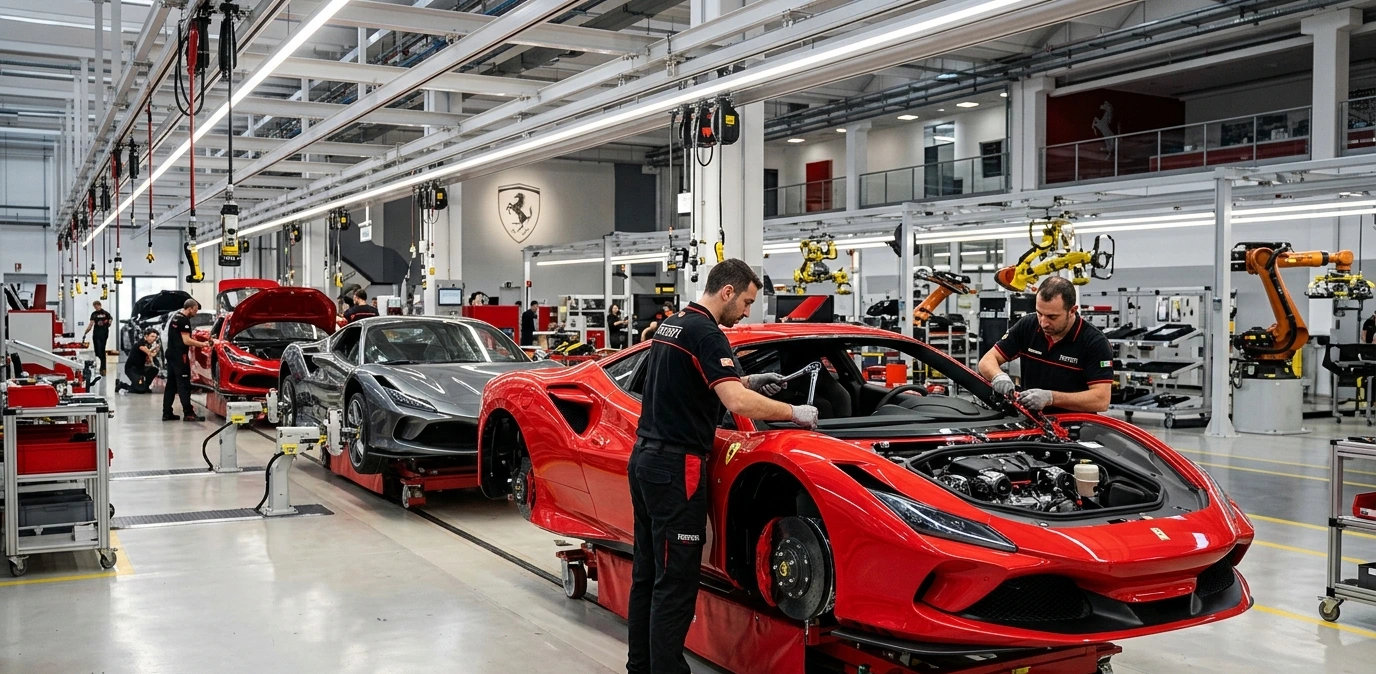
Ferrari produces fewer than 14,000 vehicles a year, and that is entirely intentional. This calculated scarcity guarantees a two-to-three-year waiting list and margins that most tech companies would envy: more than 27% EBIT margin, a world record in the automotive industry. In 2025, its revenue exceeded €7 billion. The first fully electric Ferrari is expected in 2026, a defining test for a brand that built its legend on combustion engines.
Leonardo — The quiet defence champion
Leonardo is Italy’s leading company in defence, aerospace, and security. Its areas of excellence span helicopters (the AW range, used in more than 150 countries), combat aircraft (Eurofighter), radar systems, cybersecurity, and satellites. Since the invasion of Ukraine, its order books have reached record levels in 2024–2025.
Ferrero — The chocolate champion that stays in the shadows
Ferrero is not listed on any stock exchange, and that is a deliberate choice. With 61,250 employees and a presence in 55 countries, the group is the world’s third-largest confectionery manufacturer. Nutella, Kinder, Ferrero Rocher, Tic Tac, Keebler, Fox’s Biscuits. Giovanni Ferrero received the Premio Leonardo 2025, awarded to the most influential Italian entrepreneurs on the world stage.
Prysmian — The unknown company connecting the world
You may not have heard of Prysmian, yet it is the global leader in high-voltage cables. Submarine cables, cross-border electrical interconnections, fibre-optic networks, cabling for offshore wind farms. In 2025, the group’s EBITDA grew by 28%. The energy transition and the data revolution are opening up a decade of strong growth ahead of it.
Which sectors drive the Italian economy?
Energy: the powerhouse
Energy dominates the revenue rankings: the top three places go to ENI, Enel, and GSE. Both ENI and Enel are pursuing some of the most ambitious clean-energy transitions in the global sector. Prysmian, while not a utility, benefits directly from massive investment in electricity networks and submarine cables.
Banking: the great revival
2025 marked a renaissance for Italian banking. UniCredit and Intesa Sanpaolo posted record results, carried by rising interest rates. The defining theme of 2026 is consolidation: MPS-Mediobanca, UniCredit-Commerzbank, Banco BPM — the sector is being redrawn at a European scale.
Luxury and fashion: Italy’s global soft power
Italy has more companies in the global luxury top tier than any other country. Gucci, Prada, Armani, Moncler, Versace, Brunello Cucinelli. The made-in-Italy label carries universal trust. The fashion sector accounts for 1.3% of national GDP.
Defence: the sector of the moment
The war in Ukraine and NATO’s commitment to higher defence spending have created a super-cycle of orders, and Leonardo is one of the primary beneficiaries in Europe. Fincantieri (naval shipbuilding) is riding the same tailwind.
Italy’s “hidden champions”
The Italian economy is not defined by its listed giants alone. It also rests on a dense network of small and mid-sized companies that lead their global niches:
- Barilla (Parma) — the world’s largest pasta manufacturer
- EssilorLuxottica (Milan) — the world’s largest eyewear company (Ray-Ban, Oakley, Persol)
- Technogym (Cesena) — the world’s leading professional fitness equipment brand
- Campari Group (Milan) — among the global top 5 in premium spirits
- Pirelli (Milan) — among the global top 5 in premium tyres
- Fincantieri (Trieste) — the largest Western shipbuilder
- Brunello Cucinelli (Solomeo) — global leader in luxury cashmere
- Perfetti Van Melle (Milan) — the world’s second-largest chewing gum company (Mentos, Chupa Chups)
- Stevanato Group (Padua) — global leader in pharmaceutical glass vials
- Saipem (Milan) — leader in offshore oil engineering
What makes these companies remarkable is their ability to dominate highly specific global markets from often provincial bases. That is the essence of the Italian economic model: local excellence as a launchpad for global leadership.
Best Places to Work in Italy in 2026

Knowing the biggest companies is useful. Knowing which ones offer the best working environment is even better, especially if you are considering moving to Italy and looking for a job there. Several independent rankings compile this picture each year, using different methodologies and producing complementary insights.
Great Place to Work Italia 2026 — 25 years of listening
On 19 March 2026, in Milan, Great Place to Work Italia unveiled the Best Workplaces Italia 2026 at the Teatro Alcione: the 75 best organisations to work for in Italy according to their own employees. This was the 25th edition of the ranking, involving more than 210,000 employees across 415 organisations.
The core of the methodology is the Trust Index©, an anonymous questionnaire measuring how much employees trust their employer. In 2026, the 75 awarded companies posted an average Trust Index of 85%, compared to 44% for the Italian national average. A 41-point gap that says a great deal about the divide between the best organisations and the rest of the job market.
Another striking figure: ranked companies recorded an average revenue growth of +20% compared to the previous year, versus +1% for the national average across industrial and service companies. Internal trust is not just an HR concern — it is a driver of economic performance.
The 2026 winners by category
| Category (number of employees) | 1st | 2nd | 3rd |
|---|---|---|---|
| More than 1,000 employees | Hilton (hospitality) | AbbVie (pharma) | TP (telecoms) |
| 500 to 999 employees | Cisco (IT) | Bending Spoons (IT) | ConTe.it (insurance) |
| 150 to 499 employees | MetLife (finance) | Bristol-Myers Squibb (biopharma) | Jet HR (HR Tech) |
| 50 to 149 employees | Biogen (biotech) | Galileo Life (healthcare) | Reverse SpA (HR) |
| 10 to 49 employees | Auditel (media) | Trek Bicycle (manufacturing) | ACSoftware (IT) |
What the 2026 ranking reveals
Several clear trends emerge from this edition:
- The IT sector accounts for 25.3% of the 75 awarded companies, by far the leading sector. Biotech/pharma (14.7%) and financial services/insurance (12%) follow.
- Geography is highly concentrated: 7 in 10 companies are headquartered in Lombardy (49.3%) or Lazio (22.7%). Southern Italy is almost entirely absent from the ranking.
- The Trust Index is inversely proportional to company size: smaller organisations (94%) significantly outperform large companies (79%). The smaller the organisation, the stronger the trust climate tends to be.
- In 2026, meritocracy is gaining ground (+2%), while traditional perks and flexibility have edged down slightly. What employees value most in a good employer: mutual support among colleagues (21%), atmosphere (13%), and collaboration (12%).
Italy’s Best Employers 2026 — Statista & Corriere della Sera
Alongside this, Statista publishes its annual Italy’s Best Employers ranking in partnership with Corriere della Sera, an independent survey conducted among 20,000 employees working at companies with at least 250 staff. In 2026, more than 300,000 anonymous evaluations were collected, and 450 companies were recognised.
What sets this ranking apart: employees rate not only their own employer, but also other companies in their sector, which limits the bias that comes from loyalty to one’s current workplace.
Good news for the Italian economy: the 2026 podium is entirely Italian.
| Rank | Company | Sector | Score |
|---|---|---|---|
| 🥇 1 | Lavazza | Coffee / Food | 10/10 |
| 🥈 2 | Sorgenia | Energy | Very high |
| 🥉 3 | Granarolo | Food (dairy) | Very high |
| 4 | Heineken Italia | Beverages | High |
| 5 | Fondazione IRCCS Istituto Nazionale dei Tumori | Healthcare / Research | High |
| 6 | EssilorLuxottica | Eyewear / Luxury | High |
| 7 | Bialetti | Design / Kitchenware | High |
| 8 | Novartis Italia | Pharmaceuticals | High |
| 9 | Samsung Italia | Technology | High |
| 10 | Fratelli Carli | Food (olive oil) | High |
This Statista ranking reveals an interesting pattern: Italian brands associated with food quality and craftsmanship — Lavazza, Granarolo, Bialetti, Fratelli Carli — appear prominently alongside multinational pharma and tech firms. Italians seem particularly proud to work for brands that embody made-in-Italy.
Top Employers Italia 2026 — The HR certification
The Top Employers label is a separate certification, awarded by the Top Employers Institute following a thorough audit of each company’s HR practices. In 2026, 144 companies received this certification in Italy. Among the major names:
- Generali — confirmed number one in Italy in the insurance sector
- Intesa Sanpaolo
- UniCredit
- Poste Italiane
- Terna (national electricity grid operator)
- Amplifon (global leader in audiology)
Unlike the Great Place to Work and Statista rankings, which are based on employee opinions, the Top Employers certification rests on an audit of HR policies: recruitment strategy, training, career development, diversity, and workplace wellbeing. The two approaches are complementary: one measures how employees experience their workplace from the inside, the other evaluates the employer’s practices objectively.
What these rankings tell us about the Italian job market
Taking all three sources together, a few useful conclusions emerge for anyone considering working in Italy:
- IT is the most rewarding sector: it dominates the Great Place to Work ranking and offers some of the best working conditions in the country, often with remote work options and ongoing training programmes.
- The North concentrates the best opportunities: Lombardy and Lazio are home to 72% of the awarded companies. Milan is by far Italy’s capital for quality working environments.
- Iconic Italian brands inspire pride: Lavazza, Bialetti, Granarolo — working for a brand that embodies made-in-Italy generates a strong sense of belonging among Italian employees.
- Trust matters more than perks: in 2026, traditional benefits (company cars, meal vouchers) count for less than the quality of human relationships, recognition, and workplace atmosphere. A strong signal for anyone looking to build a fulfilling career in Italy.
- Small and mid-sized companies are often better employers than large ones: Trust Index scores fall as company size grows. Italy’s SMEs frequently offer a more human and close-knit working environment than the large groups.
💡 Good to know: If you are looking for a job in Italy, the main platforms are LinkedIn, InfoJobs, Indeed, and Monster. Staffing agencies Randstad, Adecco, and Manpower also have a strong presence in the country. For IT and tech profiles, Milan-based start-ups like Bending Spoons (mobile apps) or scale-ups like Jet HR (HR Tech) offer conditions and a working culture that compete with international standards.
Frequently asked questions
Which is the largest Italian company in 2026?
It depends on the measure. By market capitalisation, it is UniCredit (more than €104 billion). By revenue, it is ENI (~€88.8 billion). By number of employees, it is Poste Italiane with 119,117 staff.
Which is the best company to work for in Italy in 2026?
According to Statista’s Italy’s Best Employers 2026 (300,000 anonymous evaluations), the best company to work for in Italy is Lavazza, which receives the maximum score of 10/10. It is followed by Sorgenia and Granarolo, making the podium entirely Italian. The Great Place to Work 2026 ranking awards Hilton in the large-company category (1,000+ employees) and Cisco in the 500–999 employee category.
Which Italian companies are in the Fortune Global 500?
Five companies incorporated under Italian law appear in the Fortune Global 500: Enel (~59th), ENI (~61st), Intesa Sanpaolo (~383rd), Assicurazioni Generali (~420th), and Poste Italiane (~450th). Stellantis and Exor, incorporated in the Netherlands, also feature thanks to their strong Italian roots.
Which sectors offer the best working conditions in Italy?
The IT sector leads the Great Place to Work 2026 ranking clearly, representing 25% of the 75 awarded companies. Pharma and biotech (14.7%) and financial services and insurance (12%) follow. These sectors stand out for greater maturity in HR policies, remote working, and continuous training.
Is Milan really Italy’s capital for quality working environments?
The numbers confirm it: 49% of the companies awarded by Great Place to Work 2026 are headquartered in Lombardy, the region of which Milan is the capital. Lombardy alone accounts for nearly half of the country’s top employers. Lazio (Rome) represents a further 22.7%. Southern Italy remains almost entirely absent from these rankings, a structural gap that reflects the country’s broader economic inequalities.
Where can I find job listings at Italy’s major companies?
Large companies post their openings on their careers pages and on LinkedIn, InfoJobs, Indeed, and Monster. Agencies Randstad, Adecco, and Manpower have a strong presence in Italy. For tech and IT profiles, Milan-based start-ups like Bending Spoons or scale-ups like Jet HR offer highly competitive conditions.