


That said, this market is largely unknown to foreign buyers and full of pitfalls for anyone who jumps in unprepared. Procedures are in Italian, a deposit is mandatory, and properties are sometimes still occupied. There is a lot to understand before placing your first bid.
This guide covers everything: how the system works, where to find properties (with links to the official portals), how to participate step by step, and which traps to avoid as an international buyer.
Contents
- What is a judicial property auction in Italy?
- The official portals for finding properties at auction
- The step-by-step process for taking part
- Fees, taxes, and costs to budget for
- Auctions by major Italian city
- Advice for foreign buyers and pitfalls to avoid
- Conclusion
- FAQ
What is a judicial property auction in Italy?

In Italy, property auctions are primarily aste giudiziarie, judicial sales carried out as part of an enforcement proceeding. In practice, these are properties seized from individuals or companies that were unable to repay their debts.
Since a 2015–2016 reform, two formats coexist:
- Vendita con incanto: an open auction held at the courthouse, with successive bids placed by attending participants.
- Vendita senza incanto (offerta telematica): a sealed written offer submitted by post or via an online platform, awarded to the highest bidder above the starting price.
Since 2018, the vast majority of judicial sales must go through telematic platforms officially approved by the Ministry of Justice. The sale no longer takes place physically at the courthouse — it happens online, which makes participation from abroad considerably more accessible.
The properties on offer are highly varied: apartments, detached houses, commercial premises, land, garages, and even entire buildings. The common thread is a starting price (base d’asta) typically set at 70–80% of the value estimated by a court-appointed expert (perito), which can drop further still if an auction receives no bids.
The official portals for finding properties at auction

This is where many foreign buyers get lost. Italy has one mandatory central portal, but also several approved platforms. Here is the full picture:
The central portal: PVP — Portale delle Vendite Pubbliche
Since November 2018, all judicial property sales must be published on the Portale delle Vendite Pubbliche (PVP), managed by the Ministry of Justice.
This is the official, non-negotiable starting point. You can search by court, by region, by property type, and by price range. Listings include a link to the telematic platform handling that specific auction.
The approved telematic platforms
Auctions take place on private platforms approved by the Ministry. The main ones are:
| Platform | URL | Notes |
|---|---|---|
| Aste Giudiziarie Inlinea | astegiudiziarie.it | One of the most widely used, clear interface |
| Aste Online | asteonline.it | Good national coverage |
| Gobid | gobid.it | Active on synchronous auctions |
| Fallco Aste | fallcoaste.it | Strong presence in northern Italy |
| Local court | (varies by city) | Some courts still publish listings on their own websites |
Our advice: always start at pvp.giustizia.it to identify properties that interest you. The portal will then redirect you to the relevant platform for that specific auction.
How to read a property listing
Every listing includes one document you cannot skip: the perizia (the court-ordered expert appraisal). This is sometimes a lengthy document (50 to 200 pages) written by an expert appointed by the court. It describes the condition of the property, its estimated value, and flags any potential issues (occupants, outstanding charges, mortgages). Never bid on a property without reading the perizia in full.
The step-by-step process for taking part in an auction

Here are the steps in chronological order, whether the auction takes place online or at the courthouse:
Step 1 — Register on the platform
Create an account on the relevant telematic platform. You will need a codice fiscale (the Italian tax identification number, obtainable free of charge from the Italian consulate or from the Agenzia delle Entrate), a valid photo ID, and an email address.
Step 2 — Pay the deposit (cauzione)
Before submitting your offer, you must pay a deposit equal to 10% of the starting price (sometimes more, as specified in the listing), by bank transfer or via the platform. This amount is returned if you are not the winning bidder, or deducted from the purchase price if you win.
Step 3 — Submit your offer
Depending on the auction format:
- Sealed offer (busta chiusa): you submit your confidential offer online before the deadline. On the day, all offers are opened simultaneously.
- Synchronous online auction: like a conventional real-time auction, with minimum increments (rilanci) set in advance.
Step 4 — Award of the bid (aggiudicazione)
If your offer is the highest, you are declared the provisional winning bidder. In a busta chiusa sale, if another bidder present at the hearing offers one sixth more than your sealed bid, an open auction can be launched on the spot. This mechanism is worth knowing about before you bid.
Step 5 — Pay the balance
You generally have 60 to 120 days to pay the remaining balance of the purchase price. Miss that deadline and you can lose both the sale and your deposit. The court then issues a decreto di trasferimento, which serves as the title deed.
Fees, taxes, and costs to budget for
The winning bid price is only part of your total outlay. Here are the cost categories to factor in from the start:
Court fees (spese di procedura)
The winning bidder must cover the costs of the enforcement proceeding (fees for the court-appointed administrator, advertising costs, etc.), which typically amount to 3–5% of the hammer price. These costs are stated in the listing.
Acquisition taxes
For an individual buyer purchasing as a primary residence (prima casa):
- Imposta di registro: 2% (prima casa) or 9% (seconda casa) on the cadastral value
- Imposta ipotecaria + catastale: €50 each (flat rate for prima casa)
If the seller is a VAT-registered company, IVA (VAT) applies instead: 4% (prima casa), 10%, or 22%.
Renovation budget
Properties sold at auction are typically sold as-is, with no guarantees. The perizia notes the defects identified by the expert, but not necessarily all of them. Budget consistently for renovation costs of 15–30% of the purchase price, depending on the property’s condition.
Additional costs
Legal or advisory fees (if you use a professional), translation costs for the perizia, international bank transfer fees, and potentially outstanding service charges left unpaid by the previous owner (capped at two years under Italian law).
Auctions by major Italian city
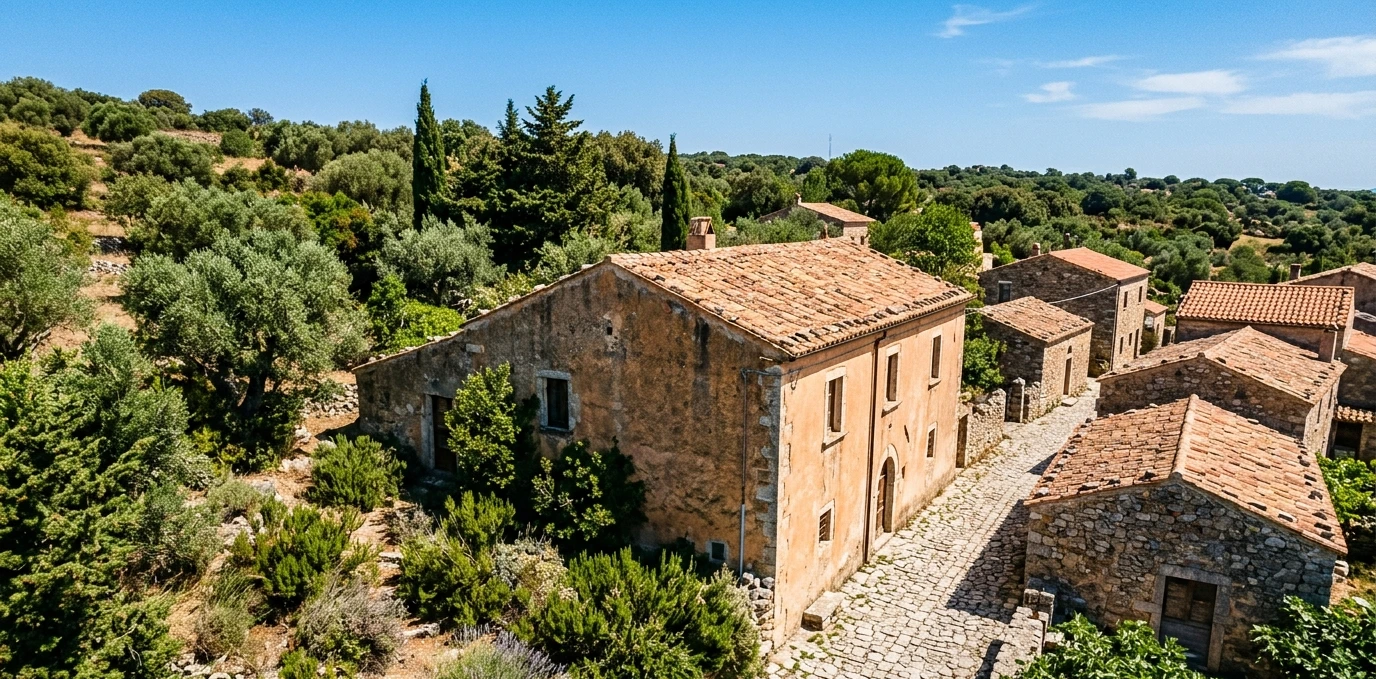
The volume and type of properties at auction vary considerably by region. Here is an overview of the main areas of opportunity:
Milan and Lombardy
The Milan courthouse is one of the most active in Italy by volume of proceedings. Properties are often apartments in outer districts or commercial premises. Starting prices remain higher than in the south, but the discounts can still be significant.
Rome and Lazio
A very active market, with properties ranging from studios to villas. Properties in peripheral areas such as Ostia, Tor Vergata, or the Via Cassia corridor sometimes offer substantial discounts. Filter by “Tribunale di Roma” on the portals.
South: Calabria, Sicily, Campania
This is where starting prices are lowest across Italy, sometimes under €30,000 for houses in depopulating rural towns. A word of caution, though: property conditions are often poor, occupation issues are more common, and local markets are less liquid if you ever want to resell. The courts of Catanzaro, Palermo, Naples, and Salerno are the most active in the south.
Turin, Bologna, Venice
Mid-tier markets that offer a good balance between price levels and property quality. Turin in particular sees a high volume of judicial sales in working-class neighbourhoods currently undergoing regeneration.
Advice for foreign buyers and pitfalls to avoid
Buying at auction in Italy as a foreign national is entirely possible, but several specific points need to be thought through in advance.
What to do first
- Get your codice fiscale: this is required for any property transaction in Italy. Apply through the Italian embassy or consulate in your country, or directly at the Agenzia delle Entrate if you are already in Italy.
- Read the perizia: all of it. Have it translated if needed. It is the only due diligence available to you before bidding.
- Visit the property: request a viewing through the custode giudiziario (the court-appointed property guardian). This is a legal right, and one that many buyers do not know they have.
- Get professional support: a specialist lawyer (avvocato) or an aste giudiziarie advisor can guide you through the process for €500 to €2,000 depending on complexity.
Common pitfalls
- The property is still occupied: the previous owner or a tenant may still be living there. The court will order them to leave, but the process can take months. Check this in the perizia.
- Outstanding service charges: the winning bidder takes on any unpaid condominium fees up to a two-year limit. Beyond that, the liability falls on the enforcement proceeding — but verify that this is clearly stated.
- Residual mortgages: buying through a judicial auction in principle “purges” existing mortgages, but certain real rights can survive. A legal eye is valuable here.
- Underestimating renovation costs: the perizia can be optimistic about the actual condition of the property. If you cannot visit in person, budget generously.
Conclusion
Judicial property auctions in Italy represent a genuine opportunity for anyone who takes the time to understand the system. The process is now largely digital, the official portals are open to everyone, and there is nothing that formally prevents a foreign national from taking part.
But that accessibility should not obscure the underlying complexity: documents are in Italian, legal traps are real, and your commitment is financially binding the moment the bid is awarded. The bottom line: prepare as thoroughly as you would for a conventional property purchase, and then some.
Start by exploring pvp.giustizia.it to get familiar with listings in the regions that interest you, read through a few perizie to understand how they are structured, and if a property genuinely catches your attention, bring in a professional for your first auction. It is the most worthwhile investment you can make.
FAQ — Your questions about buying property at auction in Italy
Can you buy a property at auction in Italy without speaking Italian?
Yes, technically. The telematic platforms operate in Italian, but most are intuitive enough to navigate even without fluency. The perizia, however, is always in Italian and can contain complex legal terminology. If you are not confident reading Italian, having it translated or working with a bilingual professional is strongly advisable. That is where the information that matters most is hidden.
Is it possible to finance an auction purchase with a mortgage?
In theory yes, in practice it is difficult. Italian banks are reluctant to approve a loan on a property you do not yet own, and the balance payment deadlines (60 to 120 days) leave little room for manoeuvre. Some lenders offer specific products known as mutui per aste. In practice, many auction buyers come with personal funds or an existing credit line already arranged before they bid.
What happens if no one bids in an auction?
The auction is declared void (asta deserta). The judge then schedules a new auction with a starting price reduced by around 25% compared to the previous one. This can happen several times, which is why some properties end up selling for well below their original estimated value. Tracking properties that have already gone unsold more than once can be a worthwhile strategy.