


You’ve been dreaming of swapping grey winters for the dolce vita. But before you pack your bags, one question needs a real answer: how much does it actually cost to live in Italy? Cheaper than most Western European countries, people say. The truth is more nuanced — and more interesting. From renting a flat in Rome to shopping at a Sicilian market, from health insurance to gas bills, this guide gives you concrete figures to build a realistic monthly expat budget for Italy, with no nasty surprises.
Whether you’re planning to settle in Milan, work remotely from Tuscany, or retire in Calabria, the financial realities vary enormously. Here’s what you actually need to know.
The cost of housing in Italy: renting or buying?

Housing is the single biggest expense for any expat, and Italy is no different. The good news is that rents are generally lower than in most major Western European cities — provided you choose your location wisely.
In Milan, Italy’s economic capital, expect to pay between €1,000 and €1,600 per month for a one-bedroom apartment in the city centre. Rome comes in slightly lower: budget between €900 and €1,400 for a well-located studio. Cities like Naples, Palermo and Bari, on the other hand, offer far more affordable rents: €400 to €700 for a decent-sized apartment.
The north-south divide is very pronounced here. The Mezzogiorno — southern Italy — remains significantly cheaper, sometimes two to three times less expensive than northern cities such as Turin or Bologna.
On top of rent, there are additional costs worth factoring in: building maintenance fees (condominio), a waste disposal tax (TARI), and agency fees that typically amount to one month’s rent. Security deposits are usually two to three months’ rent.
Food and groceries: what does daily life cost?

This is one of the most enjoyable aspects of life in Italy: eating well without spending a fortune is entirely achievable. The country has a dense network of local markets where fresh produce — tomatoes, aubergines, cheeses, cured meats — is sold at very competitive prices.
A single person can get by on €250 to €350 per month on groceries by favouring local markets and neighbourhood shops over supermarkets. A couple on a sensible budget will typically spend between €400 and €550.
Eating out is affordable too. A weekday lunch at a trattoria or a local pizzeria runs around €10 to €15 per person. Dinner at a standard restaurant costs between €20 and €35. A morning caffè at the counter? Under €1.50 almost anywhere in the country.
Transport, healthcare and bills: the costs people forget
These expenses often fly under the radar when planning a move abroad — yet they add up quickly.
Transport: In cities with a metro or tram network (Milan, Rome, Naples), a monthly pass costs between €35 and €55. Owning a car in Italy, by contrast, can get expensive: insurance, fuel (often high by European standards), motorway tolls and city-centre parking all push costs up rapidly.
Healthcare: Italy has a public healthcare system, the Servizio Sanitario Nazionale (SSN). Once registered, basic care is very accessible. In practice, many expats choose to take out supplementary private health insurance to get faster access to specialists. Expect to pay between €50 and €150 per month depending on your profile and level of cover.
Bills: Electricity, gas and internet combined typically come to €150 to €220 per month for a standard apartment. In summer, air conditioning can push the electricity bill noticeably higher. Fixed-line broadband is good quality in cities and costs around €25 to €35 per month.
Monthly budget for an expat in Italy: what to realistically expect
Here is an honest set of estimates by profile, shown excluding rent so you can apply your own housing figure depending on where you settle:
| Profile | Budget excl. rent | Estimated rent | Monthly total |
|---|---|---|---|
| Single person (mid-size city) | €700 – €900 | €450 – €700 | €1,150 – €1,600 |
| Single person (major northern city) | €900 – €1,200 | €900 – €1,400 | €1,800 – €2,600 |
| Couple (south or rural area) | €1,100 – €1,400 | €400 – €650 | €1,500 – €2,050 |
| Family (2 adults + 1 child) | €1,800 – €2,400 | €800 – €1,300 | €2,600 – €3,700 |
These estimates include food, transport, healthcare, bills, moderate leisure and miscellaneous costs. They exclude savings, one-off expenses and school fees for children.
Is Italy actually cheaper to live in?
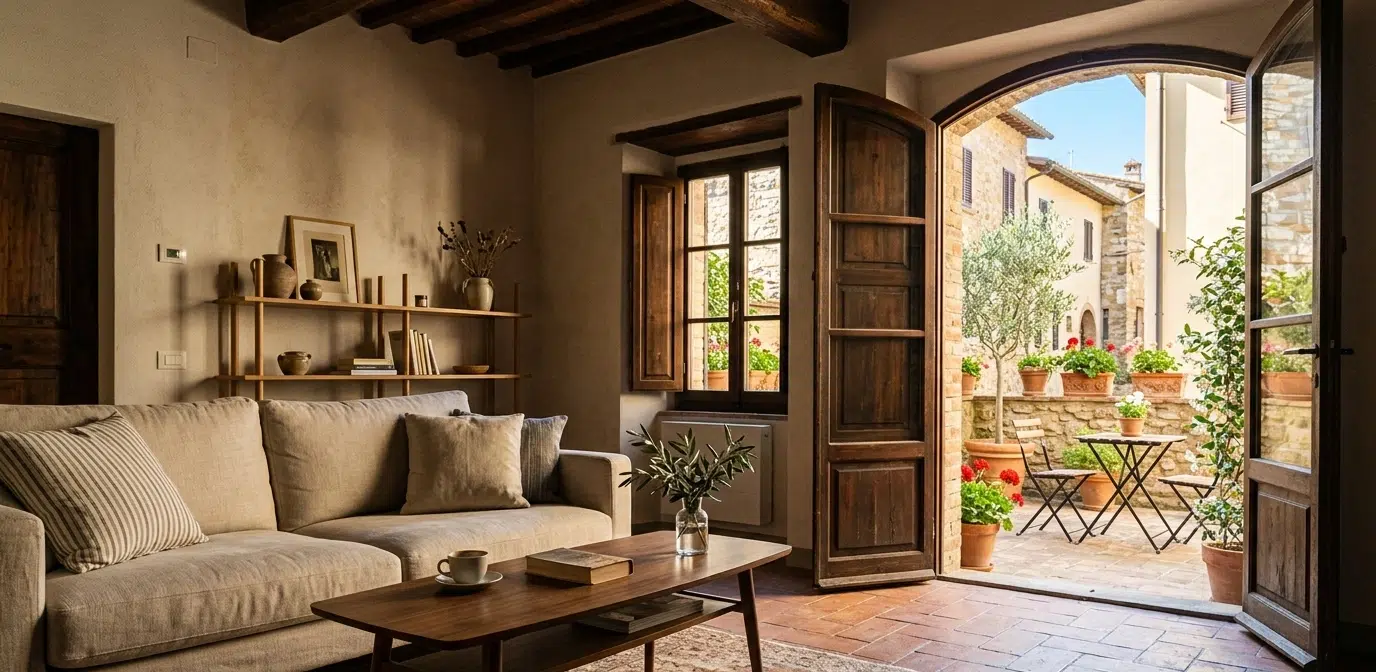
The short answer: yes, broadly — but not everywhere and not across the board.
Italy is clearly advantageous when it comes to housing outside the major cities, food, everyday dining and public transport. A comparable apartment often costs 20 to 40% less in Rome than in London or Paris, and up to 60% less in the south.
Some costs can catch people off guard, however. Italian income tax is high for residents (though attractive flat-rate regimes such as the “new residents” scheme may apply in your situation), and Italian salaries tend to be lower than equivalent salaries elsewhere in Western Europe. If you earn income in a stronger currency, work remotely for an overseas employer, or receive a pension from abroad, you start from a very favourable position.
The cities that tend to offer the best overall value for expats: Bologna, Florence, Bari and Salerno — a solid balance of infrastructure quality, cultural energy and reasonable prices.
Leisure, culture and going out: budgeting for the good life
One of Italy’s less obvious advantages is that cultural richness is often available at very little cost. Many museums offer reduced admission or free entry on the first Sunday of the month, including major national sites such as the Vatican Museums and the Uffizi in Florence.
A gym or fitness club membership runs to €30 to €60 per month depending on the city. Outdoor activities — hiking, beaches, cycling — are free and extraordinarily accessible across almost the entire country.
Travelling within Italy is made easy by a dense rail network and several low-cost carriers. A high-speed Frecciarossa train ticket from Milan to Naples costs between €30 and €80 depending on how far in advance you book. Flights from Italian airports to other European destinations are competitively priced.
With a budget of around €150 to €300 per month for leisure, culture and social life, you can enjoy everything Italy has to offer without feeling you’re holding back.
Conclusion
Living in Italy costs less than in most comparable Western European countries — that holds true in the majority of cases, but the savings depend heavily on where you settle and how you live. The real draw of Italy goes beyond the financial side: it is the quality of life, the food culture, the history layered into everyday surroundings, and the warmth of the people that make the difference.
If you have a stable income in euros — whether you are a remote worker, a retiree, or a freelancer — Italy can give you significantly more purchasing power than you might have at home, particularly in central and southern regions.
One practical suggestion: before committing to a full relocation, spend one to three months living in the area that interests you. Testing your actual spending habits on the ground is worth more than any estimate.