

 Year-round sunshine, world-class cuisine, and the art of living well — Italy captures the imagination of millions. But beyond the lifestyle appeal, it also offers genuinely attractive tax and administrative conditions for foreign retirees. A 7% flat tax, European health coverage, and a cost of living that is often significantly lower than major Western European cities — the case for retiring in Italy is solid. What you need is a clear picture of how to make it happen. This guide walks you through everything, step by step.
Why choose Italy for retirement?

Italy is not just a beautiful holiday destination — it is one of the most welcoming countries in Europe for foreign retirees, provided you choose the right region and understand the rules.
The cost of living is on average 15 to 25% lower than in major Western European cities, particularly in southern regions such as Sicily, Calabria, Puglia, and Sardinia. An 80 m² apartment in the centre of Catania or Lecce often costs less than €700 per month including bills. Food, restaurants, and local transport remain very affordable.
On the administrative side, EU citizens benefit from freedom of movement within the European Union. No visa, no quota. You settle in, register with the local municipality (Comune), and become a resident. The process is simple, though it does trigger tax obligations that are worth planning for in advance.
And the quality of life speaks for itself: UNESCO heritage sites, coastlines, mountains, medieval villages, and a culture that permeates everyday life. Italy offers a standard of living that is hard to match anywhere in Europe.
The 7% flat tax: the tax advantage that changes everything
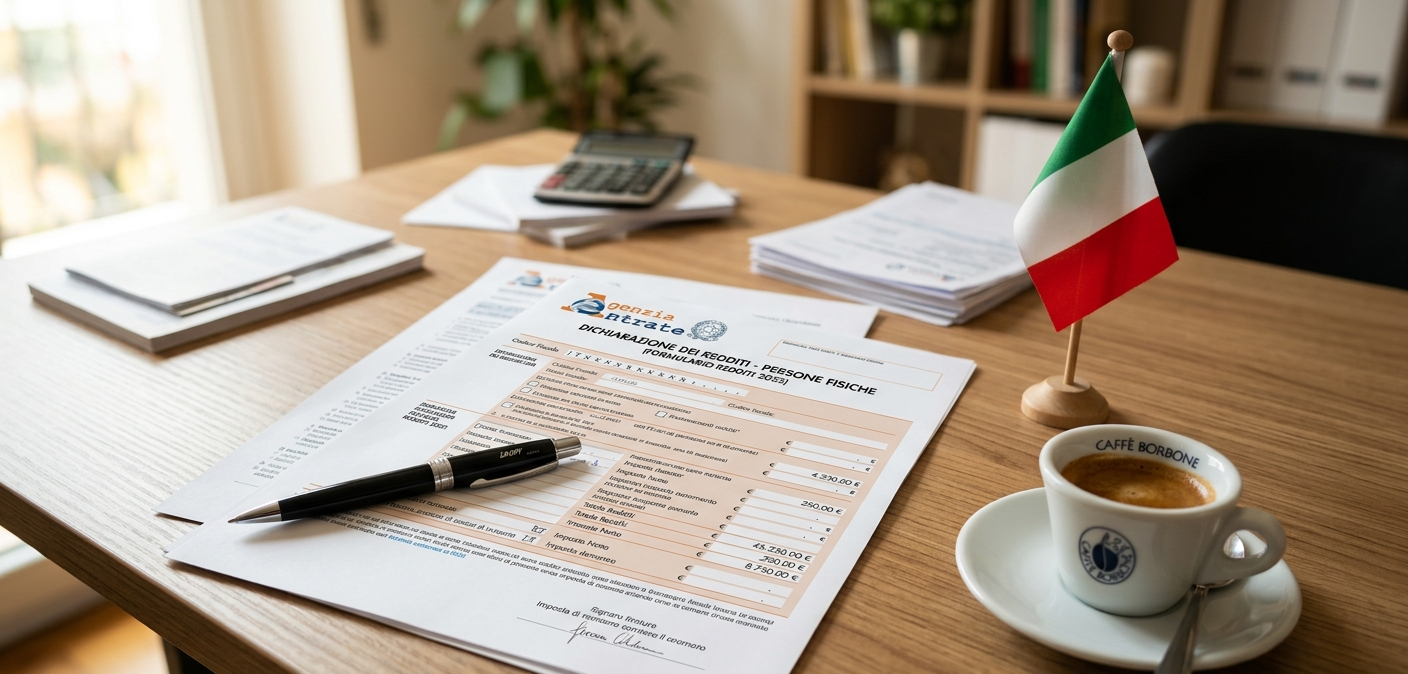
This is arguably the most compelling reason for foreign retirees to consider Italy. Since 2019, Italy has offered an exceptional tax regime known as the 7% flat tax (Article 24-ter of the TUIR), designed specifically for retirees receiving income from foreign sources.
How does this regime work?
If you are a retiree receiving a pension from abroad and you decide to settle in an eligible Italian municipality of fewer than 20,000 inhabitants — mainly in the southern regions (Sicily, Sardinia, Calabria, Campania, Basilicata, Molise, Puglia, Abruzzo) — you can opt into this regime and pay a flat tax of just 7% on all your foreign income, regardless of its nature: pension, rental income from abroad, dividends, and so on.
What are the conditions?
- You must not have been a tax resident in Italy during the five years prior to your application
- You must settle in a municipality of fewer than 20,000 inhabitants in one of the eligible regions
- You must apply when filing your first Italian tax return (Modello 730 or Redditi PF)
- The regime is valid for 10 years, renewable under certain conditions
What does this mean in practice?
In many European countries, a monthly pension of €2,500 gross is subject to progressive income tax, which can reach 30% or more. With Italy’s 7% flat tax, the saving is considerable. Over a full year, a retiree receiving €30,000 gross could save several thousand euros compared to standard taxation.
Important: Italy has signed bilateral tax treaties with many countries, including France, the UK, and others. Once you become a tax resident in Italy, you will generally no longer pay income tax in your home country on your pension — though exceptions exist (civil servants and certain public sector pensioners, for example, may remain taxable in their country of origin).
There can also be situations of double taxation depending on your specific circumstances, which is why consulting a specialist tax adviser before making any decision is strongly recommended.
Taxes in Italy: what you need to know
Beyond the flat tax, understanding the Italian tax system as a whole will help you avoid unwelcome surprises. Here are the main taxes you may be subject to as a retired resident in Italy.
IRPEF (income tax)
If you do not opt for the 7% flat tax, your income will be subject to the IRPEF (Imposta sul Reddito delle Persone Fisiche), Italy’s personal income tax. It is progressive, with rates ranging from 23% to 43%. For the vast majority of retirees, the flat tax is therefore far more advantageous.
IMU (property tax)
If you purchase a property in Italy, you will be liable for the IMU (Imposta Municipale Propria), Italy’s local property tax. The rate varies by municipality (between 0.4% and 1.06% of the cadastral value). The good news is that if the property is your primary residence (prima casa), you are exempt.
VAT (IVA)
The standard VAT rate in Italy is 22%, with reduced rates of 10% (restaurants, hotels) and 4% (basic food products). Nothing particularly unusual for a retiree, but worth knowing.
Dual tax residency: a risk to manage
If you keep a home in your country of origin while living primarily in Italy, you must clearly establish your tax residency. Tax authorities in your home country may challenge your departure if you maintain strong ties there (family, bank accounts, business activities). The 183-day rule (spending more than half the year in Italy) is one key criterion, but not the only one.
Form S1: your gateway to healthcare in Italy

One of the most common questions from future expat retirees is: “Will I be covered for healthcare in Italy?” The answer is yes — provided you complete the right steps before you leave.
What is Form S1?
Form S1 (formerly E121) is a European document that allows a retiree to access healthcare in their country of residence — in this case Italy — at the expense of the country where they are insured. In practice, you live in Italy, you are treated within the Italian public health system (Servizio Sanitario Nazionale, SSN), and the costs are reimbursed by your home country’s health insurance authority to the corresponding Italian body.
How do you obtain Form S1?
- Contact your national health insurance authority before leaving and notify them of your move to Italy
- Formally request Form S1 (the healthcare liaison document for living abroad)
- Once obtained, submit it to the ASL (Azienda Sanitaria Locale) in your Italian municipality
- You will then be registered in the SSN and can choose a GP (medico di base)
Who is eligible?
Any retiree receiving a state or occupational pension from an EU member country. Dependent spouses can also benefit from coverage through the pension holder’s S1.
Practical tip: do not wait until you have arrived in Italy to start this process. Begin at least 3 months before your departure, as administrative timelines can vary.
Healthcare in Italy: how it works for a foreign retiree
Once your Form S1 has been registered with the local ASL, you are enrolled in the Servizio Sanitario Nazionale (SSN), Italy’s public health system. Here is what that means in practice.
Your GP (medico di base)
As in most European countries, you register with a family doctor in Italy. They will refer you to specialists, write prescriptions, and manage your ongoing care. Consultations with your GP are free of charge for SSN members.
Specialists and tests
To see a specialist or have tests carried out, you will need a referral from your GP. A co-payment (ticket sanitario) may apply — generally between €20 and €50. Retirees on lower incomes may qualify for exemptions (esenzioni).
Medications
Essential medicines are partially or fully reimbursed depending on their classification (class A, B, or C). A co-payment may apply depending on your region and personal situation.
Do you need supplementary private health insurance?
The SSN provides solid coverage, and in practice relatively few people in Italy take out private health insurance, since the public system already functions as a fairly comprehensive safety net.
That said, some expats choose to take out an international health policy to access private care more quickly and with greater flexibility. Providers such as April Expat, AXA International, and Cigna offer plans tailored to European retirees.
Checklist: preparing your retirement in Italy, step by step
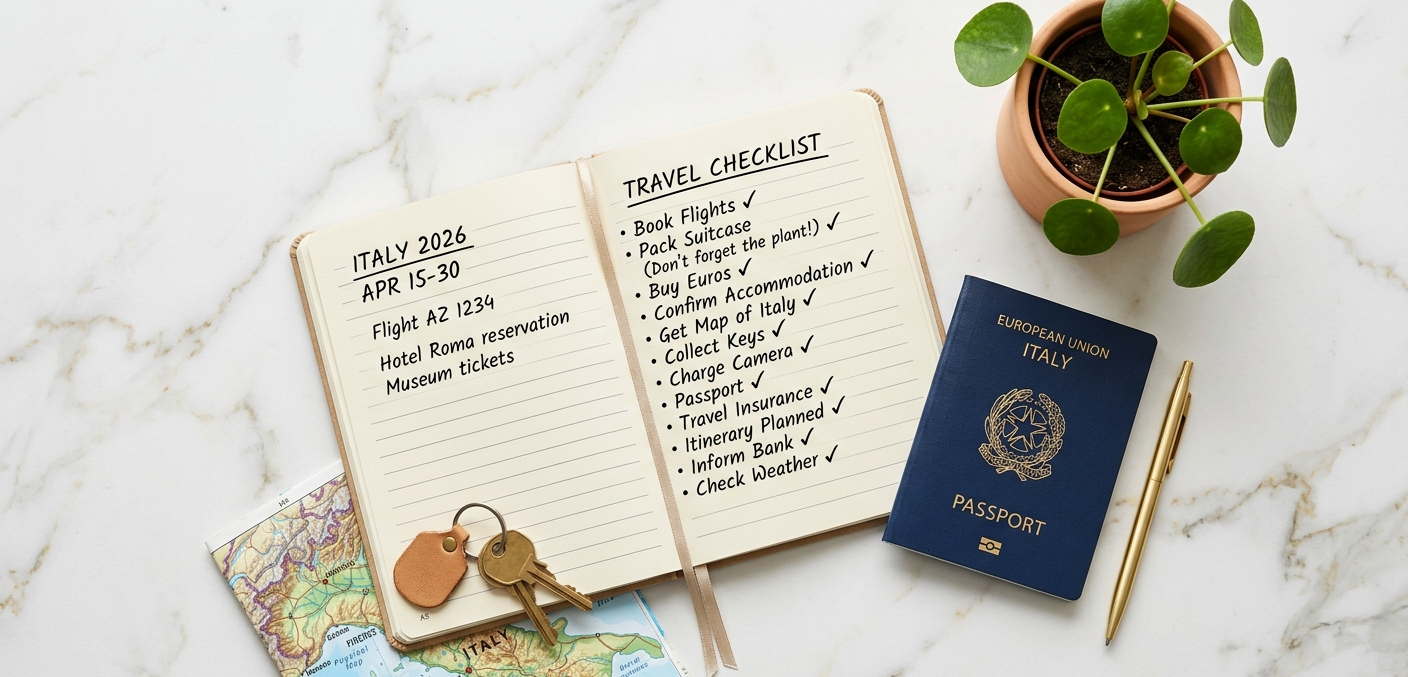
Here is a practical list of the key steps to organise your move to Italy without unnecessary stress.
6 to 12 months before departure
- ☐ Choose your region and municipality (does it qualify for the flat tax?)
- ☐ Consult a specialist cross-border tax adviser to review your situation
- ☐ Check the relevant bilateral tax treaty for your type of pension
- ☐ Estimate your monthly budget in Italy (housing, food, healthcare, leisure)
- ☐ Plan one or more scouting trips to your chosen area
3 to 6 months before departure
- ☐ Contact your national health insurance authority to request Form S1
- ☐ Notify your pension provider of your forthcoming change of residence
- ☐ Obtain your codice fiscale (Italian tax identification number) from the Italian consulate in your country
- ☐ Plan the sale or rental of your current property if applicable
On arrival in Italy
- ☐ Register at the anagrafe (population register) of your municipality
- ☐ Submit Form S1 to the local ASL
- ☐ Open an Italian bank account
- ☐ Register with a GP (medico di base)
- ☐ Notify your home country’s tax authority of your change of residence
- ☐ Take out home insurance and, if you wish, an international health policy
- ☐ Register your address at your home country’s consulate in Italy (recommended)
First year of residence
- ☐ File your first Italian tax return and opt for the 7% flat tax if eligible
- ☐ Confirm that your pension payments are reaching your Italian bank account
- ☐ Engage a commercialista (Italian accountant) for your ongoing annual tax affairs
Conclusion
Retiring in Italy is far more than a lifestyle choice — for many foreign retirees, it can be highly advantageous both financially and in terms of healthcare access. The 7% flat tax, access to the public health system via Form S1, and a moderate cost of living across many regions all represent real, concrete benefits.
To make the most of them, preparation is everything. The earlier you start — working with the right advisers, completing the steps in the right order — the smoother your move will be. La dolce vita is not something you improvise; it is something you plan for.
The most important thing to take away: begin the process at least six months before your departure, and work with a specialist tax adviser who is familiar with both your home country and Italy. It is the most valuable investment you can make before settling under the Italian sun.
FAQ — Retiring in Italy
Will I still have to pay income tax in my home country once I am a resident in Italy?
In most cases, no. Italy’s bilateral tax treaties with many countries — including France and the UK — generally provide that private pensions (occupational and supplementary) are taxable only in the country of residence. However, civil service and certain public sector pensions may remain taxable in your home country even if you live in Italy. Consult a tax adviser to understand your specific situation.
Can I benefit from the 7% flat tax if I live in a large city like Rome or Milan?
No. This regime is reserved for municipalities of fewer than 20,000 inhabitants, located in specific southern regions of Italy (Sicily, Sardinia, Calabria, Campania, Basilicata, Molise, Puglia, Abruzzo). If you choose to settle in Rome, Milan, or Florence, you will be subject to the standard IRPEF regime.
Can my spouse be covered by the Italian health system through my Form S1?
Yes, under certain conditions. A dependent spouse (with no pension entitlement of their own and not in employment) can be added to your Form S1 and benefit from SSN coverage. If your spouse receives their own pension from their home country, they will need to apply for their own Form S1 through their national health insurance authority.