

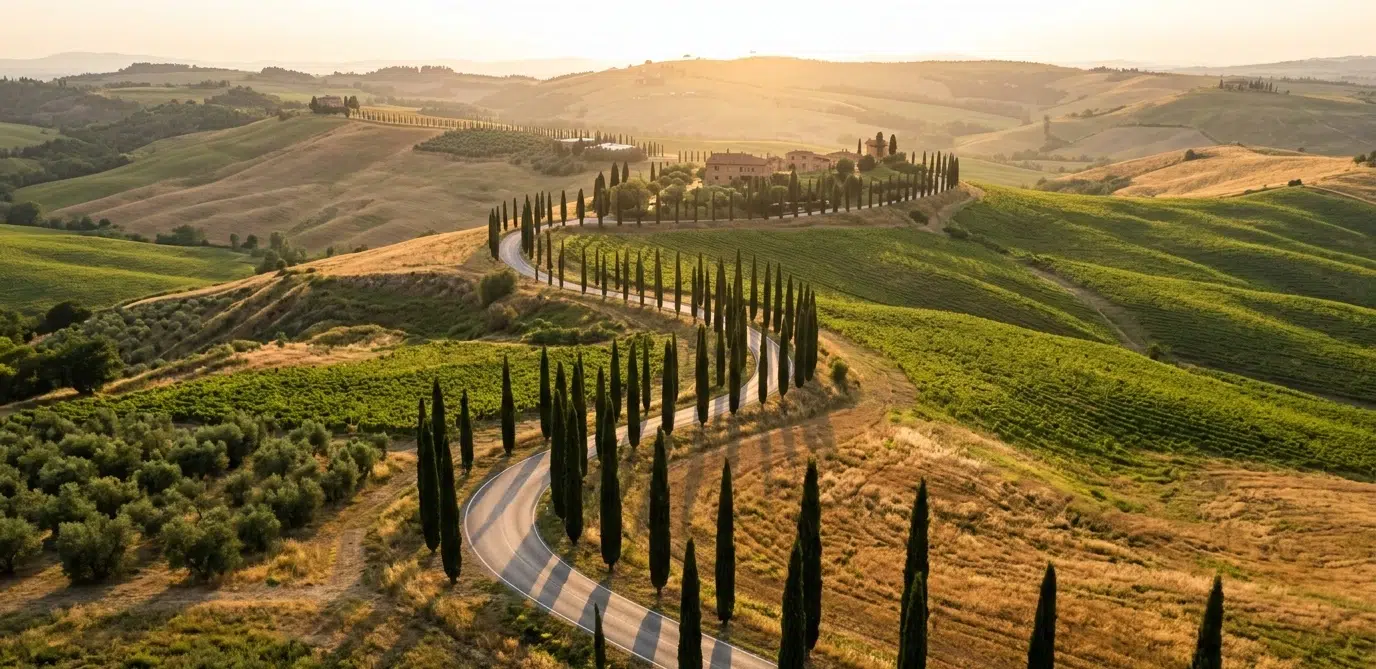
Tuscany is one of Italy’s most visited regions, yet its most authentic treasures — Montalcino, Pitigliano, the Chianti roads — remain out of reach without a vehicle. Whether you fly into Florence, Pisa, or Siena, picking up a rental car on arrival can completely transform your trip.
This guide covers everything you need to know: where to rent, how much to budget, which rules to follow, and how to avoid the most common pitfalls. Whether you’re visiting for a holiday or scouting the region ahead of a move, read on.
Why renting a car in Tuscany is (almost) a must
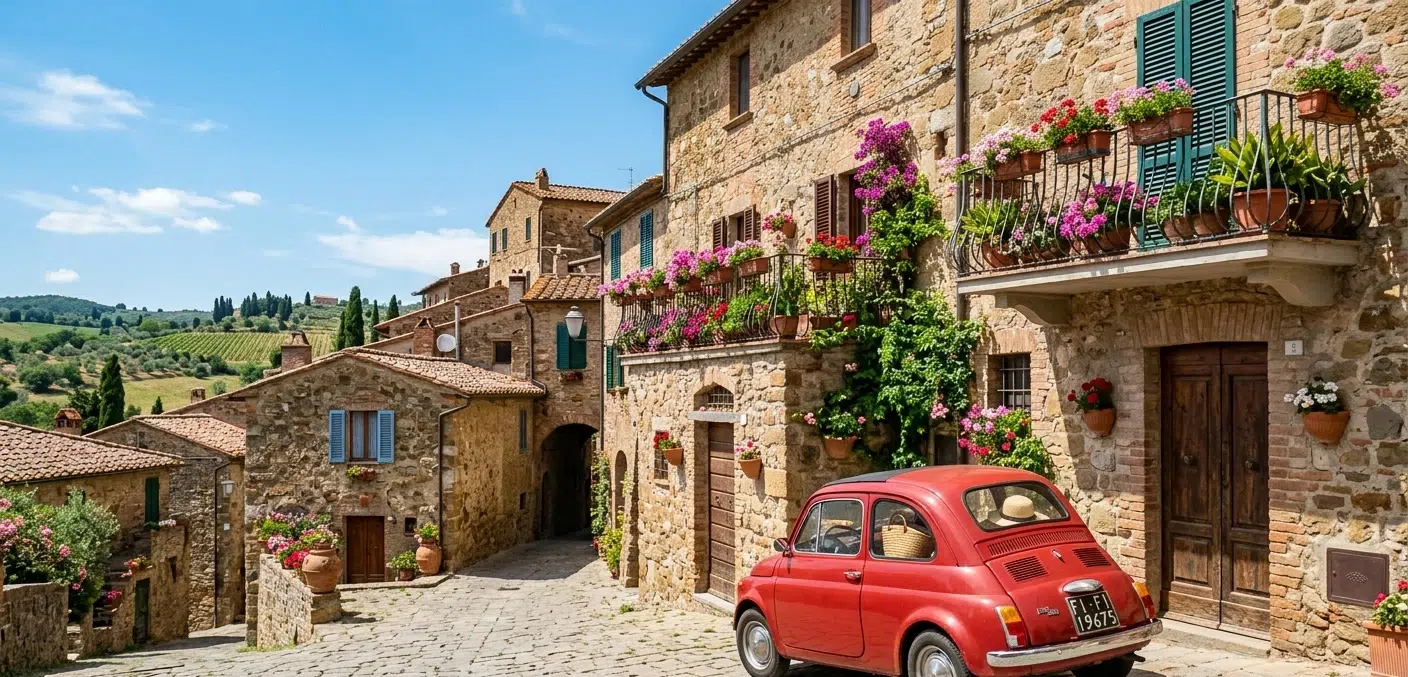
Tuscany has a paradox at its heart: it’s a breathtaking region, yet public transport outside the main cities is genuinely poor. Florence, Siena, and Pisa are well connected by train. But Volterra, San Gimignano, Montepulciano, or the Chianti wine roads? Getting there means relying on infrequent local buses that run even less often out of season.
With a rental car in Tuscany, you gain:
- The freedom to set off at dawn before the tour coaches arrive
- Access to agriturismi and countryside hotels well off the beaten path
- The ability to pull over at viewpoints that don’t appear on any map
- Real comfort for families or anyone travelling with luggage
It’s one of the first things expats who have settled in Tuscany tend to say: “Forget the shuttles, get a car on day one.”
Where to rent a car in Tuscany: the best options
You can rent a car in Tuscany at three main types of location: airports, train stations, and city-centre agencies. Each has its advantages.
At Florence Airport (Amerigo Vespucci) or Pisa Airport (Galileo Galilei)
This is the most convenient option if you’re flying directly into Italy. All the major names are represented: Hertz, Avis, Europcar, Sixt, Goldcar, Maggiore. Book well in advance, especially during peak season (June to August), as availability disappears quickly.
At Florence Santa Maria Novella train station
If you’re arriving by train from elsewhere in Europe, Florence’s main station is a natural hub. Several agencies are within walking distance or offer a shuttle from the platforms.
Through online comparison sites
To rent a car in Italy at the best price, use comparison platforms such as Rentalcars.com, DiscoverCars, or AutoEurope. These aggregate offers from dozens of local and international agencies, often at rates 30 to 40% lower than booking direct.
Prices and budget: how much does renting a car in Tuscany cost?
Rates vary considerably depending on the season, vehicle type, and agency. Here is a realistic range for 2025:
| Vehicle category | Low season (Oct–Apr) | High season (Jun–Aug) |
|---|---|---|
| City car (Fiat 500, Panda) | €25–40/day | €45–70/day |
| Compact (VW Golf, Opel Astra) | €35–55/day | €60–90/day |
| SUV / Estate | €50–80/day | €90–130/day |
On top of these rates, factor in:
- Supplementary insurance (CDW/Super CDW): €8 to €20/day — often included if you pay with certain premium Visa or Gold credit cards
- GPS: €5 to €10/day (better to use your smartphone with Google Maps downloaded offline)
- Child seat: €5 to €15/day if needed
- Motorway tolls (autostrade): budget €10 to €20 to cross Tuscany by motorway
For a week in a compact car in July with insurance included, allow a total budget of €450 to €650 all in.
Rules of the road in Italy (and how to avoid fines)
Driving in Italy is generally straightforward for visitors from countries where traffic flows on the right. Your standard driving licence is valid throughout Italy if you hold one issued by an EU member state. Drivers from outside the EU should check whether an International Driving Permit is required. Either way, a few Italian-specific rules are worth knowing before you set off.
ZTL zones: the main source of fines for tourists
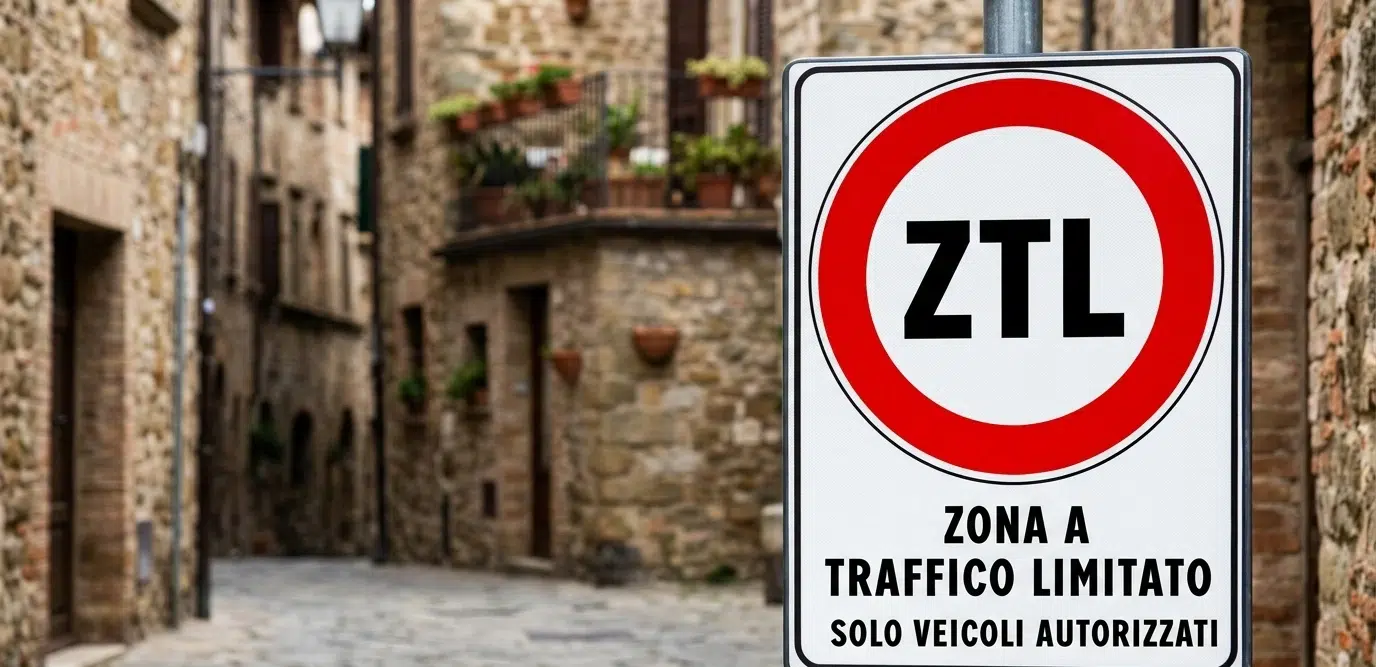
ZTL (Zona a Traffico Limitato) zones are restricted traffic areas in historic city centres, marked by a round white sign with a red border. Entering a ZTL without authorisation means a fine of €70 to €150, which can arrive at your home address several months later via the rental agency.
In Florence, Siena, Lucca, and San Gimignano, these zones are extensive. Always park at the edge of town and continue on foot.
Speed limits
- In built-up areas: 50 km/h
- Outside built-up areas: 90 km/h
- On motorways: 130 km/h (110 km/h in rain)
Other points to know
- Dipped headlights are compulsory during the day outside built-up areas
- A high-visibility vest and warning triangle must be kept in the car
- Mobile phone use at the wheel carries a heavy fine and penalty points
- Blood alcohol limit: 0.5 g/L
The best driving routes in Tuscany
This is where having a car really comes into its own. Here are three unmissable routes that simply cannot be done any other way.
The Chianti Wine Road (Strada del Vino)
Running from Florence to Siena, the SR222 winds through the Chianti Classico vineyards. Set aside a full day to enjoy wine tastings in Greve in Chianti, the medieval villages of Radda and Gaiole, and the sweeping views across the hills. It ranks among the most beautiful road trips in Europe.
The southern Via Francigena: Val d’Orcia and Montalcino
Heading south from Siena, you enter the Val d’Orcia, a UNESCO World Heritage landscape. Stop at Pienza, Montalcino (home of the Brunello wine), and Bagno Vignoni with its open-air thermal pool. This two-day loop is particularly rewarding in autumn, when the light turns golden and the crowds thin out.
The Maremma and its wild beaches
Less well known, the Tuscan Maremma in the south surprises visitors with its untamed landscapes, its cattle-herding horsemen (the butteri), and its unspoilt coastline. Grosseto, Pitigliano, Sovana, and Saturnia (with its free natural hot springs) make up a route well off the tourist trail, ideal for those returning to Tuscany for a second or third visit.
6 practical tips for renting a car in Tuscany without any nasty surprises
- Book at least 3 to 4 weeks ahead during high season — prices often double in the week before departure.
- Check your credit card coverage: some premium Visa and similar cards include CDW insurance, saving you €15/day or more.
- Photograph the car from every angle before driving away — if there’s a dispute about scratches, you’ll have proof.
- Download Google Maps offline for the Tuscany region before you leave — mobile coverage in valleys and along country roads can be patchy.
- Never drive into historic city centres — ZTL zones are standard across Tuscan towns.
- Go for a small or compact car — Tuscan country roads can be very narrow. An SUV can be more of a hindrance than a help.
Conclusion
Renting a car in Tuscany is far more than a practical decision: it’s a way of experiencing the region on its own terms. The winding roads through the vineyards, the hilltop villages, the agriturismi tucked away in oak forests — all of it is only accessible to those who take the wheel.
Book early through a reliable comparison site, check your insurance coverage, get familiar with the ZTL rules, and set off without worry. Tuscany is waiting for you, and it looks far better from a narrow country lane than from the window of a tour bus.
One recommendation above all: if there’s one thing to sort out before your trip, it’s booking your car. Everything else can take care of itself.
FAQ – Your questions about renting a car in Tuscany
Do I need an international driving licence to rent a car in Tuscany?
Not if you hold a driving licence issued by an EU member state — it is fully valid throughout Italy. An international driving permit is only required for drivers from outside the EU. Make sure to bring your licence along with a valid passport or national ID.
What is the best time of year to rent a car in Tuscany?
Spring (April to June) and autumn (September to October) are the sweet spots: prices are lower than in summer, the light is beautiful, and tourist numbers are manageable. July and August are still perfectly doable, but rental rates peak, roads get busy, and the heat can be intense.
Can I rent a car in Tuscany and return it in a different Italian city?
Yes, most agencies offer one-way rentals. Picking up in Florence and dropping off in Rome or Naples, for example, is entirely possible. A drop-off fee usually applies — typically between €50 and €150 depending on the agency and the distance involved. Check this option when booking online.