ZTL in Italy: how to avoid fines in 2026
ZTLs in Italy can lead to hefty fines for tourists. Learn how to avoid violations while traveling in 2026.

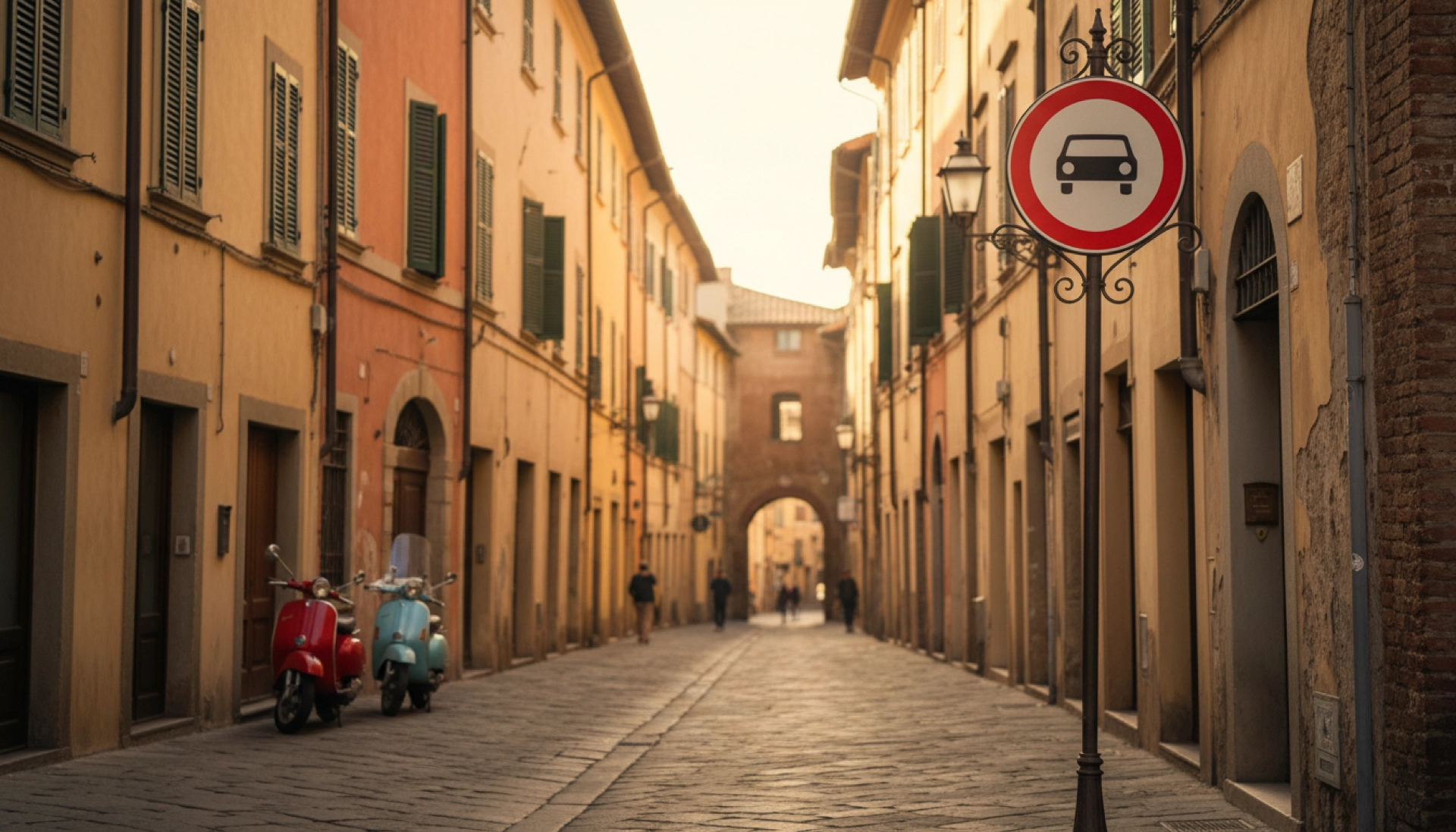 If you’re planning a road trip in Italy, ZTLs could become your worst nightmare… or just a minor formality if you’re well informed. Limited traffic zones (Zona a Traffico Limitato) grid the historic centres of almost every Italian city, and each unauthorized entry can cost you. Here is our complete guide to the ZTLs in Italy so you can travel with peace of mind in 2026.
Contents
What is a ZTL in Italy? Definition and overview
The acronym ZTL stands for Zona a Traffico Limitato, literally “limited traffic zone.” These are urban areas where motor traffic is restricted or completely prohibited for unauthorized vehicles during certain time windows. The goal is simple: protect Italy’s historic centres from pollution, noise and traffic congestion.
ZTLs in Italy exist in almost every medium to large town. From major cities like Rome and Florence to small medieval Tuscan towns, few downtowns lack at least one ZTL. This dense network is a specifically Italian feature not found at the same scale elsewhere in Europe.
How do you spot them on the ground? The signage is standard: a white round sign with a red border, accompanied by the mention “ZTL” or “Zona Traffico Limitato” and the activation hours. Often, an electronic sign indicates in real time whether the zone is active ("attivo") or inactive ("non attivo").
Be careful not to confuse ZTLs with two other types of areas. Pedestrian zones (Zona Pedonale) ban motor traffic entirely, with no time exceptions. Low-emission zones (ZFE, or LEZ in English) restrict access based on a vehicle’s emissions standard, not generally by time. A ZTL applies to all unauthorized vehicles regardless of their emission level.
How ZTLs work in Italy: hours, cameras and permits
ZTL enforcement in Italy relies on a simple but highly effective principle: automatic cameras record every vehicle entering the zone, and if your plate isn’t registered in the authorised vehicles database, you automatically receive a fine. Here are the essential points to understand:
- Hours vary by city: some ZTLs are active only during daytime (for example Monday to Friday, 07:30–19:30), others operate 24/7. Some cities extend hours in summer or on weekends. There is no single national rule.
- Automatic cameras at every access point: the varchi elettronici are placed at all zone entrances. You cannot go unnoticed.
- Each crossing = a potential fine: entering and then leaving a ZTL can generate two separate fines. Multiple trips quickly inflate the bill.
- Possible authorisations: residents, hotels (for their guests), delivery services and people with reduced mobility can obtain permits.
- GPS and apps: Waze and Google Maps mark many ZTLs, but accuracy isn’t guaranteed. Always check the road signs as well.
Enforcement cameras (varchi elettronici)
The varchi elettronici are the backbone of the ZTL system. These cameras automatically read your registration plate as you cross the zone entrance. In a fraction of a second the number is checked against the authorised vehicles database for that zone, date and time.
If your plate isn’t on the list: the system automatically issues a penalty notice. No human intervention, no leniency, no margin for an inattentive officer. It’s a 100% automated mechanism, which is exactly what makes it so unforgiving for tourists.
Can you get a temporary permit?
Yes, and it’s often the key to moving around calmly if your accommodation is inside a ZTL. In most Italian cities, hotels and B&Bs located within a ZTL can register your registration plate with the municipality for the duration of your stay. This allows you to enter the zone to drop off your luggage.
The golden rule: give your plate number to your hotel BEFORE entering the ZTL. If you arrive without notifying them, it will be too late to cancel the infringement already recorded by the camera. Some municipalities also offer an online portal where individuals can request a temporary permit. For rental cars, make sure the exact plate of the vehicle you’ll pick up is on the booking information sent to the hotel.
Florence ZTL: zones, hours and practical tips
The Florence ZTL is arguably the most feared in Italy, and for good reason: it covers the entire historic centre listed as a UNESCO World Heritage Site, from the Duomo to the Ponte Vecchio and Piazza della Signoria. Thousands of tourists are fined there each year, often without even realizing it.
Map and extent of the Florence ZTL
The Florence ZTL includes the whole historic core, roughly bounded by the major boulevards (viali) that follow the line of the old medieval walls. Some streets inside this perimeter are part of a permanent ZTL, active 24/7. Others have variable hours depending on the day of the week and the season.
The classic trap: your GPS guides you straight through the ZTL to reach a centrally located hotel. You pass a camera without spotting the sign, and the fine is already on its way. Before you leave, check the official ZTL map on the Florence municipality website (Comune di Firenze) for updated perimeters and hours.
Where to park in Florence outside the ZTL?
The safest option is to park at an outer lot and reach the centre on foot or by public transport. Florence offers several practical options:
| Parking Beccaria | Piazza Beccaria, east of the centre | 10 min walk to the Duomo |
| Parking Fortezza da Basso | North of the centre, near SMN station | 15 min walk, tram T1 |
| Parking Oltrarno | South bank of the Arno | 5 min walk to the Ponte Vecchio |
| Parking Porta al Prato | West of the centre, tram T1 | Direct tram to the centre |
Florence’s T1 and T2 tram lines quickly connect several of these parkings to the centre. If your hotel is inside the ZTL, ask it to confirm in writing that your plate has been registered before you arrive.

Rome ZTL: area, how it works and tips
The Rome ZTL is particularly complex because the capital doesn’t have a single restricted zone but several distinct ZTLs spread across different neighbourhoods. This patchwork of regulations makes it one of the trickiest cities for foreign drivers.
The different ZTLs in Rome
| Centro Storico | Pantheon, Piazza Navona, Campo de’ Fiori | Widest activation hours |
| Tridente | Piazza di Spagna, Via del Corso | Active daytime and evenings |
| Trastevere | Historic district on the west bank of the Tiber | Be careful evenings and weekends |
| Testaccio | Southern district, near Monte Testaccio | Frequent night-time ZTL |
| San Lorenzo | University area, east of Termini | Specific evening hours |
Activation times vary from one ZTL to another and can change throughout the year. The Centro Storico remains the largest and most strictly controlled area, with cameras on every access axis. The Trastevere ZTL deserves special attention: it activates in the evening and on weekends, exactly when tourists are most likely to visit for dinner.
Parking alternatives and transport in Rome
To visit Rome without risking a fine, use the same strategy as in Florence: park outside the centre and use public transport. The Villa Borghese car park (underground, central but outside the ZTL), Tiburtina and Ostiense offer good alternatives with direct access to the metro (lines A and B) or buses.
The Roma Mobilità app lets you check the status of Rome’s ZTLs in real time and plan your journeys. To obtain a temporary permit, you can use the Rome municipality’s online portal, though the procedure is reserved for specific cases (hotel in a ZTL, delivery, disability).
ZTL fines in Italy: amounts, delivery and possible appeals
This is travelers’ biggest concern: how much does a ZTL fine in Italy cost, and can you avoid it? Let’s be clear: the system is designed to leave no infringement unpunished.
How much is a ZTL fine? Indicative scale
The fine for unauthorized entry into a ZTL varies by municipality but generally ranges between €80 and €335 per offence. Here’s an indicative overview:
| Florence | around €80 to €335 | Very high volume of fines each year |
| Rome | around €80 to €335 | Multiple ZTLs = quick accumulation |
| Milan (Area C) | around €80 to €335 | Adds to the Area C access fee |
| Bologna | around €80 to €335 | Extensive SIRIO ZTL |
The real danger: each time you pass a camera generates a separate fine. If you cross three different zones or do a round trip, you can easily end up with 3 to 6 fines in a single day. If you chose to rent a car in Italy, be aware the rental company will pass your details to the authorities and may add administration fees of up to €30–50 per fine.
Delivery times for fines vary widely: expect anywhere from a few weeks to several months after the offence. Thanks to EU data-sharing agreements, fines are now sent directly to your home in France. If you pay within 5 days of notification, you typically benefit from a roughly 30% reduction.
Can you contest a ZTL fine from France?
Yes, two appeal routes exist under Italian law. The ricorso al prefetto must be filed within 60 days of notification. The ricorso al giudice di pace (local magistrate) must be submitted within 30 days. Both procedures are theoretically open to non-residents.
In practice, appealing from France is complex: you need to write the appeal in Italian, send it to the competent authorities and sometimes appear in person before the giudice di pace. Our advice: always photograph the ZTL signs you encounter and keep any proof of authorisation (written confirmation from the hotel, municipality email). If you believe you are right, these elements will be essential to support your appeal.
ZTLs in other major Italian cities: Milan, Naples, Bologna, Palermo
Florence and Rome aren’t the only places to watch. ZTLs in Italy are widespread, even in cities you might not expect.
Milan and Area C: a paid ZTL
Milan stands out with a unique hybrid system. Area C is a congestion charge area: unlike classic ZTLs, you can enter if you buy an access ticket. This urban toll is active on weekdays, typically from 07:30 to 19:30. Note: if you enter without purchasing the ticket, you receive a fine, not just an invoice.
Milan also has Area B, a much larger low-emission zone that bans the most polluting vehicles. Check your vehicle’s Euro classification before heading to Milan.
Naples, Bologna, Palermo and medium-size towns
- Naples: the ZTL covers the historic centre around Spaccanapoli and the Decumani. Hours vary and signage isn’t always as clear as in other cities. Be extra vigilant.
- Bologna: the SIRIO ZTL is one of Italy’s oldest and most extensive. It covers a wide area around Piazza Maggiore and is strictly camera-controlled.
- Palermo: the historic centre ZTL has been significantly expanded in recent years, now covering most of the Kalsa, Albergheria and Vucciria neighbourhoods.
- Siena: the medieval centre is almost entirely a permanent ZTL. The Palio makes regulations even stricter during the festival.
- Lucca: the Renaissance walls naturally define the ZTL. Don’t try to drive inside the ramparts.
- Pisa, Verona, Orvieto: all have ZTLs in their historic centres. Small towns often catch tourists off guard with cameras in narrow medieval lanes.
The same advice applies everywhere: before each stage of your road trip, always check the city’s ZTL regulations on the municipal website.
Our 7 tips to avoid ZTL problems on your Italy road trip
Here are the golden rules we recommend to every traveller driving in Italy. Apply them consistently and ZTLs will become just a logistical detail:
- 1. Update your GPS and use Waze or Google Maps: these apps mark most ZTLs, but don’t rely on them 100%. Keep an eye on road signs.
- 2. Book a hotel OUTSIDE the ZTL: this is the simplest way to avoid trouble. If your accommodation is inside a ZTL, make sure the hotel will register your plate.
- 3. Give your exact registration plate to the hotel BEFORE arrival: not the same day, not at the reception. Email it at least 24–48 hours in advance.
- 4. Choose park-and-ride lots on the outskirts: almost every Italian town has parkings outside the ZTL with good connections to the centre by bus, tram or metro.
- 5. Never follow your GPS blindly in an Italian town centre: look for the white round signs with the red border. If you see “ZTL” or “Zona Traffico Limitato”, do not cross the line.
- 6. Photograph ZTL signs and keep proof of authorisation: these will be your best defence if you appeal.
- 7. Check your rental agreement terms: find out the admin fees the agency charges in case of a ZTL fine. Some charge up to €50 administrative fees per offence.
To plan your route with confidence and prepare each stage, consult our Italy road trip guide which details the best routes and essential practical tips.
Frequently asked questions
What is a ZTL in Italy?
A ZTL (Zona a Traffico Limitato) is a restricted traffic zone in Italian city centres controlled by automatic cameras. Access is prohibited for unauthorized vehicles, usually during specific hours.
How much is a ZTL fine in Italy?
Amounts vary between €80 and €335 depending on the municipality. Each camera-detected passage can generate a separate fine, which quickly adds up.
How do I know if I’m in a ZTL in Italy?
ZTLs are marked by white round signs with a red border showing “ZTL” and activation hours. GPS apps like Waze can also help you identify them.
Can I enter a ZTL with a rental car?
It is strongly discouraged unless your hotel inside the ZTL registers your plate. The rental company will forward your details to the authorities and charge admin fees in addition to the fine.
Are Italian ZTL fines sent to France?
Yes, thanks to EU agreements, fines can be sent to your home in France, sometimes several months after the offence.
Conclusion
ZTLs in Italy are not an obstacle to your trip if you take the time to prepare. With the right habits (checking zones before each stop, giving your plate to the hotel, using park-and-ride lots), you’ll turn this constraint into a simple formality. And ultimately, parking on the outskirts and exploring Italy’s historic centres on foot remains the best way to enjoy them: cobbled lanes, secret squares and Renaissance façades are far more enjoyable without a steering wheel in your hands. Plan your itinerary, watch the signs and fully enjoy Italy’s beauty in peace.
Prepare your Rome road trip with our complete guide