Italy Digital Nomad Visa 2026: Residency, Tax & the Impatriates Regime
The Italian digital nomad visa allows non-EU citizens to work remotely in Italy, with specific tax rules and residency requirements outlined in this guide.

Aller en Italie
French expat expert · since 2020
4.9
71 verified reviews
1,500+ expats supported
50+ services with French-speaking professionals
20 regions covered
Local consultants on the ground in Italy
Free appointment · 15 min · in French · no commitment
Book an appointmentThe digital nomad visa: who can get it and how
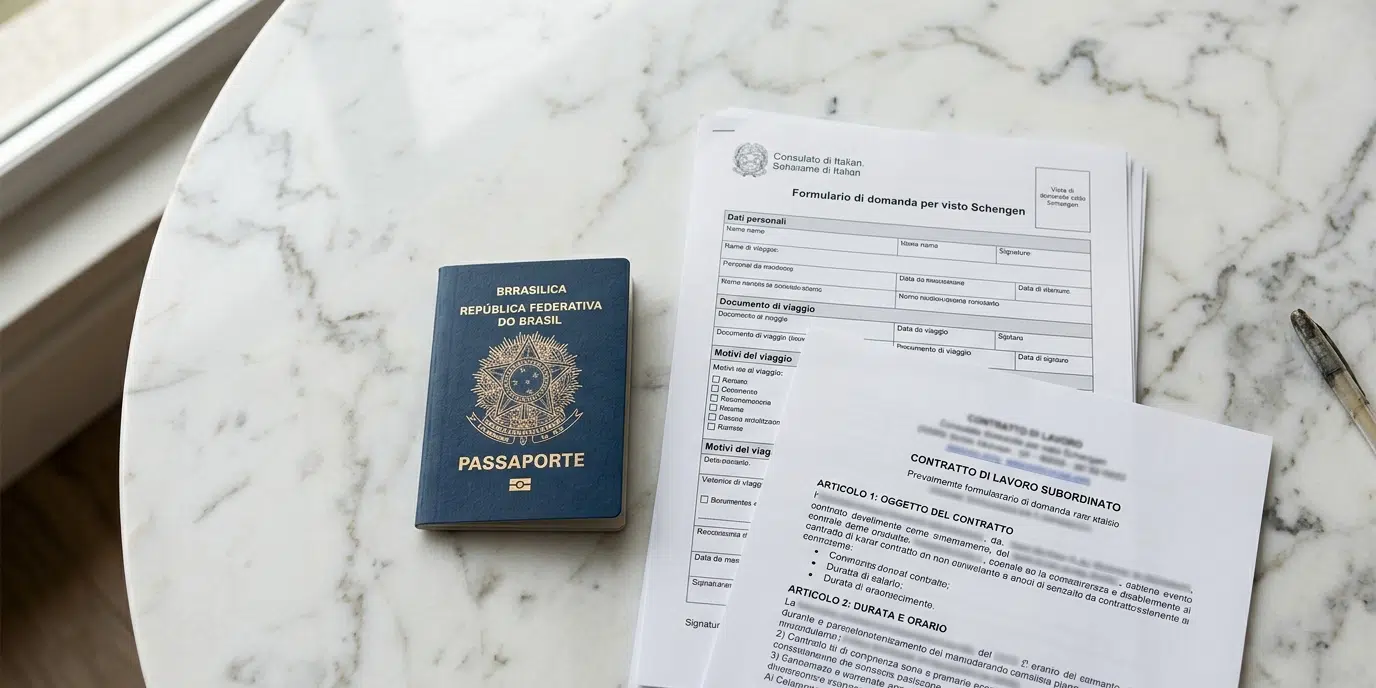
Italy’s digital nomad visa was formalised by a decree from the Ministry of the Interior dated 29 February 2024, published in the Official Gazette on 4 April 2024. It is exclusively open to non-EU nationals who want to live in Italy while working remotely for a company based outside Italy.
Who is eligible?
To obtain this visa, you need to meet the following requirements:
- Be a national of a non-EU country
- Work remotely for a foreign company (or be a freelancer with clients based outside Italy)
- Hold a university degree (minimum 3 years) or demonstrate significant professional experience in your field
- Prove stable income of at least €28,000 per year (approximately €2,330 net per month)
- Have health insurance valid in Italy (private, or enrolment in the SSN for approximately €2,000/year)
- Show proof of accommodation in Italy
How do you apply?
You apply through the Italian consulate or embassy in your country of residence, before you leave. Once in Italy, you will need to apply for a permesso di soggiorno (residence permit) within 8 days of arrival, at the local questura (police headquarters).
Tax residency: when do you start paying taxes in Italy?

Having the visa does not automatically mean you pay taxes in Italy. What matters is your tax residency.
Under Italian tax law, you become a tax resident in Italy if, for more than 183 days in a given year, at least one of the following applies:
- You are registered in the Italian population register (anagrafe)
- Your primary home (family, household) is in Italy
- Your habitual place of residence is in Italy
Just one of these conditions is enough. Once you are an Italian tax resident, you are taxed on your worldwide income, whether it comes from Italy or abroad.
How your income is taxed in Italy
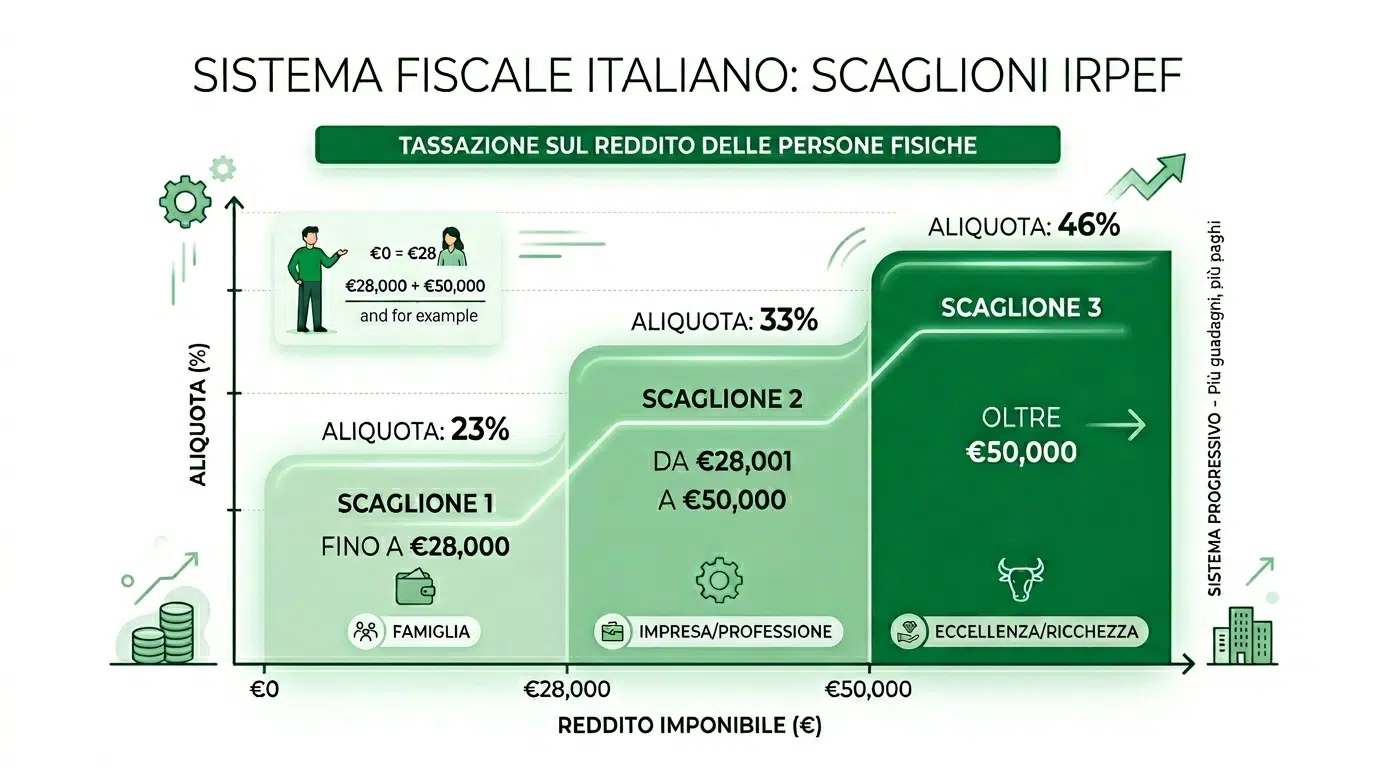
Once you are an Italian tax resident, your income is subject to IRPEF (Imposta sul Reddito delle Persone Fisiche), Italy’s personal income tax. It is progressive, with 4 brackets following the 2024 reform:
| From €0 to €28,000 | 23% |
| From €28,001 to €50,000 | 35% |
| Above €50,000 | 43% |
On top of this, regional and municipal taxes apply, generally between 1% and 3% depending on where you live.
You earn €40,000 per year as a freelance developer based in Rome.
→ On the first €28,000: 23% = €6,440
→ On the next €12,000: 35% = €4,200
→ Total IRPEF: approximately €10,640, an effective rate of ~26.6%
This is where the tax regime that attracts many digital nomads comes in: the regime impatriati.
The impatriates regime: lower taxes for your first 5 years

Italy offers a preferential tax regime for people who transfer their tax residency to Italy after living abroad. Its official name is the regime impatriati. Its main benefit is simple: only 50% of your professional income is taxable for the first 5 years.
In practice, if you earn €40,000, only €20,000 is counted when calculating your IRPEF. The remaining €20,000 is tax-exempt.
Conditions to qualify
- You must not have been an Italian tax resident during the previous 3 years (before 2024, this was 2 years)
- You must commit to remaining an Italian tax resident for at least 4 years (leaving earlier means losing the benefit)
- You must carry out a professional activity on Italian territory (remote work counts)
- Your country of origin must have signed a tax treaty or information-exchange agreement with Italy
Same developer, €40,000 income, based in Palermo.
→ Taxable base: 40% of €40,000 = €16,000
→ IRPEF on €16,000 at 23% = approximately €3,680
→ Saving: ~€6,960 compared to the standard regime
| Standard regime | 100% of income | — |
| Impatriates (North / Centre) | 50% of income | 5 years |
| Impatriates (Southern Italy) | 40% of income | 5 years |