Renting on the Amalfi Coast: Seasons, Prices & Contracts Explained
Renting on the Amalfi Coast requires preparation for seasonal changes, pricing, and contract specifics for both short-term and long-term stays.

THEY TALK ABOUT US
Maisons & Jardins · Le Figaro · Challenges
« Founded on solid field experience and an in-depth knowledge of Italian procedures. »
Jessica Colpin, co-founder — Maisons & Jardins France, Jan.–Feb. 2026
Renting on the Amalfi Coast: seasonality and availability
Understanding the seasonal rhythms of the Amalfi Coast is one of the most important things you can do before starting your search. This is a place of two very distinct realities depending on the time of year, and that difference runs straight through the rental market.
During summer (June to August), rental demand reaches exceptional levels. This coincides with the best weather: warm temperatures, clear skies, and a sea at its most inviting, particularly in August. The practical consequences for renters are significant:
- More limited availability of properties
- Stricter contract terms
- Higher landlord expectations
- The need to start searching well in advance
Come autumn and winter, the market shifts entirely. With tourist pressure easing off, conditions become considerably more favourable for anyone looking to settle in for a longer period. The off-season typically brings:
- Greater availability of properties
- More room to negotiate
- Potentially more flexible terms
Amalfi Coast rental prices by season
Rates vary substantially depending on the time of year:
- High season (June–August): €1,500–4,000 per week for a two-person apartment, up to €10,000 or more for villas
- Shoulder season (May, September): reductions of 30–40% compared to summer
- Low season (October–April): reductions of up to 50–60%, with monthly rentals starting from €800–1,200
These prices are typically exclusive of utilities, which may include electricity, water, Wi-Fi, and a final cleaning fee.
Short-term vs medium and long-term rentals on the Amalfi Coast
The distinction between short-term and longer-term rentals is particularly pronounced here. In the summer, short-term rentals are dominated by holidaymakers, with higher prices and specific conditions to match.
For stays of several months or a full year, the dynamic is different. Landlords looking for stable tenants may offer more attractive terms, particularly outside tourist season. That reliability becomes a genuine negotiating asset, especially if you are planning a longer stay.
Renting on the Amalfi Coast off-season: realistic expectations
If you opt for an off-season rental, several things are worth keeping in mind:
- Local life moves at a different pace: some shops and services may operate reduced hours or close temporarily
- Fewer transport connections, particularly ferry services
- More humid and occasionally rainy conditions, especially in November
These seasonal factors should inform what you look for in a property. In winter, pay close attention to the condition of walls (any signs of damp), the effectiveness of the heating system, and the quality of thermal insulation. These are elements often overlooked in a region known for mild weather, but they can make a real difference to your daily comfort.
Aller en Italie
French expatriation expert · since 2020
4.9
71 verified reviews
1,500+ expats supported
50+ services with French-speaking professionals
20 regions covered
Local consultants on the ground in Italy
Free appointment · 15 min · in French · no commitment
Book an appointmentRenting in Positano: what to expect by season and property type
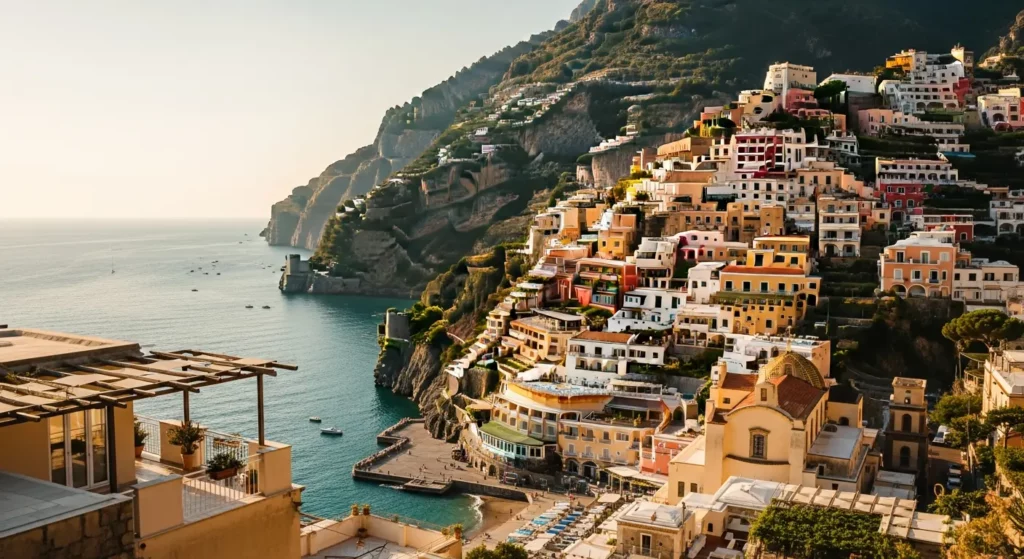
Positano is one of the most sought-after spots on the Amalfi Coast, which has a direct impact on its rental market. In high season, particularly June to August, finding a rental here becomes highly competitive, with limited availability and landlords who can afford to be selective.
Summer turns this small coastal town into an intensely lively place. Landlords may require bookings months in advance, stricter payment terms, and larger security deposits. If you are searching during this period, start early.
Off-season, the picture changes considerably. From October to April, availability improves and negotiation becomes possible, though this quieter period brings its own set of considerations.
Renting in Positano in summer: availability constraints and landlord requirements
In summer, renting in Positano comes with several particularities:
- Limited availability requiring advance bookings
- Often stricter contract conditions
- Minimum rental periods sometimes imposed (often one week minimum)
- More thorough checks on tenant background
- Larger deposits requested upfront
Apartments with sea views or terraces become particularly hard to secure during this period, even with a generous budget.
Renting in Positano off-season: interior comfort and open services
Off-season, priorities shift. The focus moves to:
- The heating system (important given winter humidity)
- Window and door insulation
- The presence of a dehumidifier
- Waterproofing and damp (check for any signs of moisture or mould)
Some shops and restaurants close temporarily, which limits nearby options. Before committing, find out which services remain open year-round in the area you are considering.
Renting in Positano: non-negotiable criteria to check before committing
Beyond seasonal factors, certain criteria remain decisive for any successful Positano rental, whether for a short stay or a longer installation.
Access in Positano: stairs, parking, and real distances
Positano’s steep terrain makes accessibility a central issue:
- The exact number of steps to reach the property (sometimes several hundred)
- The actual walking distance to shops, bus stops, and beaches
- Parking availability and cost (scarce and expensive in Positano)
- Whether home delivery is possible (groceries, parcels)
- Emergency services access if needed
Do not rely on descriptions that mention a “short distance” or “easy access”. Ask for specific details and, if at all possible, visit the property before signing anything.
Sea views, amenities, and everyday comfort
Properties with sea views are highly sought-after but deserve a realistic assessment:
- Check whether the view is direct or partial (often obscured by other buildings)
- Assess noise levels (proximity to roads, restaurants, bars)
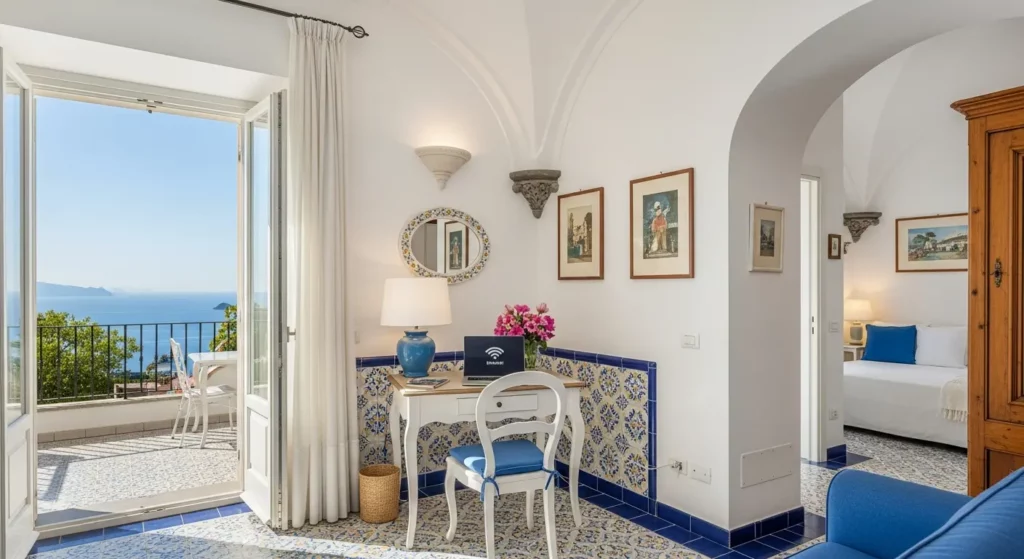
- Test the internet connection quality if you work remotely
- Confirm that essential appliances are present and working (fitted kitchen, hot water, washing machine)
- Request recent, detailed photos of every room
For longer stays, practicality tends to matter more than aesthetics. A well-equipped apartment on a quiet street can turn out to be far more comfortable than a place with a spectacular view but awkward day-to-day logistics.
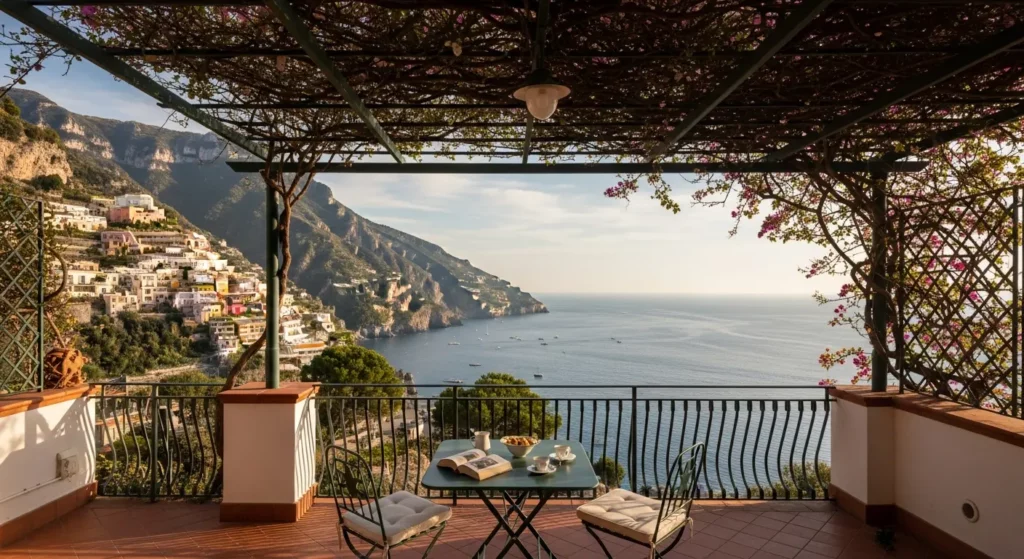
Renting on the Amalfi Coast: steps and key points in an Italian rental contract
To rent on the Amalfi Coast with confidence, you need to understand how Italian rental contracts work. Some administrative practices differ from what you may be used to elsewhere, and a few specifics are worth knowing before you commit.
Rental agreements: duration, clauses, inventory, and documents
To set up a rental contract in Italy, you will typically be asked for the following documents:
- Identity document or passport
- Proof of income
- Bank details
A written contract is not optional and must clearly state the rental duration, the monthly rent, and the termination conditions. The move-in inventory and property inspection report are just as important in Italy as anywhere else, but they are sometimes handled less formally. Insist on a detailed report signed by both parties.
One point that catches many renters off guard: contract registration. Depending on the type of lease, the landlord is legally required to register your contract with the Italian tax authorities. Always ask for proof of this registration to avoid administrative complications later on.
Short-term rentals on the Amalfi Coast: what to verify before paying
For short-term rentals, be especially careful before transferring any money:
- Verify the landlord’s actual identity
- Confirm the exact address of the property
- Clarify what is included regarding cleaning, utilities, and the security deposit
- Ask about building rules that might affect your stay
Always use traceable payment methods (bank transfer, card) and insist on a receipt for every transaction. Avoid cash payments without documentation, even if presented to you as standard practice.
Tourist rental regulations can vary between municipalities along the Amalfi Coast. If you have any doubts about the legality of a listing, particularly for stays of less than one month, do not hesitate to contact the local town hall.
One Italian administrative requirement worth knowing: landlords are obliged to declare the identity of temporary tenants to the local authorities. This is a standard procedure that protects both parties. Buying a house in Campania: benchmarks for comparing with renting.
What to keep in mind when renting on the Amalfi Coast
Renting on the Amalfi Coast requires careful preparation that accounts for local realities. A successful move depends largely on the season you choose and the genuine accessibility of your property. The rugged terrain, the contrast between a hot summer and a damp winter, and the specifics of Italian rental contracts are all factors that deserve your attention from the outset.
Before committing to anything, take the time to build a personalised checklist covering your seasonal needs, your budget, your access requirements, the amenities you cannot do without, and the contract points you want to verify. That preparation will help you avoid unpleasant surprises and make the most of your new life in Campania.
FAQ — Renting on the Amalfi Coast (climate, seasons, comfort)
What time of year is easiest for finding a rental on the Amalfi Coast?
The off-season (September to May) offers far greater availability and more room to negotiate on price. Landlords tend to be more flexible during this period.
In summer (June to August), demand is exceptionally high, choice shrinks considerably, and contract conditions are often stricter. Booking well in advance is not just advisable — it is often necessary.
What is the summer climate like, and what should you check in a property?
Summers are hot and dry, with temperatures reaching up to 32°C in August. The heat can be intensified by the cliff face, which traps warm air in certain spots.
In any property you are considering, prioritise natural ventilation, shading on terraces, orientation (avoid west-facing exposures), and the presence of air conditioning or fans for the hottest periods.
Can winter be uncomfortable in some properties on the Amalfi Coast?
Winter on the Amalfi Coast is mild but more humid, which can make some properties uncomfortable, particularly those designed primarily for summer use.
Inspect walls carefully for signs of damp or mould, check the heating system thoroughly, assess window insulation, and ask whether the property has a dehumidifier available.
Why does access (stairs and parking) matter so much on the Amalfi Coast?
The coast’s dramatic terrain means that many properties can only be reached via large numbers of steps, sometimes several hundred from the nearest road.
This has a real impact on daily life: carrying shopping, moving with luggage or equipment, and it can become genuinely demanding for people with reduced mobility or families with young children.
Do you need a car, or is public transport enough on the Amalfi Coast?
Public transport (SITA buses) connects the main towns reasonably well, but services can be overcrowded in high season and less frequent off-season.
A car offers more freedom but brings its own challenges: narrow winding roads, scarce and expensive parking (€15–30 per day), and heavy summer traffic. Many locals prefer scooters for their manoeuvrability.