

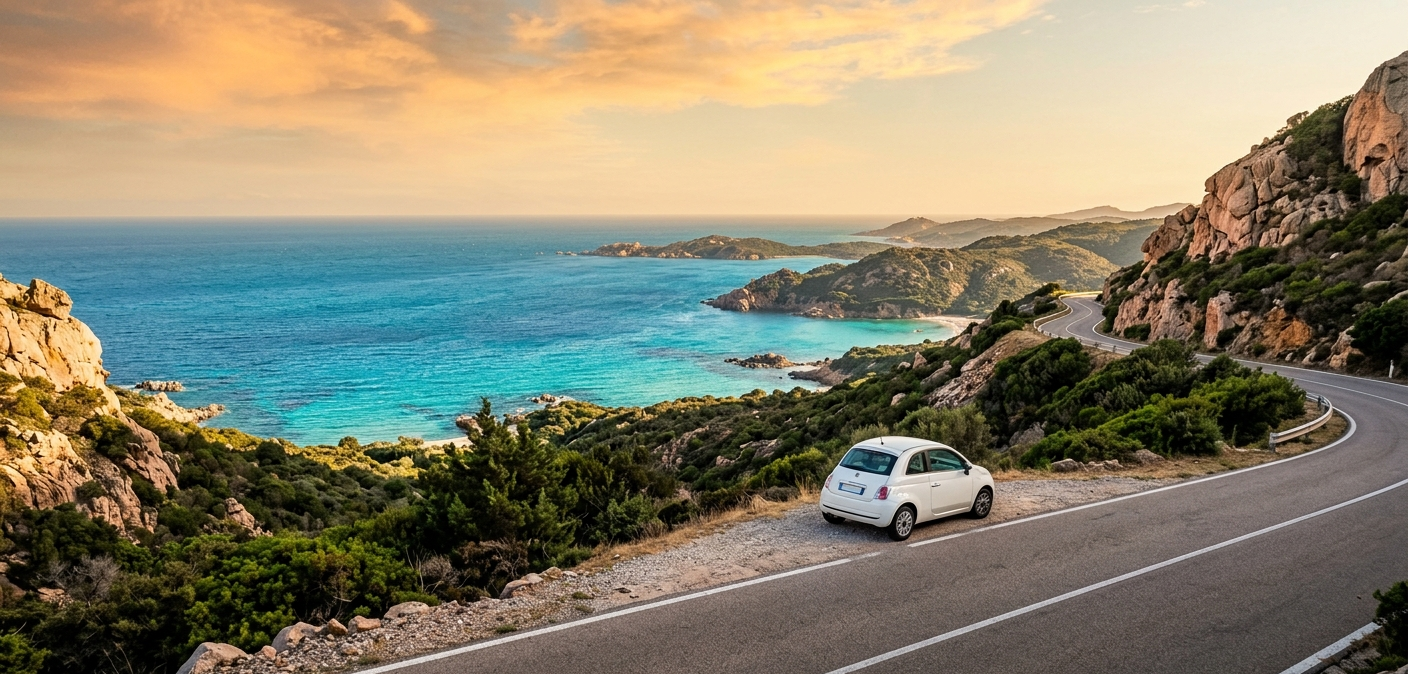
Sardinia is one of those islands you have to earn. Its postcard beaches, granite villages clinging to the hillsides, secret coves reachable only along dusty tracks — none of it reveals itself properly from a bus seat. Renting a car in Sardinia is not a luxury: in the vast majority of cases, it is the one condition that makes or breaks a trip to this 24,000 km² island.
But between comparison platforms that are more or less reliable, agencies eager to sell you insurance you may not need, prices that rocket in July, and security deposits that give many travellers pause, it is easy to feel lost before you have even packed your bags. This guide cuts through all of that. Whether you are planning a road trip around Sardinia or simply looking to rent a car in Italy more generally, you will find everything you need here to choose the right vehicle, book at the right time, avoid the classic pitfalls, and hit the road confidently from the moment you arrive.
Why a car is indispensable in Sardinia
Sardinia does have a rail network, but it only serves the main cities (Cagliari, Sassari, Oristano) and journey times are discouraging: the train between Olbia and Cagliari takes around 4 hours 40 minutes. For most visitors, public transport imposes scheduling constraints that are fundamentally at odds with the freedom they came to find on this island.
The geography tells the whole story. The island is vast, its roads are often winding, and its most beautiful spots — isolated coves, the hilltop villages of the Ogliastra, nuragic sites lost in the scrubland — are only reachable by car, sometimes along unpaved tracks. Travelling without a vehicle means confining yourself to the most well-trodden tourist routes.
According to the latest available tourism figures, more than 23% of visitors to the island now choose car rental as their primary mode of transport, a number that speaks volumes about the reality on the ground.
When to book to get the best price
Rental car prices in Sardinia vary dramatically by season. A small city car can cost under €10 per day in November and rise to €47 or more in August for the exact same model. In peak season, an SUV can easily exceed €120 per day. The golden rule is to book early.
| Period | City car | SUV / Saloon |
|---|---|---|
| November – March (low season) | €6 – €20 | €20 – €45 |
| April – June / September – October | €25 – €45 | €50 – €90 |
| July – August (peak season) | €45 – €80 | €90 – €120+ |
For shoulder season travel, aim to book 4 to 6 weeks ahead. For July and August, 2 to 3 months in advance is the minimum if you want a decent choice at a reasonable price. Agency fleets in Sardinia have been noticeably reduced since the pandemic, which puts further pressure on availability during peak season.
Prices are also cheaper on a weekly basis: renting for 7 days or more consistently works out less expensive per day than booking for 2 or 3 days. If your trip allows it, go for a minimum of one week.
Where to pick up your car: airports and agencies

Sardinia has three main airports, each with its own selection of rental agencies. Your choice of pick-up point will directly affect both your price and how smoothly the handover goes.
Olbia – Costa Smeralda Airport
The busiest airport for travellers coming from northern Europe, it hosts all the major international brands (Avis, Budget, Sicily by Car) directly inside the terminal. Other agencies offer a shuttle service from the airport. Be aware that the high tourist demand at Olbia often makes it more expensive than Cagliari for equivalent vehicles.
Cagliari – Elmas Airport
Located just 7 km from the city centre, this is generally the cheapest airport on the island for car rental. All the major brands are present inside the terminal. If you arrive in the evening, it can be worth waiting until the following morning to pick up your vehicle, saving yourself a full day’s rental charge.
Alghero – Fertilia Airport
Situated 13 km from the centre, this airport has Europcar and Avis desks directly at the exit of the arrivals hall. Rental company car parks are located in a dedicated area on the same side of the terminal.
Using a comparison platform: why it pays off
Platforms such as DiscoverCars or Carigami let you compare offers from dozens of local and international agencies in seconds. Beyond price, they offer genuine peace of mind: smaller agencies dealing directly with travellers can sometimes be less consistent than when they operate through a reputable intermediary. The available filters — automatic gearbox, zero excess, no credit card required — make it easy to narrow down your search efficiently.
Which vehicle to choose for your itinerary
A small city car (such as a Peugeot 208 or Fiat 500) is ideal for a couple sticking to main roads and the beaches of the north. It is economical to hire and cheap to run, and it handles easily in narrow village streets. That said, watch out on unpaved tracks: ground clearance is low, and some insurance policies exclude damage caused off tarmac.
An SUV or crossover is the better choice if you plan to explore the Ogliastra, the Supramonte, or the coastal tracks around Villasimius. The extra ground clearance genuinely makes a difference on mountain paths. Expect to pay 30 to 50% more than for a city car.
A convertible is tempting, especially in June or September when the sky is perfect and the heat still manageable. Prices are higher and availability is limited in peak season, so book further in advance than you normally would.
Automatic transmission is the most requested option. It is particularly useful on winding mountain roads where constant gear changes become tiring. Select it at the booking stage, as automatic vehicles are in shorter supply.
Insurance and deposits: how to avoid the traps
Excess vs deposit: two different things
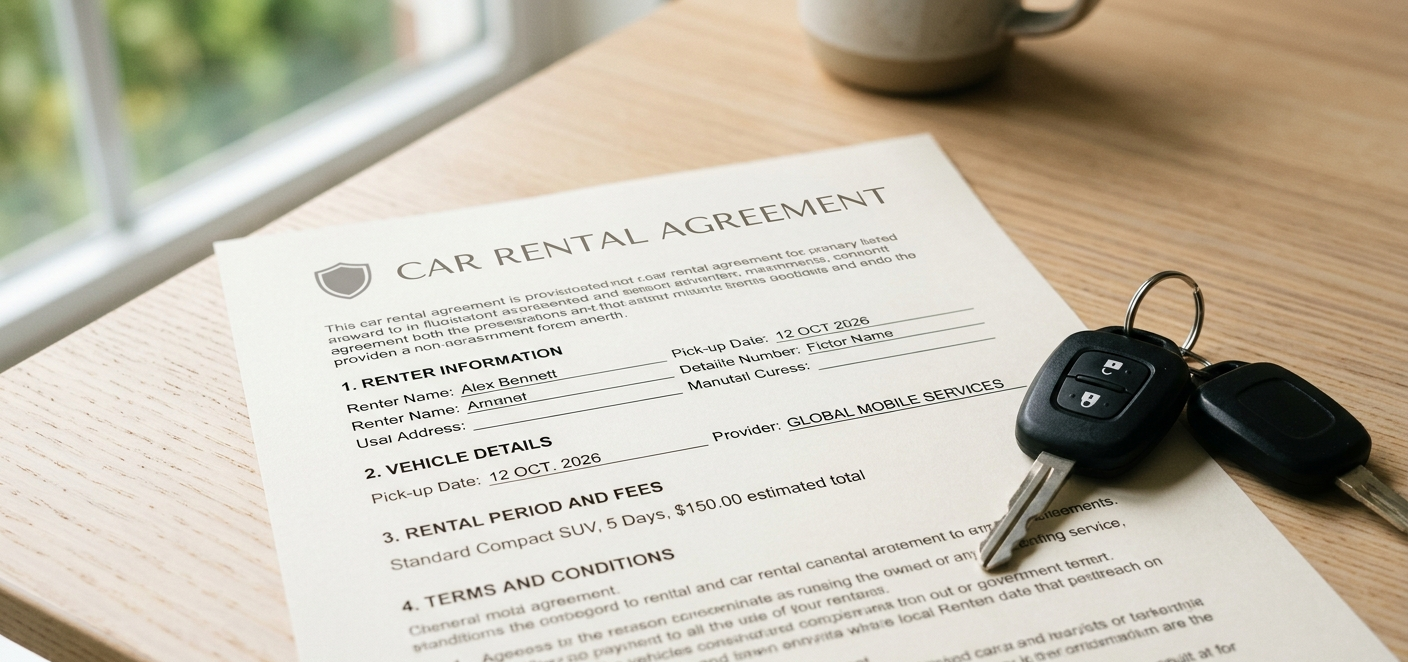
The deposit is an amount blocked on your bank card at pick-up (often between €500 and €1,500). It is released when you return the car undamaged. The excess is the amount you remain liable for in the event of a claim, even with basic insurance. These two concepts are frequently confused, and agencies rarely go out of their way to explain the difference.
Is the included basic insurance enough?
The coverage included in the rental price (CDW — Collision Damage Waiver) protects against damage to the vehicle but often carries a very high excess. It typically does not cover damage to tyres, the windscreen, mirrors, or the underside of the car — precisely the areas most exposed on Sardinian tracks.
Which option should you go for?
The most stress-free approach is to book through a comparison platform and select a zero-excess (or “Full Protection”) policy. It covers all damage, removes the deposit requirement, and means you can walk up to the counter with your email confirmation — the agent cannot then sell you any additional cover.
If you hold a premium bank card (Visa Premier, Mastercard Gold or Black), check in advance what protection it provides for car rentals in Italy. Some cards already cover the excess at no extra cost.
Is a credit card compulsory?
At the great majority of agencies in Sardinia, a credit card (not a debit card) is required to block the deposit. Some rental companies now accept debit cards provided you take out comprehensive insurance. Always confirm this condition before you book.
Renting a car in Italy: what applies everywhere, Sardinia included
Sardinia is fully part of Italian territory, and all the rules governing car rental in Italy apply here without exception. A few points are worth knowing if you have never rented a car in Italy before.
A standard driving licence is sufficient. No international driving permit is required to rent a car in Italy, including in Sardinia. A valid national licence from any EU country is accepted by all agencies, and visitors from countries such as the UK, the US, or Australia will also generally be accepted with their national licence, though it is worth confirming with your chosen agency.
Speed limits. In Italy, the maximum speeds are 50 km/h in built-up areas, 90 km/h on ordinary roads (110 km/h on dual carriageways), and 130 km/h on motorways. In Sardinia, where there are no toll motorways, you will be driving almost exclusively on national and regional roads.
Fines and traffic offences. If your rental vehicle is caught by a speed camera or receives a fine, the agency will be notified by the Italian authorities and will charge the amount to your payment method, sometimes with an additional administration fee. These fees are generally not covered by insurance.
Travelling to other Italian regions. With your rental car, you can drive freely throughout mainland Italy. Some agencies also permit travel to neighbouring countries (such as France, Switzerland, or Austria), provided you declare this at the time of booking. For any other destination, check the terms of your contract carefully.
Driving in Sardinia: what you need to know
Licence requirements and age conditions
A valid driving licence is all you need — no international permit is required in Italy. The minimum age varies by agency: 21 at most rental companies, 18 at some such as Sixt. Young driver surcharges generally apply to drivers under 25. Certain vehicle categories (SUVs, premium cars) are restricted to drivers over 25 with at least 2 years of driving experience.
The road network
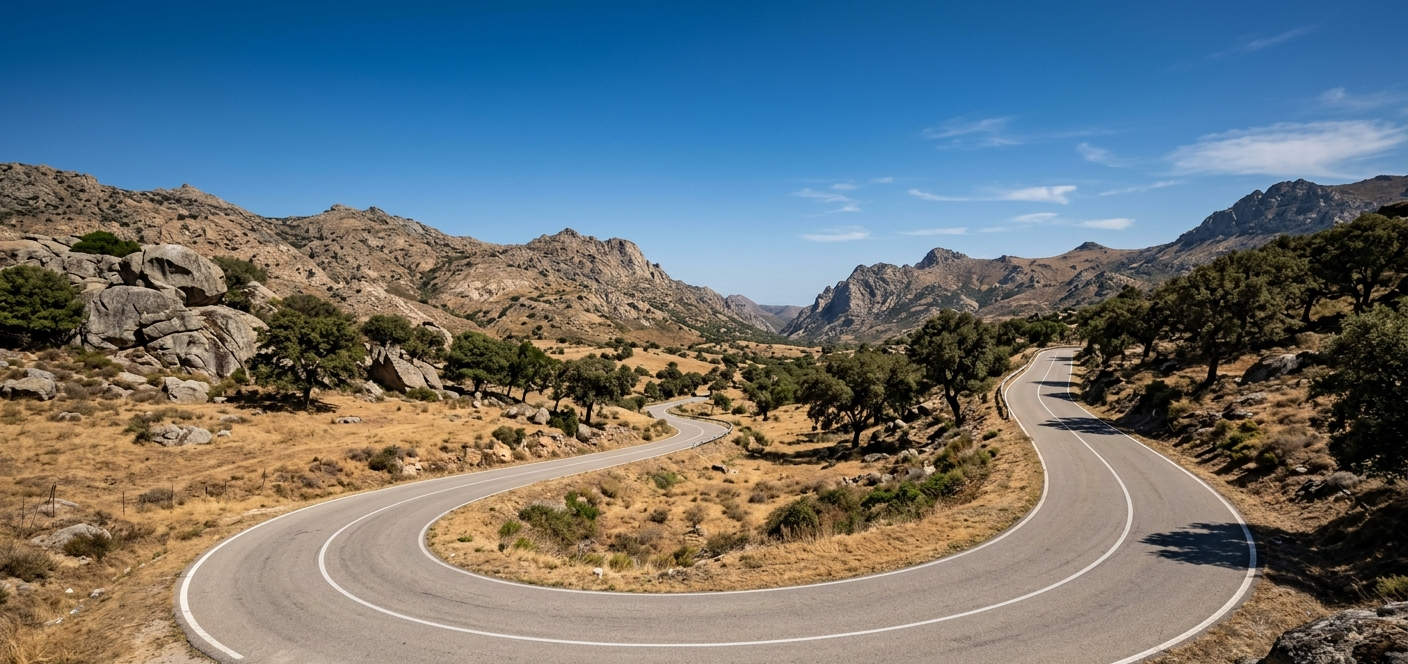
Good news: Sardinia has no toll motorways. The main network (the SS131 between Cagliari and Sassari, the coastal national roads) is free and well maintained. Mountain roads and coastal tracks, however, demand attention. Some stretches are unpaved and potholes are common away from the main routes.
Fuel and overall budget
Petrol in Sardinia costs between €1.80 and €2.00 per litre (2025 figures), with diesel slightly cheaper. For a week of driving (700 to 800 km), budget between €60 and €120 for fuel depending on your vehicle. There are no road tolls anywhere on the island. Parking in tourist areas and near beaches is often paid: typically €1 to €2 per hour, or a flat rate of €5 to €10 for the day.
If you are thinking of taking your rental car on a ferry to La Maddalena or Carloforte, be aware that most agencies either prohibit it or charge an additional premium for specific cover. Standard insurance policies become void at sea.
Checklist at the rental counter
- Photograph the entire vehicle (bodywork, tyres, interior) before driving away.
- Make sure any existing damage is noted on the contract before you sign.
- Choose the full-to-full fuel policy (you return the car with the same level of fuel) rather than full-to-empty, which always costs more.
- Watch out for add-ons offered at the counter that you may have already included through your comparison platform.
Key takeaways
Renting a car in Sardinia is straightforward once you approach it in the right order. Book early — ideally 4 to 6 weeks before your trip, or further ahead during peak season. Use a reputable comparison platform to access the best deals and have a point of recourse if something goes wrong. Choose a vehicle suited to your actual itinerary, and sort out the insurance question before you get to the counter.
With a car at your disposal, Sardinia opens up completely: wild beaches, granite villages, panoramic roads you can explore at your own pace, with no timetable to answer to. It is often what travellers look back on as the best investment of their trip.
Our advice: check your travel dates today and run a search on a comparison platform. Prices move quickly, and every week of advance planning can make a real difference to your final budget.
Frequently asked questions about renting a car in Sardinia
Are there differences between renting a car in mainland Italy and in Sardinia?
The general rules are the same: a standard driving licence is sufficient, a credit card is needed for the deposit, and speed limits are identical. The main difference lies in the market itself: in Sardinia, supply is more concentrated across three airports, prices rise faster in peak season, and the available fleet is more limited. Booking in advance matters even more here than elsewhere in Italy.
Is renting a car in Sardinia really necessary?
Yes, in the vast majority of cases. The island’s public transport network is limited and schedules are restrictive. A car is the only way to reach isolated beaches, inland villages, and the most spectacular natural sites freely. Only a visit strictly limited to Cagliari could potentially work without a vehicle.
Can you rent a car in Sardinia without a credit card?
Most agencies require a credit card to block the security deposit. Some accept a debit card provided you take out comprehensive insurance. Always check the agency’s specific conditions when booking to avoid unpleasant surprises at the counter.
What is the best time to book a rental car in Sardinia?
As early as possible. For low and shoulder season, aim for 4 to 6 weeks in advance. For July and August, allow at least 2 to 3 months. Agency fleets in Sardinia are limited, and prices can triple between November and peak summer season.