Cremona in One Day: Itinerary, Restaurants, Where to Stay & ZTL Guide
Explore Cremona in one day with an optimal itinerary, delicious local cuisine, and tips for navigating the city’s ZTL restrictions.

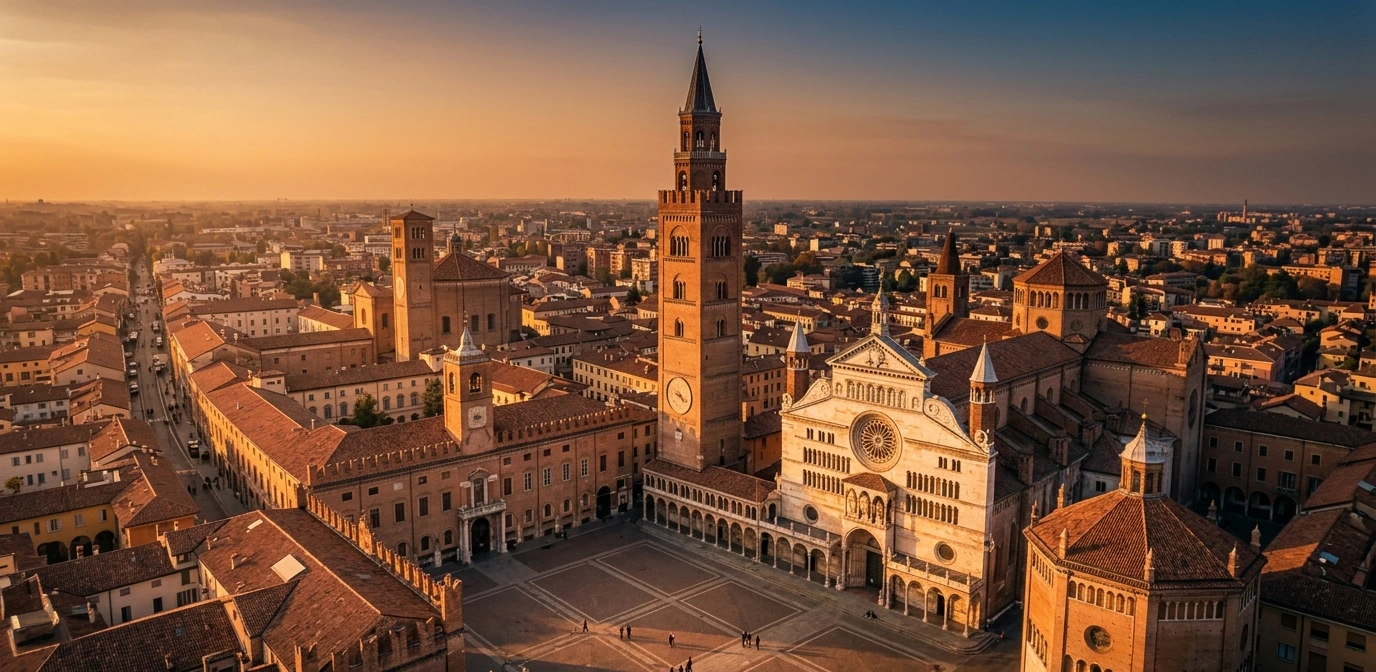
Cremona is one of Lombardy’s great surprises. Less visited than Milan or Verona, this small city on the Po river hides one of Italy’s most beautiful medieval squares, a UNESCO-listed cathedral, and a tradition of violin-making that has shaped music history worldwide. If you only have a day, that’s plenty: Cremona is perfectly manageable in 24 hours, as long as you plan ahead.
Contents
« Built on solid field experience and an in-depth knowledge of Italian procedures. »
Jessica Colpin, co-founder — Maisons & Jardins France, Jan.–Feb. 2026
Why visit Cremona?
Cremona is a Lombard provincial city of around 70,000 people, situated on the left bank of the Po river, about an hour by train from Milan. It is best known for its lutherie tradition: this is where Antonio Stradivari, the Amati family, and the Guarneri family lived and worked, the greatest violin-makers in history. Their craft has been inscribed on the UNESCO Intangible Cultural Heritage list since 2012.
But Cremona is more than violins. The city has a remarkably well-preserved historic centre, with the Piazza del Comune as its absolute jewel — a medieval square surrounded by exceptional monuments: the Torrazzo (the tallest medieval tower in Italy), the Baptistery, and the Romanesque cathedral. Food lovers will find plenty to enjoy too, from torrone (nougat) to the famous mostarda di Cremona.
Aller en Italie
French expatriation expert · since 2020
4.9
73 verified reviews
1,500+ expats supported
50+ services with French-speaking professionals
20 regions covered
Local consultants on the ground in Italy
Free appointment · 15 min · in French · no commitment
Book an appointmentOne-day itinerary: hour by hour
Here is an optimised programme to make the most of Cremona in a single day. Everything is within easy walking distance of the historic centre.
Morning (9:00 – 13:00)
9:00 — Start at the Piazza del Comune, the beating heart of the city. Take in the Gothic facade of the Palazzo del Comune, the 12th-century octagonal Baptistery, and the cathedral front. Give yourself time here: this is one of the finest medieval squares in all of northern Italy.
9:30 — Climb the Torrazzo: at 112 metres, it is the tallest medieval tower in Europe. The ascent (around 502 steps) rewards you with a panoramic view over Cremona’s rooftops, the Po plain, and on a clear day, the Alps. Allow 30 to 45 minutes.
10:30 — Visit the Cremona Cathedral (the Duomo), a masterpiece of Lombard Romanesque architecture from the 12th century. The interior frescoes are remarkable. Entry is free.
11:30 — Head to the Museo del Violino, the city’s unmissable attraction. Original instruments by Stradivari, an exceptional acoustic hall, and the full story of Cremonese lutherie. Allow around 90 minutes for a thorough visit.
Afternoon (13:30 – 18:00)
13:30 — Lunch break in the Duomo neighbourhood (see the restaurants section below).
15:00 — Wander through the lanes of the historic centre, particularly Via Solferino and Via Mercatello. Step into the inner courtyards of a few Renaissance palaces — several are freely accessible.
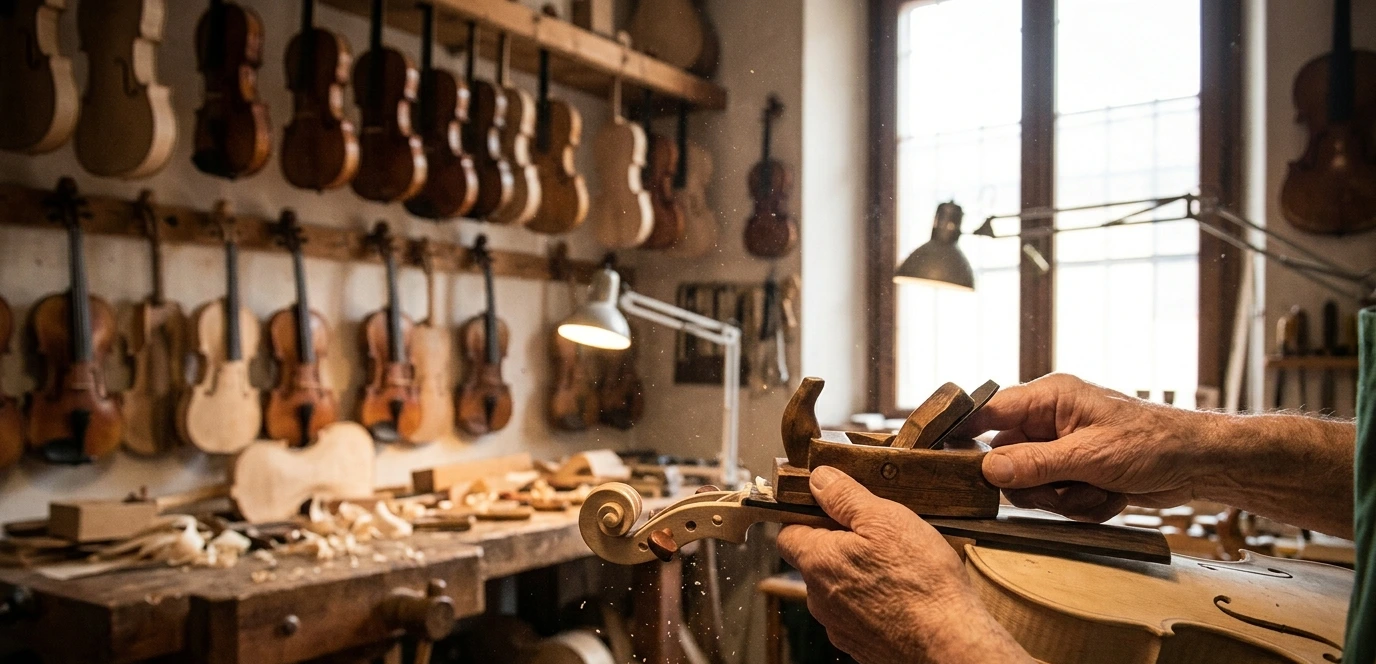
16:00 — Visit the violin-makers’ workshops in the artisan quarter around Via Ugolani Dati. Many craftspeople work with their windows open to the street and welcome curious visitors.
17:00 — Settle in for an aperitivo on the Piazza del Comune or at one of the bars along Via Solferino. The local spritz is served with generous snacks.
The highlights: monuments and museums
The Piazza del Comune
Ranked among the most beautiful squares in Italy, the Piazza del Comune is the ideal starting point for any visit. In a single space it brings together the Torrazzo, the Duomo, the Baptistery, the Loggia dei Militi, and the Palazzo del Comune. The ensemble, dating from the 12th and 13th centuries, is remarkably coherent and exceptionally well preserved.
The Museo del Violino
Opened in 2013, this modern museum is dedicated to the art of Cremonese lutherie. It houses original instruments by Stradivari (including the famous Cremonese of 1715), the Amati family, and the Guarneri family. A dedicated acoustic room lets you hear these instruments played by professional musicians. Admission: around €12 for adults. Booking is recommended.
The Torrazzo
The city’s defining landmark, the Torrazzo stands 112 metres tall and dates from the 13th century. It is connected to the cathedral by a covered walkway. Halfway up, you’ll find the largest medieval astronomical clock still in working order in Europe, dating from the 14th century. Admission: around €5.
The Ala Ponzone Picture Gallery
For art lovers, this gallery (housed in the Palazzo Affaitati) holds a fine collection of Lombard paintings from the 15th to the 18th century. Admission: around €7.
Where to eat in Cremona: best restaurants
Cremona’s food scene is strong, with a good mix of traditional trattorias, convivial osterie, and more contemporary options.
Ristorante Il Violino
Lombard cuisine · Average spend: €35–50
The city’s most respected address for traditional Cremonese cooking. House specialities include risotto alla pilota, marubini al brodo, and bollito misto with mostarda. Elegant setting inside a historic centre palazzo. Booking is essential at weekends.
Osteria La Sosta
Osteria · Average spend: €25–40
One of the best osterie in the centre, popular with locals and visitors alike. A solid list of Lombardy wines, market-driven cooking, and a relaxed atmosphere. The weekday lunch is particularly good value.
Trattoria Mellini
Family trattoria · Average spend: €20–30
An old-fashioned trattoria run by the same family for several generations. Simple, unpretentious surroundings, generous portions. A great choice for an honest lunch with plenty of flavour.
Pasticceria Lanfranchi
Pastry shop and café · Breakfast and afternoon breaks
For breakfast or an afternoon stop, this long-established patisserie in the centre makes the best artisan torrone in town. Worth a visit if you have a sweet tooth.
Cremonese food: what to try
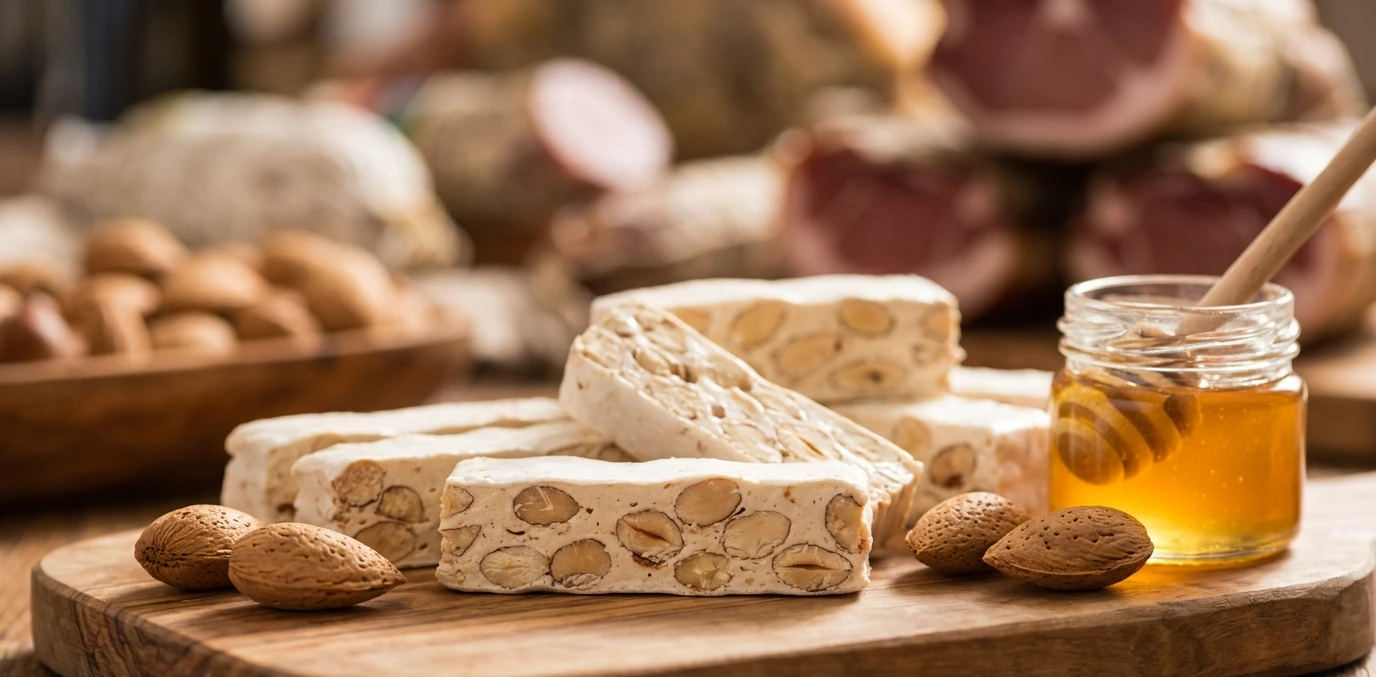
Torrone di Cremona
Torrone (nougat) is the city’s culinary symbol. Made with honey, egg whites, sugar, and almonds or hazelnuts, it comes in both hard and soft versions. The Fiera del Torrone, held every November, is one of the finest food markets in northern Italy.
Mostarda di Cremona
Mostarda is a condiment made from whole candied fruits preserved in a mustard-spiked syrup — sweet, pungent, and surprising. It is the traditional accompaniment to bollito misto and local cheeses, and one of the best edible souvenirs you can bring home.
Marubini al Brodo
Marubini are Cremona’s signature filled pasta: small round parcels stuffed with meat and cheese, served in a clear broth. They are the emblematic dish of the traditional osterie.
Risotto alla Pilota
A speciality of the Po plain, this risotto is made using a particular technique that gives it a firm, slightly grainy texture. It is often served with luganega, a mild and fragrant local sausage.
Where to stay in Cremona: best neighbourhoods
Cremona is a human-scale city — the entire historic centre falls within a 15-minute walk in any direction. The choice of neighbourhood mainly affects atmosphere, budget, and parking convenience if you are arriving by car.
Centro Storico — The best choice
Medieval heart · Piazza del Comune and surroundings · €50–130/night
The ideal option if you have one or two days. You are 5 minutes on foot from every monument, the best osterie, and the torrone shops. B&Bs here are often set inside beautiful 18th-century palaces. Note: some streets are within the ZTL — if you are arriving by car, ask your accommodation to register your number plate before you arrive (see the ZTL section below).
Station Quarter
Stazione and Viale Trento e Trieste · €45–90/night
A practical choice for travellers arriving by train. The historic centre is a 15-minute walk away. Hotels here tend to be more standard but better equipped: parking, lift, meeting rooms. A solid base for a night in transit.
San Michele Quarter
North of the centre · Corso Garibaldi · €40–80/night
A quiet residential neighbourhood, entirely outside the ZTL. A good option if you are driving and want to avoid parking complications. The Piazza del Comune is around 10 minutes on foot.
Lungo Po — For those who like open space
Riverbanks · South of the city · €55–120/night
A handful of agriturismi and small garden hotels along the river, for travellers looking for peace and quiet. Beautiful views over the Po at sunrise. A bike or car is useful for reaching the centre (around 20 minutes).
— Book early in November: the Fiera del Torrone (mid-November) fills every hotel in the centre. Book at least six weeks ahead.
— Ask about bikes: many hotels and B&Bs lend bicycles free of charge. It’s the best way to explore the Po riverbanks.
— Check for air conditioning: summers on the Po plain are hot and humid. Make sure your room is air-conditioned.
— Weekend minimum stays: many B&Bs require a two-night minimum from May to October. For a single night, the station quarter is more flexible.
ZTL and parking in Cremona: how to avoid a fine
If you are visiting Cremona by car, the ZTL (Zona a Traffico Limitato) is the first thing you need to understand. Many visitors are caught out and receive a fine weeks after their trip.
How does Cremona’s ZTL work?
The ZTL covers most of the historic centre. It is enforced by automatic cameras installed at every entry point, which read number plates in real time. There is no physical barrier — nothing will stop you from driving in, but a fine will arrive by post, sometimes four to six weeks after your visit.
When is it active?
Generally Monday to Saturday, from 7:30 to 19:30. On Sundays and public holidays the ZTL is usually suspended, but always check the official Cremona municipality website before your visit, as hours can vary by season and local events.
Who is allowed to enter?
- Residents with an annual permit
- Delivery vehicles during authorised hours
- People with reduced mobility (European disability badge recognised)
- Guests of hotels located within the ZTL, provided the establishment has registered their number plate with the municipality before arrival
Staying in the historic centre?
This is the simplest situation. Give your number plate to your hotel or B&B when you book, or at least 24 hours before arrival. The accommodation handles the registration with the municipality, and you can enter and exit freely during your stay. Don’t assume it happens automatically — always confirm explicitly.
Not staying in the centre?
Avoid entering the ZTL during active hours. Park in one of the car parks outside the restricted zone and walk into the centre — everything is reachable in 10 to 15 minutes.
Best car parks outside the ZTL
- Parcheggio Largo Marinai d’Italia — Covered car park, 10 minutes’ walk from the Duomo. Around €1.50/hour. Free on Sundays.
- Parcheggio Via Palestro — Surface car park, 8 minutes from the centre. Around €1/hour, with a 2-hour daytime limit.
- Parking Gare Centrale — Large capacity, 15 minutes from the Duomo, open 24 hours. Around €1/hour.
- Peripheral blue zones (streets around Via Postumia) — Free after 20:00 and on Sundays.
Practical info: getting there and budget
By train
Cremona is served by direct trains from Milan (Centrale or Rogoredo stations) in around 1 hour 10 minutes. Several departures per day with Trenitalia. From Brescia, the journey takes around 45 minutes. Cremona station is 15 minutes on foot from the historic centre, or 5 minutes by taxi.
By car
From Milan: take the A1 towards Lodi, then the SS415 to Cremona. Allow 1 hour to 1 hour 15 minutes depending on traffic. Bear the ZTL in mind (see the dedicated section). Park outside the old city walls and walk into the centre.
Indicative budget for one day
- Torrazzo admission: ~€5
- Museo del Violino: ~€12
- Picture Gallery: ~€7
- Lunch at a trattoria: ~€25–35
- Aperitivo: ~€8–12
- Torrone and mostarda souvenirs: ~€15–25
Estimated total: €70 to €100 per person for a full day.
Conclusion
Cremona rewards those who take the time to stop. Its Piazza del Comune is among the finest in Italy, the Museo del Violino is a one-of-a-kind experience, and the local food is some of the most authentic in Lombardy. In a single well-organised day you can cover the highlights — though you will almost certainly leave wanting to return for a full weekend.
Our advice: book your Museo del Violino ticket before you travel, and arrive at the Piazza del Comune when it opens (9:00) to enjoy it without the crowds. If you are coming by car, remember to pass your number plate to your accommodation in advance to avoid any ZTL issues. Cremona is Italy away from the well-worn trail — exactly the kind of place worth seeking out.
FAQ — Frequently asked questions about Cremona
Is Cremona worth a day trip from Milan?
Absolutely. At 1 hour 10 minutes by train, Cremona offers something completely different from Milan: no crowds, exceptional medieval monuments, genuine local food, and the unhurried atmosphere of an Italian provincial city that most travellers never get to experience. It makes an excellent day trip, or a good stop on the way to Venice.
Should I book the Museo del Violino in advance?
During high season (April to October) and at weekends, advance booking is strongly recommended, especially for the acoustic hall concerts. On weekdays outside peak season you can usually buy tickets on the door. Online booking is available through the museum’s official website.
How do I avoid a ZTL fine in Cremona?
If you are staying in the centre, give your number plate to your hotel or B&B at the time of booking and ask them to register it with the municipality. If you are not staying in the centre, park in a car park outside the ZTL (Largo Marinai, Via Palestro, or the station car park) and walk into the centre in 10 to 15 minutes. The ZTL is generally inactive on Sundays and after 19:30.
Is Cremona suitable for families with children?
Yes, Cremona works very well for families. Climbing the Torrazzo is a real adventure for children (from around age 6), the Museo del Violino has interactive areas designed for younger visitors, and the pastry shops in the centre will delight anyone with a sweet tooth. The city is completely flat and easily navigable with a pushchair.