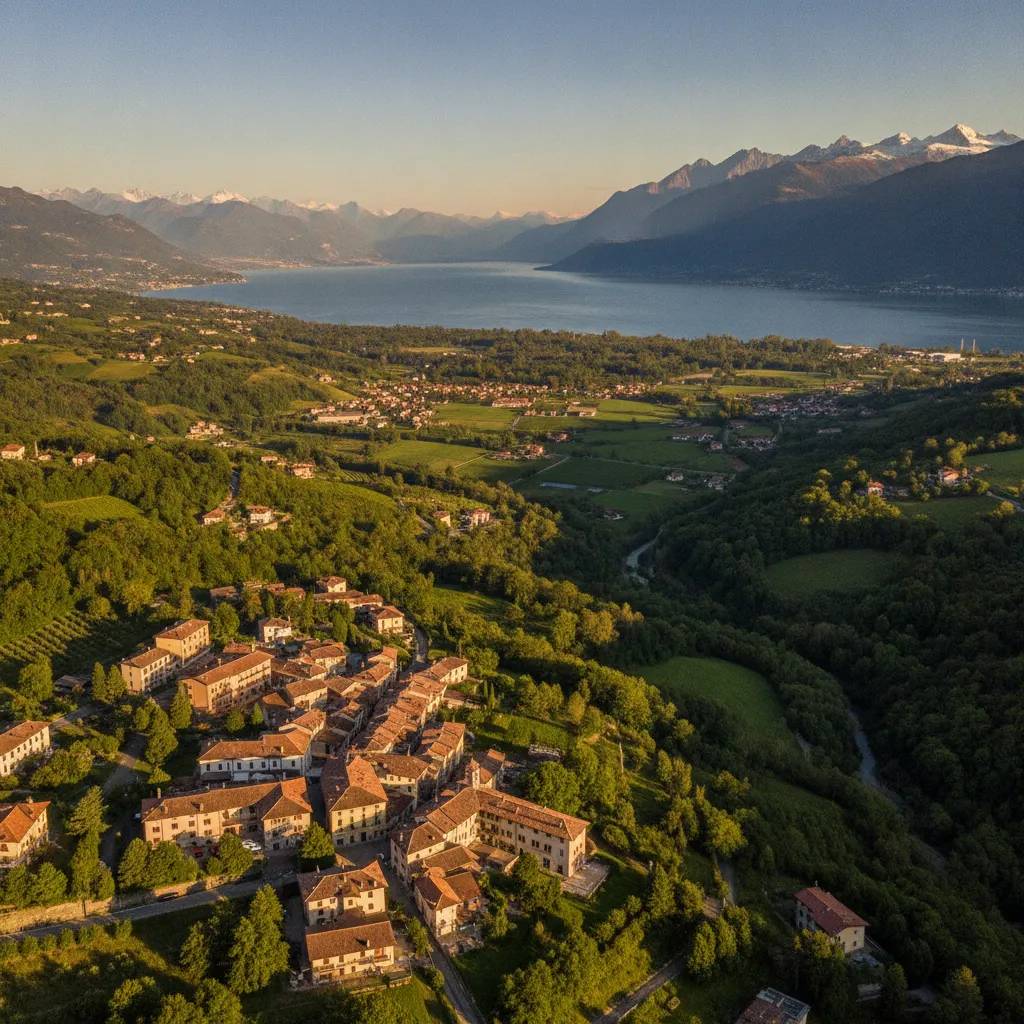
Natural Disasters in Italy: How to Buy a Home Safely
Earthquakes, floods, landslides: 90% of Italian municipalities are at risk. A complete guide to buying property with your eyes open.


Italy is one of Europe's most exposed countries when it comes to natural disasters. Earthquakes, volcanic eruptions, floods, landslides, wildfires, and heatwaves: the peninsula faces almost every known natural hazard. Yet every year, millions of foreigners buy a holiday home or settle here permanently — often without fully grasping this reality. Understanding the risks, knowing which documents to request, and learning how to assess a property's structural soundness are all essential steps to buying a house in Italy with confidence — turning a legitimate concern into a well-managed process.
Aller en Italie
Relocation experts · since 2020
4.9
How many steps separate you from Italy?
A tailored offer based on your needs — in 3 min, no commitment
Tell us about your project
Profile, area, buying or renting
We select your services
From 50+ services in English
Receive your quote
Clear, detailed, personalized
*Indicative and customizable quote, no contractual commitment.
Free · 3 min · in English · no commitment
Create my offerOne of Europe's highest exposures to natural risk
The figures speak for themselves and are worth stating upfront: roughly 70% of Italians live in municipalities exposed to seismic risk, 57% in flood-prone areas, and more than 3 million people reside in zones at volcanic risk. Even more striking, over 90% of Italian municipalities are exposed to hydrogeological hazards — landslides, flooding, or erosion — placing Italy at the top of European countries for this type of risk, accounting for nearly two-thirds of all landslides recorded on the continent.
This situation is also partly explained by a factor that is often underestimated: the age of Italy's housing stock. A significant proportion of buildings were constructed before the first national seismic standards came into force in 1974, and many have never been fully brought up to code. Climate change is further intensifying certain phenomena: episodes of heavy, concentrated rainfall are becoming more frequent, increasing the risk of flash floods and landslides — including in areas historically considered low-risk.
These facts should not discourage buying property in Italy, but they do call for a rigorous and well-informed approach. The good news: the right tools exist, qualified professionals can guide you through the process, and tax incentives such as the Sismabonus can even increase a property's value by improving its seismic resistance.
THEY TALK ABOUT US
Maisons & Jardins · Le Figaro · Challenges
« Built on solid hands-on experience and an in-depth knowledge of Italian procedures. »
Jessica Colpin, co-founder — Maisons & Jardins France, Jan.–Feb. 2026
Key natural risks region by region
Seismic risk: a nationwide reality
Italy lies along the Alpine arc and the Apennine mountain chain, at the junction of continental and oceanic tectonic plates. This complex geology explains the country's frequent seismic activity across its entire territory. Italy is divided into four seismic zones (zone 1 to zone 4), with zone 1 being the most hazardous.
The regions with the highest seismic risk include:
Central Italy: Abruzzo, Umbria, the Marche, and inland Lazio — regions struck by devastating earthquakes in recent decades (L'Aquila in 2009, Amatrice in 2016).
The Mezzogiorno: Calabria, Basilicata, and parts of Campania present some of the highest seismic risk levels in Europe.
Eastern Sicily: exposed to both seismic risk and the volcanic activity of Mount Etna.
The Apennine chain from north to south: the mountainous spine of the peninsula is a zone of intense seismic activity along its entire length.
Even northern Italy, often perceived as more stable, is not risk-free. Significant earthquakes have struck the Po Valley (Emilia-Romagna in 2012). Only a few lowland areas in the north-west present a risk classified as low — and even there, vigilance remains warranted.
Floods and hydrogeological risk
Flooding represents another major natural disaster risk in Italy. Between 2,000 and 3,000 landslides occur every year, around 300 of which directly affect inhabited areas or infrastructure. Liguria, Tuscany, Veneto, Campania, and Sicily are regularly hit by flash floods and devastating mudflows. Venice, the most iconic case, faces chronic acqua alta — a phenomenon that the MOSE project is attempting to mitigate.
Volcanoes, wildfires, and heatwaves
Campania (Vesuvius, Campi Flegrei), Sicily (Etna, Stromboli), and the Aeolian Islands concentrate the main volcanic risks. Wildfires devastate thousands of hectares every summer in Sardinia, Sicily, Calabria, and central regions. Heatwaves — increasingly frequent and intense — affect the entire country and also put older buildings under additional strain.
The particular case of historic centres and older properties
Many international buyers are drawn to the charm of an Italian historic centre or a stone village house — precisely the oldest buildings, and often the most structurally vulnerable. These properties are frequently subject to vincoli paesaggistici or vincoli storico-artistici (heritage and landscape protection constraints) that strictly limit what structural reinforcement work is permitted: it is not always possible to alter a façade, a roof structure, or a vault — even to improve seismic resistance. Before falling in love with an older property, it is essential to check with the relevant Soprintendenza whether the building is protected, and to what extent structural works remain feasible.
Aller en Italie
French expatriation expert · since 2020
4.9
73 verified reviews
1,500+ expats supported
50+ services with French-speaking professionals
20 regions covered
Local consultants based in Italy
Free appointment · 15 min · in French · no commitment
Book an appointmentHow to buy a house in Italy in a risk zone: a practical approach
<div class="youtube-embed" style="position:relative;padding-bottom:56.25%;height:0;overflow:hidden;"><iframe src="https://www.youtube.com/embed/Zwt_kvnMIRg" style="position:absolute;top:0;left:0;width:100%;height:100%;border:0;" allowfullscreen loading="lazy"></iframe></div>
Step 1: identify the seismic zone and local natural hazards
Before any serious viewing, consult the national seismic zoning map available on the INGV (National Institute of Geophysics and Volcanology) website and on the Italian Civil Protection portal. Every municipality is classified as zone 1 (very high seismicity), 2 (high), 3 (moderate), or 4 (low). This information is public and free of charge.
Also consult the PAI (Piano di Assetto Idrogeologico) for the relevant region to identify areas at risk of flooding or landslides. This data is available from the local municipality or regional river basin authorities.
Step 2: engage a qualified structural specialist
In Italy, the notary does not carry out a technical assessment of the building or verify its seismic resistance. If you are buying a property in a seismic risk zone, it is therefore strongly advisable to engage a qualified specialist — such as a structural engineer (ingegnere strutturale) or, depending on the case, a surveyor (geometra).
This professional can examine the overall condition of the building, identify any structural weaknesses, analyse modifications carried out over time, and advise you on any reinforcement works that may be needed. This step allows you to make an informed decision before committing to a purchase and helps avoid unpleasant surprises after signing.
Allow roughly one to two weeks to receive an initial seismic vulnerability report, and factor this timeline into your purchase schedule — particularly if the preliminary contract includes a suspensive clause linked to the results of the assessment.
Step 3: essential documents to request from the seller
Below is the list of key documents to request before signing any preliminary sales agreement (compromesso):
Titolo edilizio: building permit or equivalent authorisations (concessione edilizia, permesso di costruire, SCIA, DIA) — verify that the constructed building matches what was officially approved.
Certificato di agibilità (or abitabilità): certificate confirming that the building meets minimum habitability and safety requirements.
Attestato di Prestazione Energetica (APE): mandatory at the time of sale.
Collaudo statico: structural compliance certificate, mandatory for buildings constructed after 1971 in seismic zones — verify its existence and validity.
Documentazione sismica: for buildings in seismic zones, seismic deposit files lodged with the Genio Civile (regional authority) must be present.
Eventuali lavori strutturali: all permits, project drawings, end-of-works declarations, and collaudi relating to any structural reinforcement or modification works.
Visura catastale and planimetria catastale: to verify that the physical property matches its land registry entry.
Atto di provenienza: the previous title deed, to confirm the chain of ownership.
If any of these documents is missing or appears incomplete, this is not necessarily a dealbreaker: it simply means that a regularisation process will need to take place — often at the seller's expense, before or at the time of signing. Make sure to get this regularisation cost estimated before finalising your offer.
The notary's role in relation to natural risks
The notary is the guarantor of the legal security of the transaction — not its technical safety. Their role in the context of natural risks is twofold:
On one hand, they verify that all works carried out on the property have been properly declared and hold the necessary authorisations. A building renovated without a permit in a seismic zone represents a major legal and structural risk. On the other hand, where a Sismabonus has been applied during previous works, the notary must ensure that the corresponding fiscal and technical documentation is in order and annexed to the deed, so that the buyer can benefit from the added value of those improvements.
Italy's regulatory landscape is evolving rapidly: the 2024 Budget Law introduced a mandatory natural disaster insurance requirement for businesses covering earthquakes, floods, and landslides — a clear signal of growing national awareness. No similar legal obligation yet exists for private individuals, but this trend reinforces the importance of personal prevention.
Assessing and reducing seismic risk: the Sismabonus
What is the Sismabonus?
The Sismabonus is an Italian tax incentive that allows property owners to claim substantial tax deductions on works aimed at reducing the seismic risk of their property. It forms part of Italy's national natural disaster prevention strategy and is one of the most powerful tools for both increasing a property's value and protecting its occupants.
Eligibility requirements
The building must be located in a seismic zone 1, 2, or 3 (the highest-risk zones).
A qualified engineer must establish a seismic risk classification of the building before and after works, certifying an improvement of at least one risk class (on a scale from A+ to G).
Works must be carried out in compliance with current technical standards, properly declared, and paid for via traceable means (a dedicated bank transfer).
Types of eligible works
Interventions covered by the Sismabonus include in particular:
Structural reinforcement of load-bearing walls, floors, roofs, and foundations: adding bracing elements, improving connections between structural components, and consolidating vulnerable sections.
Improving structural regularity: reducing imbalances between different parts of the building, correcting irregularities in plan or elevation.
Reducing the vulnerability of non-structural elements: façades, partition walls, and chimneys, when integrated into a comprehensive risk class reduction project.
Base seismic isolation: an advanced technique that decouples the building from ground movement.
Why the Sismabonus matters for buyers
For an international buyer, the Sismabonus offers a dual benefit. First, if the property being purchased has already undergone Sismabonus works, it means that a serious technical assessment has been carried out and the building has been improved — a verifiable quality assurance backed by the provided documentation. Second, if the buyer plans works after acquisition, the Sismabonus can fund a significant portion of the seismic upgrading costs, making the investment considerably more attractive.
One important caveat deserves mention: non-Italian tax residents cannot always claim these deductions in the same way as Italian taxpayers, since they are offset against income tax owed in Italy. Always have your personal situation reviewed by a tax adviser before factoring the Sismabonus into your financing plan.
Aucun produit
Insurance against natural disasters in Italy
A long-underdeveloped market for private individuals
Italy has historically lacked a structured insurance system for natural disasters affecting private individuals. Unlike France with its Cat Nat regime, Italian homeowners have not benefited from systematic coverage. This gap led to a paradoxical situation: a country highly exposed to natural risks whose residents relied largely on government aid in the aftermath of disasters.
The new regulatory landscape
The 2024 Budget Law marked a turning point by making natural disaster insurance compulsory for businesses, covering earthquakes, floods, and landslides. While private individuals are not yet subject to this obligation, the broader shift towards greater insurance coverage is clear.
What should you cover as a property owner?
Even without a legal obligation, taking out home insurance that covers natural risks is strongly advisable in Italy. Here are the key points to check when arranging cover:
Earthquake cover (terremoto): verify that direct damage to the building and its contents is covered, along with temporary rehousing costs.
Flood and mudslide cover (alluvione, frana): essential in areas with hydrogeological risk.
Excesses and limits: Italian policies can carry high excesses for natural risks; compare offers carefully.
Reinstatement value: ensure the property is insured for its actual rebuilding cost, not an underestimated value.
Several Italian and international insurers now offer comprehensive home insurance policies that include natural disaster cover. Premium costs vary significantly depending on the seismic zone, the nature of the building, and its year of construction: as a rough guide, an older house in seismic zone 1 will cost considerably more to insure than a recently built flat in zone 3 or 4 — a factor worth incorporating into your calculation of the true cost of ownership.
Buying in Italy with your eyes open
Buying a house in Italy in an area of elevated natural risk is not an insurmountable challenge — it simply requires thoroughness, sound information, and the right professionals. In summary:
Research the seismic zone and hydrogeological risks of your target area before making any offer.
Engage a structural engineer to assess the property's seismic vulnerability.
Systematically request the technical and planning documents listed above.
Work with an experienced notary who will verify full legal compliance.
Assess the potential for reinforcement works eligible under the Sismabonus.
Take out insurance covering natural disasters appropriate to your area.
Italy offers an exceptional quality of life, an unrivalled architectural heritage, and a way of living that is hard to match. With thorough preparation, exposure to natural risks becomes a managed factor rather than a hidden threat. The Aller en Italie team is available to support you at every stage of your Italian property journey, from finding the right property to signing at the notary.
Frequently asked questions
How do I find out whether a property is in a seismic zone?
The seismic classification of every Italian municipality (zone 1 to 4) is publicly available and can be checked free of charge on the INGV website and on the Italian Civil Protection portal. Simply enter the name of the municipality to find its risk level.
Does the notary verify the seismic risk of a property?
No. The notary checks the legal, cadastral, and planning compliance of the transaction, but does not assess the structural soundness or seismic vulnerability of the building. That assessment is the role of a structural engineer, who must be engaged separately.
What is the Sismabonus and who can benefit from it?
The Sismabonus is an Italian tax deduction available to property owners who carry out seismic reinforcement works on a building located in seismic zone 1, 2, or 3. It applies to both residents and foreign owners, provided the technical standards and traceable payment requirements are met; non-Italian tax residents should however first verify their actual ability to claim the benefit.
Is it compulsory to insure a property against natural disasters in Italy?
For private individuals, no: only business insurance against seismic risk, flooding, and landslides has been made mandatory under the 2024 Budget Law. For private owners, taking out such cover remains strongly recommended but is not legally required.
Which documents should I request before buying in a risk area?
The essential documents include the titolo edilizio (building permit), the certificato di agibilità, the attestato di prestazione energetica, the collaudo statico for buildings constructed after 1971 in seismic zones, and all documentation relating to any previous structural works.
Can a property in a protected historic centre still benefit from the Sismabonus?
This depends on the heritage constraints applicable to the building. If the property is subject to a vincolo storico-artistico or paesaggistico, any structural works must be compatible with those protections and validated by the relevant Soprintendenza before they can qualify for the Sismabonus tax benefits.