1 Euro Houses in Italy: The Complete Guide for 2026
Discover the true costs and conditions behind Italy's €1 houses. This guide outlines what buyers must know before diving into rural property ownership.

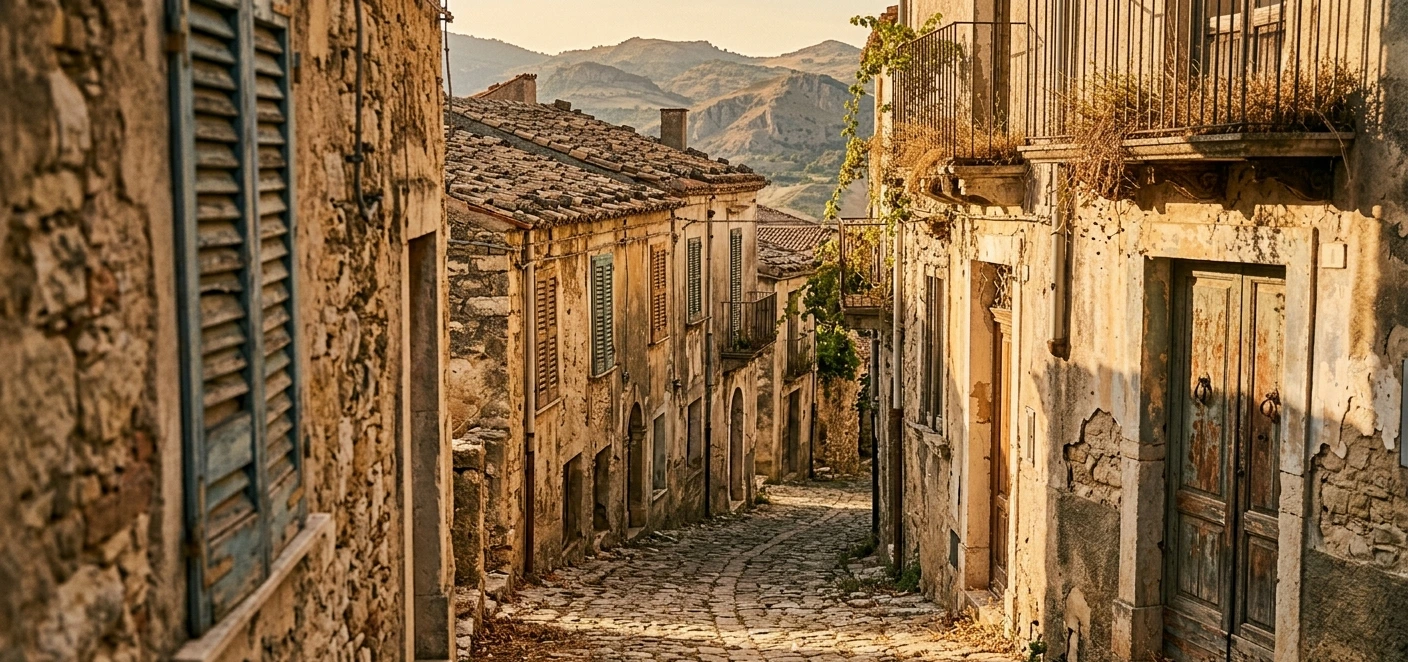
Buying a house in Italy for a symbolic 1 euro: the idea is enough to make anyone dream. And yet the scheme is very real. Since 2008, dozens of Italian towns have been selling off their abandoned homes at rock-bottom prices for one concrete reason: to attract new residents, breathe life back into deserted historic centres and slow the quiet disappearance of their villages.
But behind the headline price lie precise conditions, a very real renovation budget and, all too often, a town hall that is hard to reach. This guide covers the whole picture — how it works, the true cost, the pitfalls, the step-by-step process and the list of participating towns — without glossing over what most enthusiastic articles carefully leave out.
Aller en Italie
Relocation experts · since 2020
4.9
How many steps separate you from Italy?
A tailored offer based on your needs — in 3 min, no commitment
Tell us about your project
Profile, area, buying or renting
We select your services
From 50+ services in English
Receive your quote
Clear, detailed, personalized
*Indicative and customizable quote, no contractual commitment.
Free · 3 min · in English · no commitment
Create my offerHow does the “1 euro house” scheme work?
The principle is simple in its intention: a town puts abandoned properties up for sale at a symbolic price — often 1 euro, sometimes a few thousand — to buyers who commit, in exchange, to renovating them within a set deadline (usually one to three years) and to spending a minimum amount on the works.
On paper, everyone wins. The town gets rid of ruins that sometimes threaten to collapse, gains a taxpaying resident and revives its historic centre; the buyer, meanwhile, picks up an Italian bolthole for the price of a coffee.
One point is essential to grasp from the outset: there is no single national platform listing all the available properties. Each town runs its own scheme, at its own pace, with its own criteria and calendar. That is precisely what makes this arrangement, however appealing, difficult to navigate alone: there is no one-stop shop, no official catalogue, and the information circulates mainly at local level, in Italian.
THEY TALK ABOUT US
Maisons & Jardins · Le Figaro · Challenges
« Built on solid hands-on experience and an in-depth knowledge of Italian procedures. »
Jessica Colpin, co-founder — Maisons & Jardins France, Jan.–Feb. 2026
What the enthusiastic articles don’t tell you
This is the subject most guides skip over — and yet it is one of the very first things to weigh up seriously before you commit.
The vast majority of villages offering 1 euro houses sit in remote areas, sometimes more than an hour from the nearest large town. These places were not chosen at random: they are precisely the communities that have been losing people for decades. The young leave, shops close, the school and the doctor’s surgery cut their hours or vanish. The scheme exists exactly to try to reverse that spiral.
In practical terms, that means:
- difficult access by public transport — in many of these villages a car is essential, sometimes even for the smallest grocery run;
- limited local services: not always a doctor on site, a pharmacy open only a few days a week, a maternity ward 40 to 60 km away;
- patchy internet in some hamlets, which can make remote work tricky — something to check carefully if you plan to work from there;
- a social fabric to rebuild: the first few months can be lonely, especially until you speak decent Italian.
None of this means the villages lack charm — quite the opposite is usually true. But you need to go in with your eyes open. Our most valuable advice: visit several times before committing, and in different seasons. A bright, lively town in August can turn silent and cut off in January. It is that everyday, off-season reality you need to understand before you sign.
What about a B&B or holiday-let project?
It’s often the first idea that comes to mind: renovate the house, open it as a guesthouse or short-term rental, and turn it into a source of income. The idea is appealing. The reality deserves a clear-eyed look.
Tourist accommodation in a very isolated village, with no established visitor flow and no reputation, will struggle to fill enough rooms to be profitable year-round. The summer weeks can be good — but what happens in November or February? Some villages have built a genuine tourist positioning (hiking, food, heritage sites nearby) and can support this kind of project. Others remain confidential, off the beaten track, and will only draw a handful of curious travellers a year.
Before you take the plunge, ask the right questions: are there already visitors in this village? Are there guesthouses or B&Bs that actually work? How far are the nearest attractions? Can you generate traffic all year, or only in high season?
Our advice: if your main goal is a rental or B&B project, study the village’s tourism potential first — before letting the purchase price seduce you. A well-placed village 30 minutes from a major draw (the sea, an archaeological site, an art city) will be infinitely more promising than a hamlet lost in the Apennines, even if the latter has more raw charm.
Aller en Italie
French expatriation expert · since 2020
4.9
73 verified reviews
1,500+ expats supported
50+ services with French-speaking professionals
20 regions covered
Local consultants based in Italy
Free appointment · 15 min · in French · no commitment
Book an appointmentThe conditions you absolutely must meet
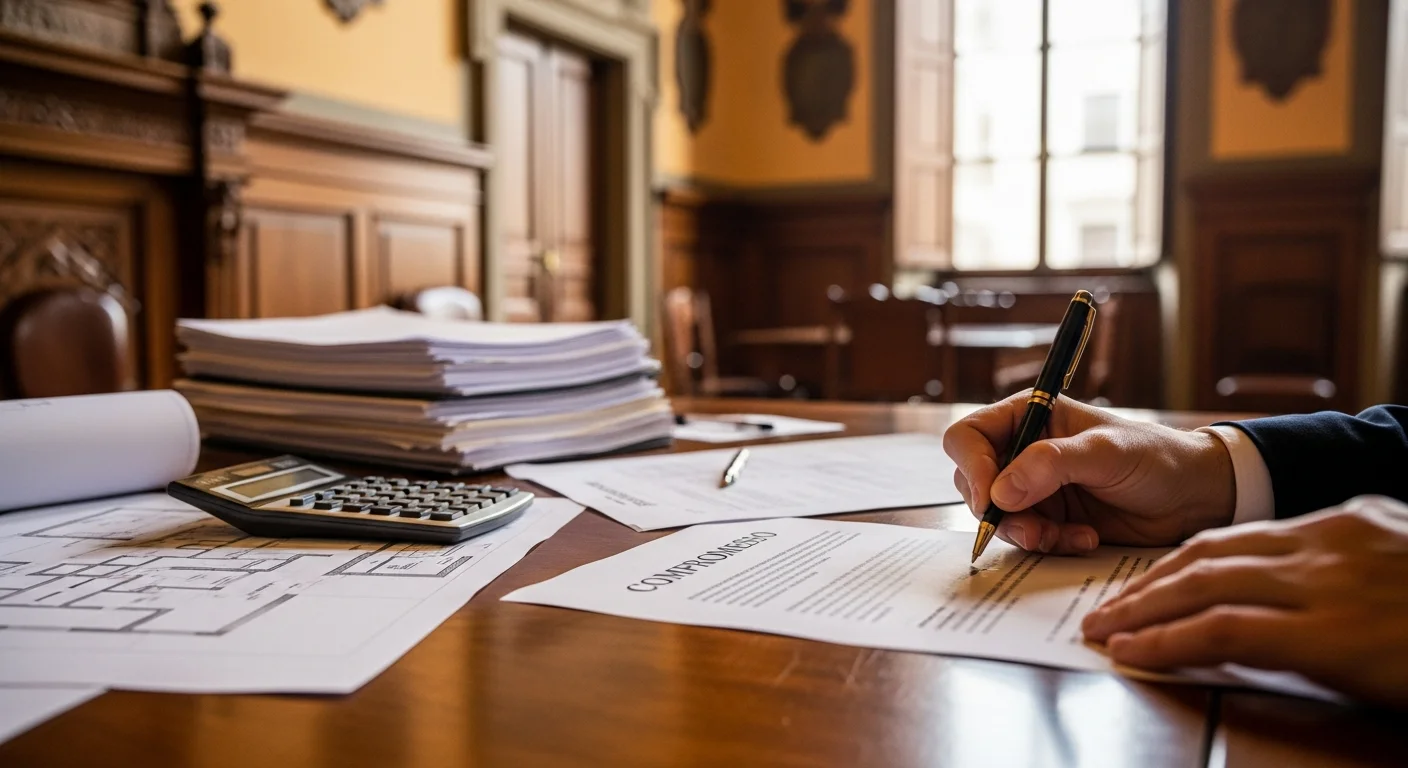
You don’t pick up an Italian house the way you order a coffee. The symbolic price comes bundled with binding commitments that each town sets freely in its own regulations (the bando). These clauses vary from village to village, but the same ones come up again and again:
- Renovation deadline: works must generally begin within 2 to 12 months of signing and be completed within 1 to 3 years, depending on the town. Missing the deadline can trigger penalties, or even cancellation of the sale;
- Minimum works budget: most towns require a renovation investment of between €20,000 and €50,000, sometimes more;
- Use of the property: some villages require it to become your main residence or to host a business; others allow a second home or holiday letting. Check this point above all else, as it shapes your entire project;
- Security deposit: a bond (often between €1,000 and €5,000) is frequently required, returned at the end of the works on production of the receipts;
- Heritage constraints: stone facades, historic architectural features and traditional materials often have to be preserved — a factor that can push up the cost of the works;
- Language: the contract is written entirely in Italian. Have a bilingual professional support you before you sign anything.
The real budget: how much does it actually cost?
This is the question everyone asks — and the answer quickly brings you back down to earth. Houses sold for 1 euro are, by definition, in an advanced state of neglect: roof to redo, no electricity, ancient plumbing, damp that has crept into the walls. The true cost of the project isn’t the purchase price, it’s the renovation. Here is a realistic budget to plan for:
| Cost item | Estimated amount |
|---|---|
| Symbolic purchase price | €1 |
| Notary & registration fees | €1,500 – 3,000 |
| Codice Fiscale + translations | €100 – 300 |
| Renovation works | €20,000 – 80,000 |
| Architect / surveyor (geometra) | €2,000 – 5,000 |
| Lawyer or bilingual adviser | €1,000 – 2,500 |
| Realistic total budget | €25,000 – 90,000 |
A concrete example to fix ideas: a buyer who acquired a 1 euro house in a village in Campania ended up investing €62,000 in works. Today he lets it as a short-term rental with satisfaction — but it took patience, a solid budget and several trips to Italy to coordinate the tradespeople. That’s the typical profile of a successful project: not a stroke of luck, but a project that was planned and financed.
The reality on the ground: why it’s hard to do alone
The town halls of these small communities are often very hard to reach. Many have no up-to-date website, their opening hours are limited, and their staff speak neither English nor French. Sending an email and waiting weeks for a reply — or never getting one at all — is an experience most foreign applicants share.
Another difficulty: there is no definitive, up-to-date list of available properties. A house advertised one day may have found a buyer the next week, or been pulled from the scheme without notice. The calls for applications (bandi) open and close as allocations are made and municipal decisions taken, with no fixed calendar. What is true one month is no longer true the next.
It is precisely to clear these obstacles that we offer to contact the towns on your behalf. Our bilingual teams know the right people to talk to, the expected format of a request and the real timelines on the ground. Book a call with us — the first consultation is free.
How to apply, step by step
The process resembles a standard property purchase in Italy, with a few steps specific to the scheme. Here is the typical path, in order:
- Choose your town on casea1euro.it or directly on the town hall’s official website, and check that the call for applications is still open.
- Visit the village — several times if possible, in different seasons — to get a real sense of daily life and the potential of the place.
- Get your Codice Fiscale (the Italian tax code). You can obtain it from an Italian consulate abroad, or directly from the Italian Revenue Agency (Agenzia delle Entrate). It is essential for any notarial deed in Italy.
- Put together your file: a motivation letter describing your project, proof of funds (bank statements for the last three months) and a written commitment to meet the renovation deadlines set by the town.
- Have the works estimated by a local builder or architect before signing. This step spares you nasty surprises and lets you budget precisely.
- Sign the preliminary contract, then the final deed of sale (rogito notarile) before an Italian notary. Every document is in Italian: bilingual professional support is indispensable here.
- Start the works within the allotted time and keep every invoice. They will be required to recover your security deposit and to prove you have met your commitments.
Note for non-EU nationals: buying property in Italy does not automatically grant a residence permit. EU citizens simply have to register with the local town hall if they settle there; other nationalities should look into the applicable residence conditions, such as the Golden Visa programme.
Participating towns, region by region
Here is the list of towns that have taken part — or still take part — in the scheme, with a short description to help you picture each one. Remember that availability changes constantly: this list is a starting point, not a real-time catalogue.
1 euro houses in Piedmont
Piedmont, in the north-west, is known for its UNESCO-listed wine hills, its white truffles and its perched medieval villages. The participating towns lie mainly in rural and mountainous areas.
- Albugnano — A small village in the Monferrato hills, about thirty kilometres from Turin. Endless vineyards, a serene atmosphere and a panoramic view over the Po plain.
- Borgomezzavalle — Tucked into the Antrona valley, at the gateway to the Alps. A preserved natural setting, ideal for those seeking peace in the heart of the mountains.
- Carrega Ligure — On the edge of Piedmont and Liguria, in the Ligurian Apennines. Wooded landscapes, pure air and authentic rural architecture.
- Rive — A small town in the province of Vercelli, on the Piedmont plain. A quiet village off the tourist trail, between rice paddies and canals.
1 euro houses in Liguria
Wedged between sea and mountain, Liguria is the region of the Cinque Terre and colourful villages clinging to the cliffs. The participating towns are in the hinterland, less known but just as endearing.
- Pignone — A village in the Ligurian hinterland, not far from La Spezia. Surrounded by chestnut forests and small vineyards, it keeps a remarkably intact medieval architecture.
- Triora — Nicknamed “the village of witches”, Triora is perched in the Argentina valley. Stone alleys, arches and medieval chapels — a place steeped in history and legend.
1 euro houses in Lombardy
Lombardy is Italy’s most powerful economic region.
- Milan — A special case: the scheme concerns properties in certain districts targeted by urban regeneration projects. The conditions are specific and worth checking directly with the city’s services.
- Montalto Pavese — A village in the Oltrepò Pavese hills, moving to the rhythm of the vines and the seasons. Renowned local wines and views over the Apennines.
1 euro houses in Veneto
- Unione Montana Pasubio Piccole Dolomiti — An inter-municipal territory in the Vicenza area, at the foot of the Little Dolomites. Spectacular Alpine landscapes, hiking trails and Great War heritage.
1 euro houses in Abruzzo
Abruzzo is home to nature reserves, perched medieval villages and still-wild countryside. It is one of the most endearing and least touristy regions of central Italy.
- Canistro — A village in the Liri valley, known for its mineral water. A calm setting, close to the Abruzzo National Park.
- Casoli — A small town on a rocky spur overlooking the Aventino valley. A medieval castle, open panoramas and well-preserved local life.
- Lecce nei Marsi — Nestled in the Fucino area. A quiet village at the heart of fertile farmland.
- Penne — A medieval town in the province of Pescara, listed among Italy’s most beautiful villages. Ramparts, bell towers and cobbled streets.
- Pratola Peligna — In the Peligna valley, between L’Aquila and Sulmona. A lively, well-connected village at the foot of the Maiella massif.
- Santo Stefano di Sessanio — One of the most photographed villages in Italy. Perched at 1,250 metres in the Gran Sasso, this fully restored medieval hamlet has become a model of sustainable tourism. Its 1 euro houses have drawn buyers from around the world.
1 euro houses in Lazio
Lazio means Rome, of course — but also a discreet countryside dotted with Etruscan villages, volcanic lakes and gently rolling landscapes.
- Graffignano — A village in the Tuscia, in the province of Viterbo. Medieval architecture, blond volcanic tuff and a timeless atmosphere.
- Maenza — In the Lepini Mountains, on heights overlooking the Pontine plain. A perched village with an exceptional sea view and Cistercian heritage.
- Patrica — A small farming town between Frosinone and Latina, surrounded by centuries-old olive trees.
- Santi Cosma e Damiano — On the border of Lazio and Campania, less than an hour from Naples. A mild microclimate and a strategic location.
1 euro houses in Marche
Marche remains one of Italy’s least known regions. Between hills, the Adriatic coast and fortified villages, it is a territory of great richness.
- Cantiano — A medieval town at the foot of Mount Catria. Known for its historic carnival and wooded landscapes.
- Monte Urano — In the province of Fermo, not far from the Adriatic coast. An active village known for its shoemaking craft — a living local industrial tradition.
1 euro houses in Tuscany
Tuscany needs no introduction — but the participating towns lie far from the classic circuits, in a more secret and authentic Tuscany.
- Fabbriche di Vergemoli — Lost in the Garfagnana, surrounded by forests and spectacular gorges. One of the wildest areas of Tuscany.
- Montieri — In the Maremma, between Grosseto and Siena. A former mining village surrounded by astonishing geothermal landscapes — fumaroles, hot springs and ochre hills.
1 euro houses in Emilia-Romagna
Emilia-Romagna, the land of Italian gastronomy (Parma, Bologna, Modena), has two participating towns in its most rural areas.
- Casteldelci — On the border of Emilia-Romagna and Marche, in the upper Marecchia valley. A mountain village with intact medieval heritage, surrounded by beech forests.
- Farini — In the Piacenza Apennines, province of Piacenza. A starting point for many hiking trails. Typically Emilian architecture and authentic local life.
1 euro houses in Basilicata
Basilicata is one of the least populated regions of Italy — and one of the most beautiful. Matera, its UNESCO-listed sassi, its lunar landscapes and its perched villages make it a place apart.
- Acerenza — Considered one of Italy’s most beautiful villages, perched on a rocky spur above the Bradano and Ofanto valleys. Its 11th-century Romanesque cathedral is an architectural jewel.
- Chiaromonte — A medieval village in the Pollino, at the gateway to the national park. Cobbled streets, tuff houses and sweeping views of the Calabrian peaks.
- Laurenzana — On the edge of the Appennino Lucano National Park. A very traditional, little-touristed village in an exceptional natural setting.
- Ripacandida — In northern Basilicata, not far from Melfi. Known for its Norman crypt adorned with remarkable Byzantine frescoes.
1 euro houses in Calabria
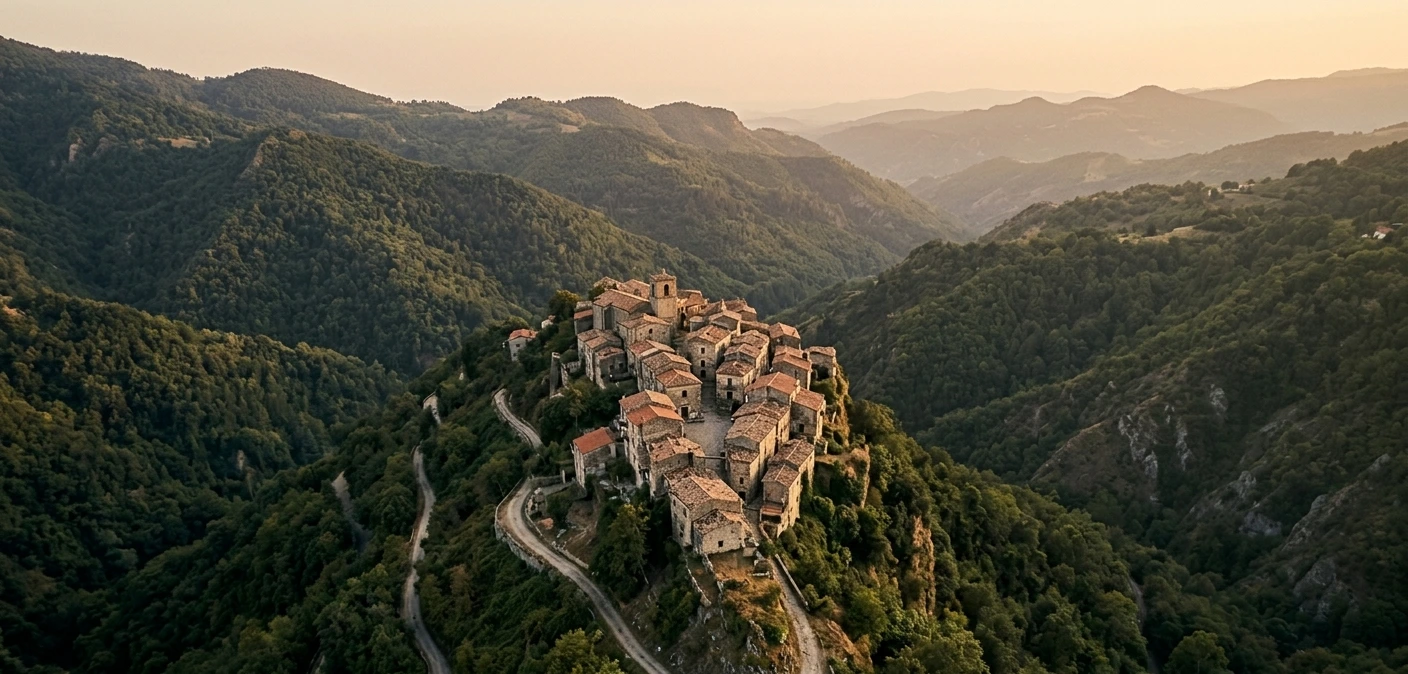
Calabria, the toe of the Italian boot, remains surprisingly little known to overseas buyers — wrongly so. Ionian and Tyrrhenian coasts, villages clinging to the Aspromonte mountains, generous cuisine: the region has a great deal to offer those who take the time to discover it.
- Albidona — A village in the province of Cosenza, in the Calabrian Pollino. Views over the Ionian Sea and architecture typical of southern Italy.
- Belcastro — Overlooking the Simeri valley, with a medieval castle above it. The feel of a village at the end of the world.
- Bisignano — A small town in the province of Cosenza with a well-preserved historic centre. Known for its tradition of lutherie and pottery.
- Cinquefrondi — In the Gioia Tauro plain, not far from Reggio Calabria. A farming village surrounded by olive and citrus groves.
- Gasperina — A village in the province of Catanzaro, on heights overlooking the Ionian coast. A remarkable sea view and absolute calm.
- Maida — In the province of Catanzaro. This village owes its international fame to the 1806 battle between the French and the British — which gave its name to London’s Maida Vale district.
- Platania — A mountain village in the province of Catanzaro, surrounded by pine forests. A pleasant climate, far from the summer-crowded coasts.
- Rose — In the province of Cosenza, at the gateway to the Sila. A well-equipped village in an exceptional natural setting for lovers of wide-open spaces.
1 euro houses in Campania
Campania is Naples, the Amalfi Coast and Pompeii — but also a deep countryside, forgotten villages and a popular culture of incredible richness.
- Altavilla Silentina — In the Cilento, province of Salerno. A medieval village surrounded by cultivated hills, an hour from the coast.
- Bisaccia — In Irpinia, province of Avellino. A hilltop village with medieval alleys, known for its Aragonese castle.
- Guardia Sanframondi — In the Benevento Samnium. Famous for its procession of penitents held every seven years. A deep cultural identity and a preserved natural setting.
- Pietramelara — In the province of Caserta, at the foot of the Matese massif. A traditional farming village, between olive trees and cereals.
- Teora — In Irpinia, rebuilt after the 1980 earthquake. A mountain village with a strong character, in a setting of great beauty.
- Torre Annunziata — A coastal town in the Naples conurbation, at the foot of Vesuvius. The nearby Oplontis archaeological site is UNESCO-listed.
- Zungoli — One of the “Most Beautiful Villages of Italy”. A medieval village in Irpinia, with a Norman castle overlooking a landscape of hills and deep valleys.
1 euro houses in Molise
Molise is the least known and least populated region of mainland Italy. It is also one of the most authentic — almost frozen in time, in the best sense.
- Castropignano — A medieval village in the Biferno valley, dominated by the ruins of a Norman castle. A timeless atmosphere.
- Petrella Tifernina — A village perched on the heights of Molise, with a panorama over the surrounding valleys and remarkable religious heritage.
- Sant’Elia a Pianisi — A village in upper Molise with a well-preserved historic centre. Lively traditional festivals and a warm welcome from the locals.
1 euro houses in Puglia
Puglia, the region of the trulli, the masserie and the turquoise sea, is seeing a strong property boom. The towns taking part in the scheme are located in less touristy areas, inland.
- Biccari — In the Dauni Mountains, province of Foggia. A mountain village with a small ski station and a remarkable beech forest.
- Candela — Also in the Foggia area. A village known for its powerful winds — which have inspired several wind-energy projects in the region.
- Caprarica di Lecce — In the Salento, a few kilometres from Lecce. A small farming village surrounded by millennial olive trees, close to the Adriatic beaches.
- Taranto — A large port city on the Ionian coast, with exceptional Greek and Roman heritage. Here the scheme concerns properties in the old town, currently under regeneration.
1 euro houses in Sardinia
Sardinia is seeing several inland towns try to attract new residents to offset rural depopulation.
- Bonnanaro — A village in the Logudoro, in the Sassari area. Lively traditions and nuragic sites nearby.
- Montresta — In the province of Oristano, between hills and sea. A preserved rural village, far from the coast’s tourist bustle.
- Nulvi — In northern Sardinia, province of Sassari. A village typical of the Sassari area, with its Baroque church and granite houses.
- Ollolai — A village in the Barbagia, at the heart of inland Sardinia. One of the first to launch the scheme on the island, with worldwide media coverage.
- Romana — In the province of Sassari. A small farming village with very much alive pastoral traditions.
- Sedini — Known for its “Rocca”, an imposing limestone rock hollowed with caves inhabited since the Neolithic. A fascinating village, between prehistory and contemporary life.
1 euro houses in Sicily
Sicily is by far the region with the largest number of participating towns. With its inland villages emptied by rural exodus, the island offers considerable property potential — and breathtaking landscapes.
- Augusta — A port on Sicily’s east coast, province of Syracuse. A historic town on a peninsula, with a strong Greek, Norman and Spanish past.
- Bivona — In the Agrigento hinterland, at the foot of the Sicani Mountains. A calm village surrounded by forests, with quiet local life.
- Calatafimi Segesta — At the foot of the Greek temple of Segesta, one of the finest Doric temples in the world. To buy a property here is to live at the heart of the ancient Mediterranean.
- Caltagirone — The city of ceramics, UNESCO-listed with the Val di Noto. Its majolica-decorated staircases are among the most iconic images of Sicily.
- Caltanissetta — A provincial capital at the heart of Sicily, a former mining area. A Baroque historic centre to rediscover.
- Castel di Lucio — A small village in the Nebrodi, province of Messina. Landscapes of forests and hills, far from mass tourism.
- Castiglione di Sicilia — In the Alcantara valley, at the foot of Etna. A medieval village of great beauty, with the spectacular Alcantara gorges nearby.
- Corleone — An inland Sicilian town that deserves to be known for its stunning landscapes, intact historic centre and warm people.
- Gangi — Voted “Most Beautiful Village of Italy” and awarded best restored village in Europe. Perched on the Madonie, it is one of the most photogenic villages in all of Sicily.
- Grotte — In the province of Agrigento, not far from the Valley of the Temples. A working-class village, authentic and still little visited.
- Itala — A village in the province of Messina, in the hills above the strait. An exceptional natural setting, midway between sea and mountain.
- Leonforte — In the Enna area, a Baroque town with its gran fonte — a monumental 17th-century fountain — and peaches famous across Sicily.
- Mussomeli — Dominated by a medieval castle balanced on a rock, this village in the Nisseno is one of the scheme’s emblems. Its mayor was among the first to publicise the arrangement in Italy.
- Palma di Montechiaro — In the Agrigento area, birthplace of the Prince of Lampedusa, author of The Leopard. A strong literary connection, a Baroque cathedral and the coast nearby.
- Petralia Soprana — The highest village of the Madonie, at 1,147 metres. Among Italy’s most beautiful villages, with 360° views over the Sicilian mountains.
- Pettineo — A small medieval village in the Messina area, in the Nebrodi. Stone architecture, narrow alleys and an end-of-the-world atmosphere.
- Piazza Armerina — Known for the Villa Romana del Casale, a UNESCO site for its extraordinary Roman mosaics.
- Racalmuto — Birthplace of Leonardo Sciascia, one of the greatest Italian writers of the 20th century. A place of pilgrimage for lovers of literature and Sicilian authenticity.
- Regalbuto — In the Enna area, on the shore of Lake Pozzillo. A traditional farming village surrounded by citrus and almond groves.
- Salemi — In the Trapani area, a town of Arab and Norman origins. One of the first towns to launch the scheme, back in 2008.
- Sambuca — Awarded “Village of the Year” in Italy, Sambuca di Sicilia is a masterpiece of Arab and Baroque urban planning. Its Lake Arancio and vineyard do the rest.
- San Biagio Platani — Famous for its “Archi di Pasqua” festival — arches of bread and sweets erected for Easter, listed as intangible cultural heritage.
- San Cataldo — In the province of Caltanissetta. Rich religious heritage and a working-class identity tied to the former sulphur mines.
- San Piero Patti — In the Nebrodi, province of Messina. A village typical of southern Italy, with its festive traditions and preserved natural surroundings.
- Saponara — In the hills of the province of Messina. A view over the Strait of Messina and Calabria on clear days.
- Serradifalco — A village in the Nisseno surrounded by cereal fields. Typical rural architecture and quiet local life.
- Termini Imerese — A coastal town in the province of Palermo, with ancient Roman baths and an active port. One of the few coastal towns in the scheme.
- Troina — The highest village in Sicily (1,121 metres), in the Enna area. Norman history, an 11th-century cathedral and bracing mountain air.
- Valguarnera Caropepe — In the province of Enna, a former mining village at the heart of deep Sicily. A strong working-class identity and inland Sicilian landscapes.
What we think of this opportunity
1 euro houses in Italy are a reality, not an urban legend. The scheme has existed since 2008 and continues to attract buyers from around the world in 2026. Some have carried out fine life or investment projects. But it is neither a gift without strings nor an automatic rental investment: it is a demanding project that rewards preparation and punishes improvisation.
For it to succeed, several conditions must come together: a realistic budget, between €25,000 and €90,000 all in; a good dose of patience with Italian bureaucracy; a serious assessment of the village’s potential (appeal, accessibility, services); and personal motivation that goes beyond the mere promise of a symbolic price.
Our recommendation: visit the village before committing, ideally outside the summer season. Meet the residents and local officials. Have the works estimated on site. And get support from an English-speaking expert who knows the workings of Italian property and administration — by far the best investment you can make before you sign.
How we can help you
At Allerenitalie, we don’t leave you alone to face the complexity of this scheme.
- Contacting the town halls on your behalf. Our bilingual teams know how to identify the right contact, draft requests in the expected form and obtain reliable information on the real availability of properties.
- Checking the exact conditions. We decode the specifications, renovation deadlines, security deposits and residence obligations specific to each town for you.
- Supporting you through the purchase. Our bilingual lawyers and legal advisers secure the purchase deed, verify the title deeds and represent you before the notary.
Aucun produit
Your most frequently asked questions
Is the 1 euro house scheme still active in 2026?
Yes. Several Italian towns still offer properties at this symbolic price. The scheme remains intermittent: calls for applications open and close as allocations are made and municipal decisions taken. Check casea1euro.it regularly, or entrust this monitoring to our team.
Can foreigners buy without living in Italy?
Absolutely. The scheme is open to foreigners, including non-residents. You will need a Codice Fiscale (the Italian tax code), obtained from an Italian consulate or the Italian Revenue Agency. Be aware, however, that some towns require the property to become your main residence. Always check the local conditions before applying.
Is it really profitable to open a B&B in a 1 euro village?
It all depends on the location. In an isolated village with no established visitor flow, year-round profitability is hard to reach. In a well-positioned village near the sea, a listed site or an art city, the project can be viable. That is why we recommend analysing the village’s tourism potential before letting the purchase price seduce you. Our team can carry out this analysis with you.