Buy a House in Tuscany in 2026: Prices by Area, Villas & One-Euro Homes
Explore the vibrant Tuscan property market in 2026, with varying prices, investment opportunities, and the allure of one-euro homes for international buyers.

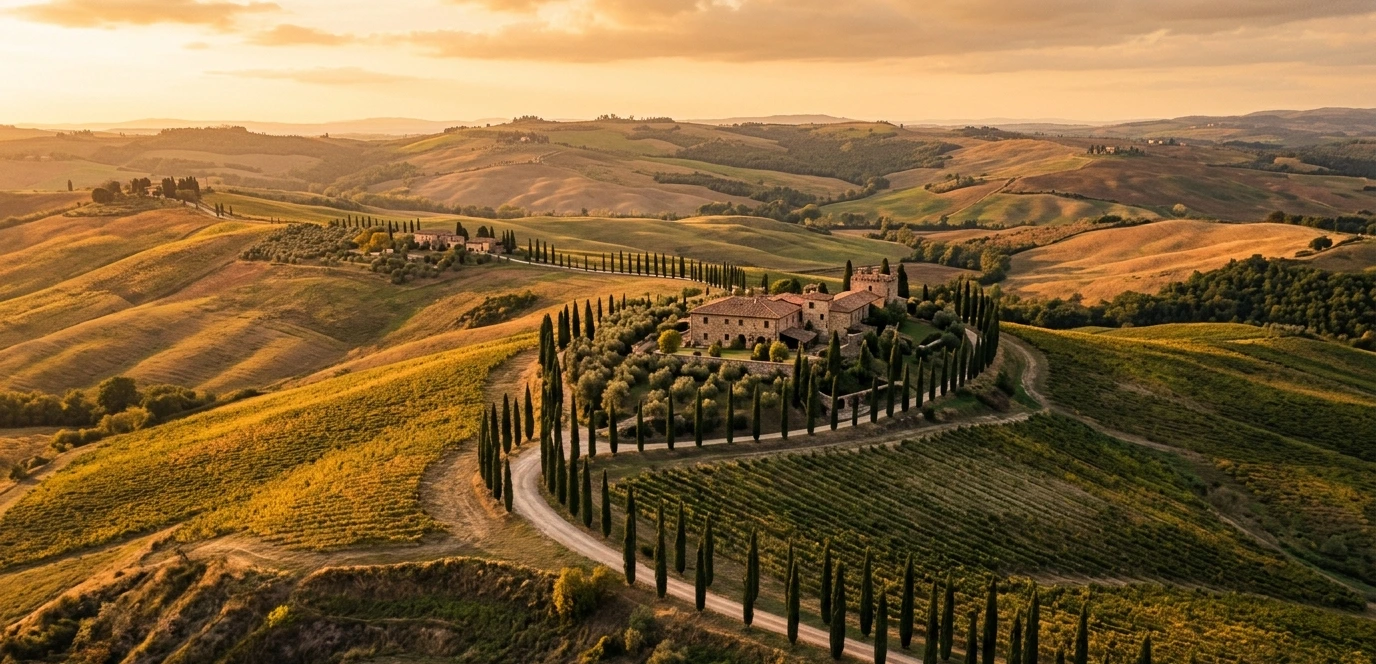
Buying a house in Tuscany is far more than a property investment: it is a life choice. Sun-gilded hills, cypress trees lining the road to a stone casale, medieval villages perched between vineyards and olive groves — Tuscany is, for thousands of international buyers, the Italy they dreamed of before making it real.
In 2026, the Tuscan property market remains one of the most attractive in Europe for foreign buyers. International demand is back, prices are stabilising in certain rural areas, and the opportunities — whether a Tuscany villa purchase with a pool in the Chianti or a village house to renovate in the Maremma — are very real for those who approach it well.
This guide, fully updated for 2026, covers prices per square metre by area (Florence, Siena, Lucca, Arezzo, Tuscan countryside), the conditions of one-euro homes in Tuscany, the villa and country house market, the role of a specialist Tuscany estate agency, and the practical steps for buying as a foreign national. Read it before you visit anything.
Aller en Italie
Relocation experts · since 2020
4.9
How many steps separate you from Italy?
A tailored offer based on your needs — in 3 min, no commitment
Tell us about your project
Profile, area, buying or renting
We select your services
From 50+ services in English
Receive your quote
Clear, detailed, personalized
*Indicative and customizable quote, no contractual commitment.
Free · 3 min · in English · no commitment
Create my offerThe Tuscan property market in 2026: what to know before you buy
The Tuscan property market stands out for its resilience and its enduring appeal to foreign buyers. According to Immobiliare.it and Idealista.it data updated for 2025–2026, the average price across Tuscany sits at around €2,900 per m², well above the Italian national average of roughly €1,900/m².
Several structural factors explain this resilience:
- Scarcity of quality properties: renovated homes with land are becoming increasingly rare in the most sought-after areas (Chianti, Val d’Orcia, the hills around Lucca), which keeps prices firm.
- The return of international demand: after a post-pandemic slowdown, British, American, German and other international buyers have returned in force since 2024.
- Strong seasonal rental potential: short-term rental platforms report record occupancy rates for Tuscan villas with pools, a compelling argument for investors.
- Attractive taxation for retirees: the flat tax regime at 7% for foreign retirees settling in small municipalities (fewer than 20,000 inhabitants) continues to draw a specific buyer profile to the region.
The wide geographic spread in prices — from €800/m² in deep rural areas to over €7,000/m² in central Florence — makes Tuscany a market to read zone by zone, not as a whole. That is exactly what the next section covers.
THEY TALK ABOUT US
Maisons & Jardins · Le Figaro · Challenges
« Built on solid hands-on experience and an in-depth knowledge of Italian procedures. »
Jessica Colpin, co-founder — Maisons & Jardins France, Jan.–Feb. 2026
Price per m² in Tuscany by area in 2026: the comparison table
The price ranges below are drawn from 2025–2026 data published by Italy’s leading property portals and from feedback gathered by local specialist agencies. These figures apply to properties in good condition or already renovated. A property requiring full renovation typically comes at a 30 to 50% discount on the prices shown.
| Area / Province | Average price €/m² | Low–high range | Typical property type |
|---|---|---|---|
| Florence — historic centre | €4,800 | €3,800 – €7,000 | Apartment in a historic palazzo, premium heritage investment |
| Florence — outskirts & hills | €3,200 | €2,400 – €4,500 | Villa with garden, character house, quiet residential apartment |
| Siena — city and surroundings | €2,800 | €2,000 – €3,800 | Apartment in the medieval centre, house with views over the Crete Senesi hills |
| Chianti (between Florence and Siena) | €3,000 | €2,200 – €4,500 | Renovated podere, farm with vineyard or olive grove, villa with panoramic pool |
| Lucca — city and province | €2,600 | €1,800 – €3,500 | Historic centre apartment, village house, suburban villa with land |
| Arezzo — city and province | €1,900 | €1,400 – €2,800 | Town house, apartment, rural farmhouse in Valdichiana or Valtiberina |
| Val d’Orcia & Montepulciano | €2,400 | €1,800 – €3,500 | Renovated stone house, podere with land, UNESCO village home |
| Tuscan countryside — Maremma, Garfagnana, Volterra | €1,200 | €800 – €1,800 | Casale to renovate, rural farmhouse, rustico — strong appreciation potential |
| Versilia & Forte dei Marmi | €4,500 | €3,000 – €8,000 | Premium seaside villa, seafront apartment, prestige residence |
| Etruscan Coast — Livorno, San Vincenzo, Cecina | €2,200 | €1,500 – €3,200 | Apartment, house with garden, property with accessible seasonal rental potential |
Source: Immobiliare.it, Idealista.it, specialist local agencies — data observed over 2025–2026. Prices for properties in good condition or renovated. A discount of 30 to 50% is possible for properties requiring major works.
Bear in mind: on top of the purchase price, budget consistently for 10 to 15% in additional costs — notary fees (around 2%), registration tax (2% for a primary residence / 9% for a second home, calculated on the cadastral value) and agency commission (3 to 4% excluding VAT, in line with local practice).
Aller en Italie
French expatriation expert · since 2020
4.9
73 verified reviews
1,500+ expats supported
50+ services with French-speaking professionals
20 regions covered
Local consultants based in Italy
Free appointment · 15 min · in French · no commitment
Book an appointmentBuying a villa in Tuscany: the character property market in 2026
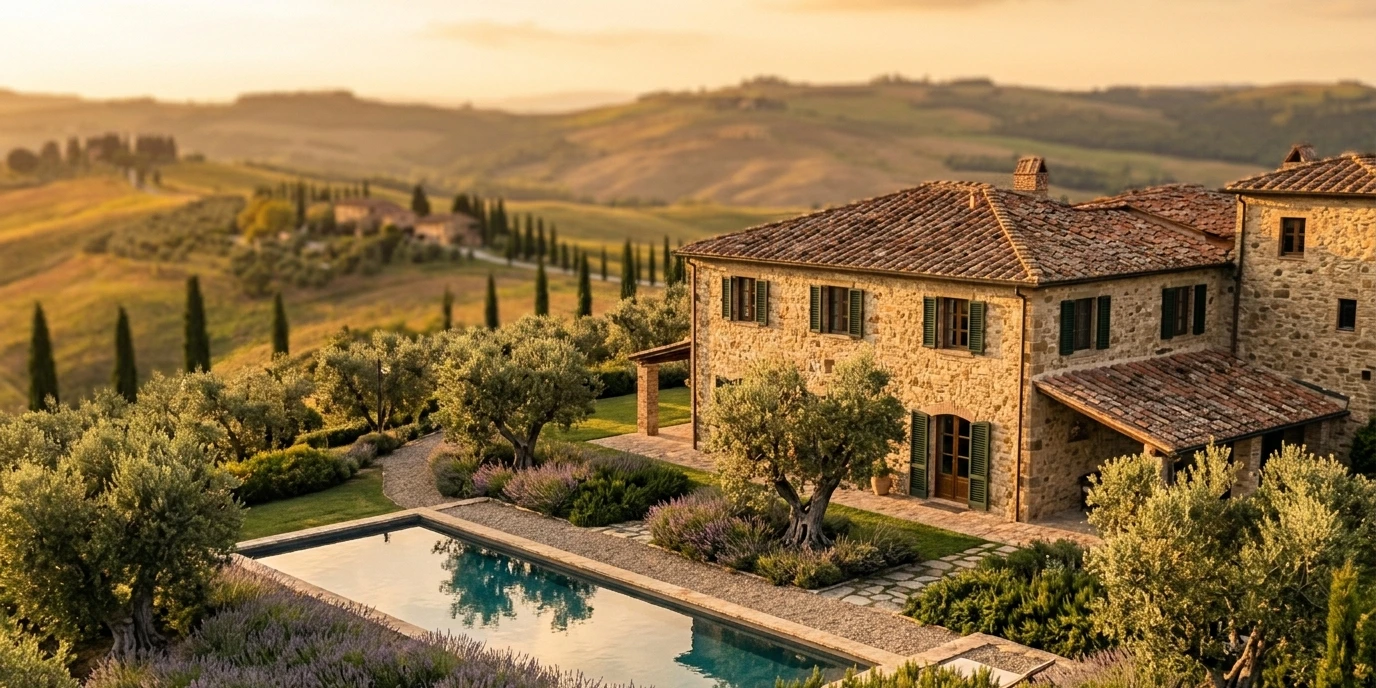
Buying a villa in Tuscany is the most sought-after segment among international buyers — and also the most competitive. In 2026, character properties (villa, casale, podere, renovated rustico) are moving fast in premium areas, and the finest examples often sell within weeks.
What buyers are looking for: exposed stone, wooden shutters, a panoramic terrace, a private pool, an olive grove or vineyard — and ideally a location within 30 minutes of a city of art or a motorway junction. These criteria, combined with limited supply, explain why prices hold firm in this segment.
The preferred areas for buying a villa in Tuscany
The Chianti remains the benchmark area. Stretching between Florence and Siena, this iconic territory accounts for a large share of prestige transactions. A renovated podere with vineyard or olive grove is valued at between €400,000 and €2 million depending on size and finish. Demand consistently outstrips supply.
The Val d’Orcia, a UNESCO World Heritage site, is sought after for its exceptional landscapes. Renovated stone houses here are rare and command strong prices, ranging from €350,000 to €1.5 million. This is the area whose imagery of cypress-lined lanes has become the defining picture of Tuscany — and the market reflects that perfectly.
The hills around Lucca offer excellent value compared to the Chianti. Fine properties with land remain accessible between €250,000 and €700,000, with the sea 45 minutes away and Florence within an hour.
The Maremma (province of Grosseto) represents the standout opportunity of 2026 for buying a Tuscan villa at still-reasonable prices. Casali with land can be negotiated between €150,000 and €400,000 in this wild and preserved territory — an area worth watching closely before international demand pushes prices higher.
Points to check before you sign
Buying a villa in a rural Tuscan setting involves specific checks that foreign buyers often underestimate:
- Planning compliance: undeclared renovations are common in rural areas. Any extension or structural modification must have valid administrative approval on record.
- Land status: agricultural or buildable? Agricultural land places strict limits on extensions or outbuildings.
- Easements and rights of way: these are worth verifying carefully on isolated properties.
- Structural condition: roof, timber frame, septic tank, electrical systems — old stone houses can conceal substantial works.
A competent notaio and an experienced English-speaking adviser are indispensable for securing this type of purchase. That is precisely what our team offers.

One-euro homes in Tuscany: what the programme really involves in 2026
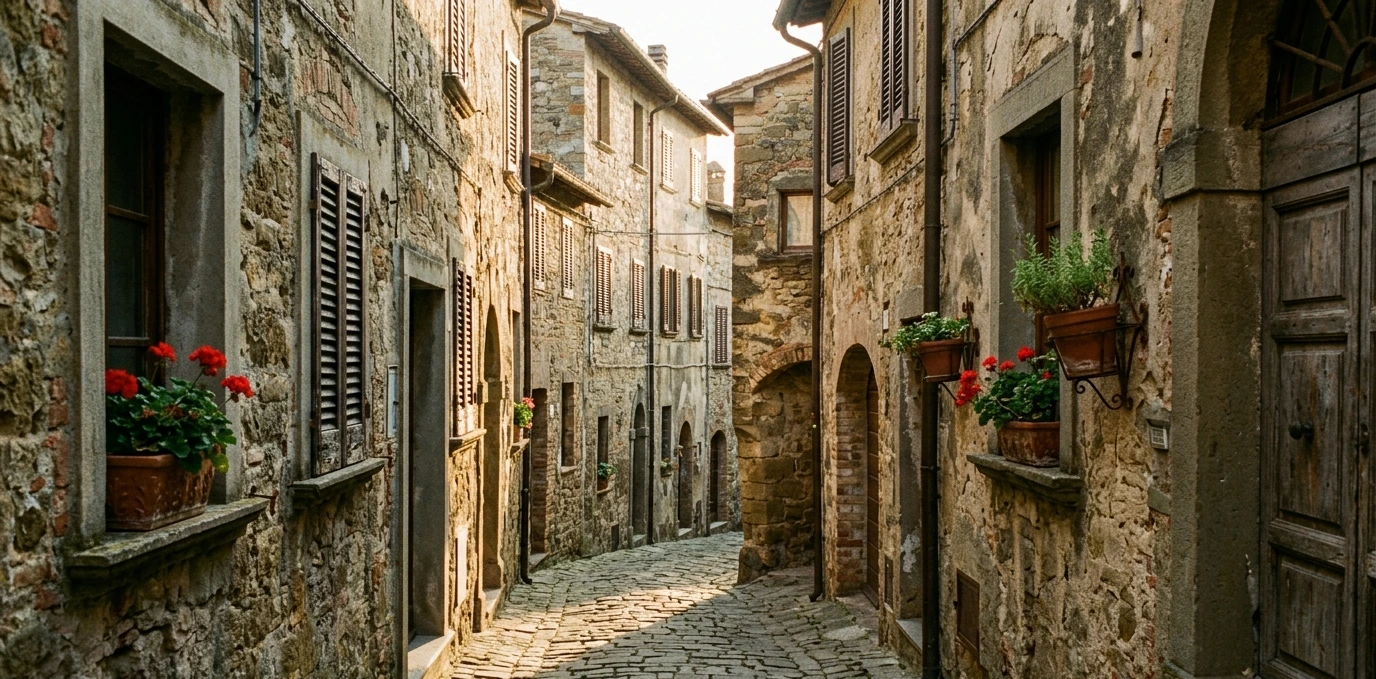
Searches for one-euro homes for sale in Tuscany have surged since 2023. The appeal is understandable: the idea of acquiring a property in one of the world’s most beautiful regions for a symbolic euro is hard to resist. The reality is more nuanced — but the programme is genuine.
In 2026, two Tuscan municipalities are officially participating in this type of revitalisation initiative:
- Fabbriche di Vergemoli (province of Lucca, Garfagnana): a village nestled among forests and mountains in the heart of preserved natural landscape. The available properties are old stone houses, often in poor structural condition. The setting is magnificent; the renovation work, substantial.
- Montieri (province of Grosseto, metalliferous hills of the Maremma): a former medieval mining town with strong character. An authentic historic centre, narrow lanes, views over the hills — and a municipality banking on residential appeal to revitalise itself.
How does a one-euro home in Tuscany work?
The mechanism is the same in both municipalities: the local authority transfers the property for one symbolic euro, in exchange for a detailed and costed renovation plan, a deposit of between €2,000 and €10,000 (variable depending on the municipality and the condition of the property), and a commitment to complete the works within a set period of one to three years. If the deadline is not met, the deposit is forfeited and the property may be reclaimed by the municipality.
The real cost of a one-euro home in Tuscany
What these listings do not always make clear: renovation costs in Tuscany are among the highest in Italy. Skilled labour, quality materials (stone, terracotta, timber), and architectural constraints tied to heritage protection zones all add up — plan for between €50,000 and €150,000 in works, sometimes more for heavily deteriorated properties. Building permit timelines can also be lengthy in listed areas.
That said, for a well-advised buyer with a realistic budget and a coherent project (personal residence, rural gîte, bed and breakfast), a one-euro home in Tuscany remains a genuine opportunity. It is not a turnkey property for €1 — it is a life project to be built, in one of the finest settings in Europe.
To explore all the active municipalities across Italy and compare conditions by region, see our full guide: one-euro homes for sale in Italy.
Where to buy in Tuscany? The key areas by buyer profile
Tuscany covers more than 22,000 km² and its property markets differ dramatically from one province to the next. Here is the profile-based reading that has guided our work with buyers for years.
You are looking for a solid long-term investment — Florence
The Florentine market is the most liquid in Tuscany. A well-positioned apartment in the historic centre holds its value over time, rents easily both on long-term and short-term contracts (subject to local regulations), and benefits from permanent international visibility. The trade-off: prices are high, competition is strong, and short-term rental regulations are tightening. A realistic minimum budget is €400,000 to €600,000 for a quality apartment in the centre.
You are after rural dolce vita — Chianti, Val d’Orcia, the hills around Siena
This is the heart of the Tuscan dream. These areas account for the majority of foreign villa and estate purchases. Seasonal rental demand is excellent: a villa with a pool in the Chianti can generate €3,000 to €6,000 per week in high season. Prices are high but the value is real and lasting.
You want quality of life with a controlled budget — Lucca, Arezzo
Two cities often overlooked by foreign buyers, yet very well regarded by Italians. Lucca (with its province stretching toward the Garfagnana and the sea) and Arezzo (gateway to the Valdichiana and the Valtiberina) offer an excellent balance: prices 30 to 40% below the Chianti, remarkable quality of life, and genuine local community — not an open-air museum.
You are looking for a high-potential opportunity — the Maremma and southern Tuscany
The standout opportunity of 2026. Less familiar to foreign buyers, the Maremma and southern Grosseto province still offer casali with land at accessible prices, unspoilt nature and a quality coastline. Prices here have not yet caught up with demand — a window to act before the trend reverses.
You are planning to live in Tuscany year-round — think beyond the property itself
Living in Tuscany full-time means choosing an area with the infrastructure your daily life requires: hospitals, schools, shops, rail connections. The best-balanced areas for a lasting move are the provinces of Lucca, Arezzo and Siena, which combine an active local life, good accessibility and an exceptional living environment. Our complete guide to living in Tuscany covers residency procedures, real costs and the practical specifics for international residents.
Coastal and luxury property in Tuscany
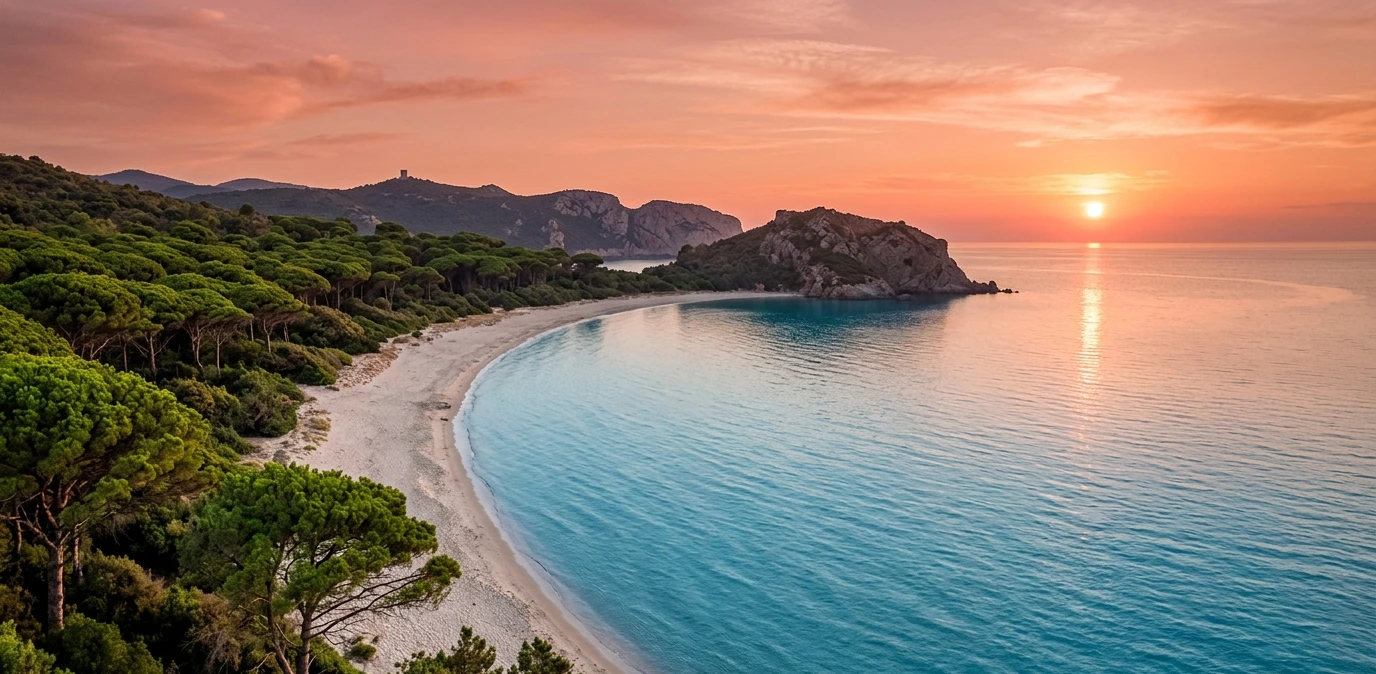
The Tuscan coast often comes as a pleasant surprise to buyers discovering the region for the first time: less dramatic than Sardinia or Sicily, it compensates with exceptional accessibility, reliable seasonal rental demand and an authentic coastal lifestyle.
The Versilia (Forte dei Marmi, Viareggio, Pietrasanta) represents the premium end of the coastline. Elegant villas, a wealthy international clientele, high seasonal rental potential — and prices that reflect it, between €3,000 and €8,000/m².
The Maremma coast (Castiglione della Pescaia, Orbetello, Capalbio) offers a more natural, preserved stretch of shoreline with protected natural parks. Highly popular for quiet second homes, between €2,500 and €4,000/m².
The Etruscan Coast (San Vincenzo, Cecina, Rosignano) remains the most accessible option, with prices between €1,500 and €3,200/m² and steady seasonal rental demand — an area worth considering for a rational rental investment.
In the luxury segment, Tuscany offers wine estates, listed historic villas and exceptional residences in the Chianti or Val d’Orcia, reaching several million euros. These properties are often paired with a business project (agritourism, wine production, high-end accommodation) that justifies the investment over the long term.
Estate agencies in Tuscany and the buying process for foreign buyers
Before walking through the purchase steps, one important point: the Tuscan property market does not operate like most markets buyers are used to. Private listings are rare, asking prices are often negotiable, and certain properties — particularly the finest villas — never appear on public portals. This is where choosing the right partner on the ground makes all the difference.
Tuscany estate agencies: the good and the less good
There are hundreds of estate agencies in Tuscany, from local generalists to international firms specialising in foreign buyers. Here is what you need to know:
- In Italy, the estate agent (mediatore) in principle represents both parties — seller and buyer. The commission is split between the two, typically 3 to 4% (excluding VAT) from each side, making a total of 6 to 8% of the price. Some agencies charge the buyer only: check the terms before any viewing.
- A specialist Tuscany agency with a thorough knowledge of the local market, strong relationships with vendors and genuine experience of foreign buyers will give you access to off-market properties and help you avoid the classic pitfalls (overpaying, undisclosed defects, unresolved cadastral issues).
- An independent English-speaking adviser — separate from the selling agent — adds an additional layer of protection that is particularly valuable for buyers who do not speak Italian. They can coordinate viewings, analyse legal documents and represent your interests during negotiations.
Our team: your English-speaking partner in Tuscany
Aller en Italie works with a curated network of local professionals. We support you from the moment you define your project through to signing at the notaio: area identification, property selection (including off-market), legal and planning due diligence, negotiation, and notarial coordination. Everything in English, everything in full transparency.
The purchase process for foreign buyers in Tuscany
- Obtain your codice fiscale (Italian tax identification number): required for any property transaction. Obtained at an Italian consulate in your country or directly at the Agenzia delle Entrate in Italy.
- Open an Italian bank account: not compulsory, but strongly recommended to reduce transfer costs when paying the balance at the notaio.
- Sign the proposta d’acquisto (purchase offer): a binding contractual document committing both parties, accompanied by a deposit of 5 to 10%.
- Sign the compromesso (preliminary contract): a notarised or privately executed agreement, with a further deposit of 10 to 30%. If the seller withdraws, they must return double the deposit.
- Sign the atto notarile (final deed) before the notaio: definitive transfer of ownership, payment of the balance and all associated costs. The notaio in Italy represents both parties and guarantees the legality of the transaction.
If you are planning to settle in Tuscany long-term, our guide to living in Tuscany covers residency procedures, applicable taxation and everyday life in the region.
Conclusion: buying a house in Tuscany in 2026 — where to begin?
Tuscany in 2026 remains one of Italy’s safest, most desirable and most varied regions for a property purchase. Whether you are looking at a villa in the Chianti for a high-end rental project, an apartment in Florence for long-term capital appreciation, a one-euro home in Tuscany for an ambitious renovation, or a casale in the Maremma for an Italian life away from the crowds — the region has an answer for every vision.
What separates a successful purchase from a costly disappointment? Knowledge of the local market, rigorous legal and planning checks, and the quality of the people around you. In Tuscany more than anywhere, the best properties do not stay available for long — and the pitfalls, for those unfamiliar with local practice, can be expensive.
Our English-speaking team, based in Italy, supports you from start to finish in your project to buy a house in Tuscany. Get in touch for an initial conversation with no commitment — it is often where the finest acquisitions begin.
FAQ — Your questions about buying property in Tuscany
What budget should I plan for buying a house in Tuscany in 2026?
In 2026, the average price across Tuscany is around €2,900 per m². Budget €150,000 to €300,000 for a house to renovate in a rural area (Maremma, Garfagnana, the province of Arezzo), €400,000 to €800,000 for a renovated property in the Chianti or the hills around Siena, and upwards of €4,000/m² in central Florence. Add 10 to 15% for additional costs (notary, registration tax, agency).
What is a one-euro home in Tuscany and how do I access the programme in 2026?
In 2026, two Tuscan municipalities are offering properties for a symbolic €1: Fabbriche di Vergemoli (province of Lucca) and Montieri (province of Grosseto). The buyer must submit a costed renovation plan, pay a deposit (€2,000 to €10,000) and complete the works within one to three years. The real cost: between €50,000 and €150,000 in renovation works, depending on the state of the property. A genuine opportunity — provided you go in with clear expectations and the right support.
Can I buy a villa in Tuscany on a limited budget?
Yes — by targeting the right areas. In the Maremma, the Garfagnana or around Volterra, farms (casali) and rusticos requiring renovation are negotiated at between €800 and €1,500/m². For a villa with a garden in reasonable condition, plan a minimum budget of €200,000 to €300,000 in the least touristy areas. The hills around Lucca and the province of Arezzo also offer good value compared to the Chianti.
What are the steps for a foreign buyer purchasing in Tuscany?
Foreign nationals can buy freely in Italy. The steps are: codice fiscale (Italian tax number, obtained at your local Italian consulate), an Italian bank account (recommended), proposta d’acquisto (purchase offer with a 5–10% deposit), compromesso (preliminary contract with a 10–30% deposit), then the atto notarile (final deed signed before the notaio). Working with a specialist Tuscany estate agency and an English-speaking adviser is strongly recommended to secure the entire process.
What are the advantages of living in Tuscany as an expat?
Living in Tuscany offers an exceptional quality of life: iconic landscapes, outstanding cuisine, a unique cultural heritage, a mild climate and an active international community. For retirees, the flat tax regime at 7% in municipalities of fewer than 20,000 inhabitants represents a considerable fiscal advantage. The infrastructure (Pisa and Florence airports, rail network, hospitals) makes it possible to combine rural living with genuine accessibility. See our guide to living in Tuscany for all the practical details.
How do I choose an estate agency in Tuscany as a foreign buyer?
Look for a specialist Tuscany agency with proven experience working with international buyers, a thorough knowledge of rural areas and access to off-market properties. In Italy, the agent in principle represents both parties — their commission (3 to 4% excluding VAT) is paid by each side. An independent English-speaking adviser, working alongside the agency, protects your interests exclusively during negotiations and document review. Together, they form the right combination for a secure purchase.