Buying land in Italy
Buying land in Italy requires understanding the distinctions between agricultural and buildable plots, as well as the specific regulations that apply.


Buying land in Italy is a dream for many people considering a move abroad or a simpler life closer to nature. Whether you want to build your own home, set up a tiny house, or buy a house in Italy, the country draws people in with its landscapes, climate, and attractive prices — particularly for agricultural land, which is often far more affordable than building land.
However, before investing, it is essential to understand Italian regulations, as the possibilities differ greatly depending on the type of land. Agricultural land is subject to strict rules limiting construction, while building plots offer more freedom — but at a higher cost.
In this article, we explore both types of land in detail — agricultural and building land in Italy — to help you understand their differences, the applicable regulations, and the real costs of buying or building, as well as the essential safeguards needed to carry out your property project with confidence.
Aller en Italie
Relocation experts · since 2020
4.9
How many steps separate you from Italy?
A tailored offer based on your needs — in 3 min, no commitment
Tell us about your project
Profile, area, buying or renting
We select your services
From 50+ services in English
Receive your quote
Clear, detailed, personalized
*Indicative and customizable quote, no contractual commitment.
Free · 3 min · in English · no commitment
Create my offerAgricultural land in Italy

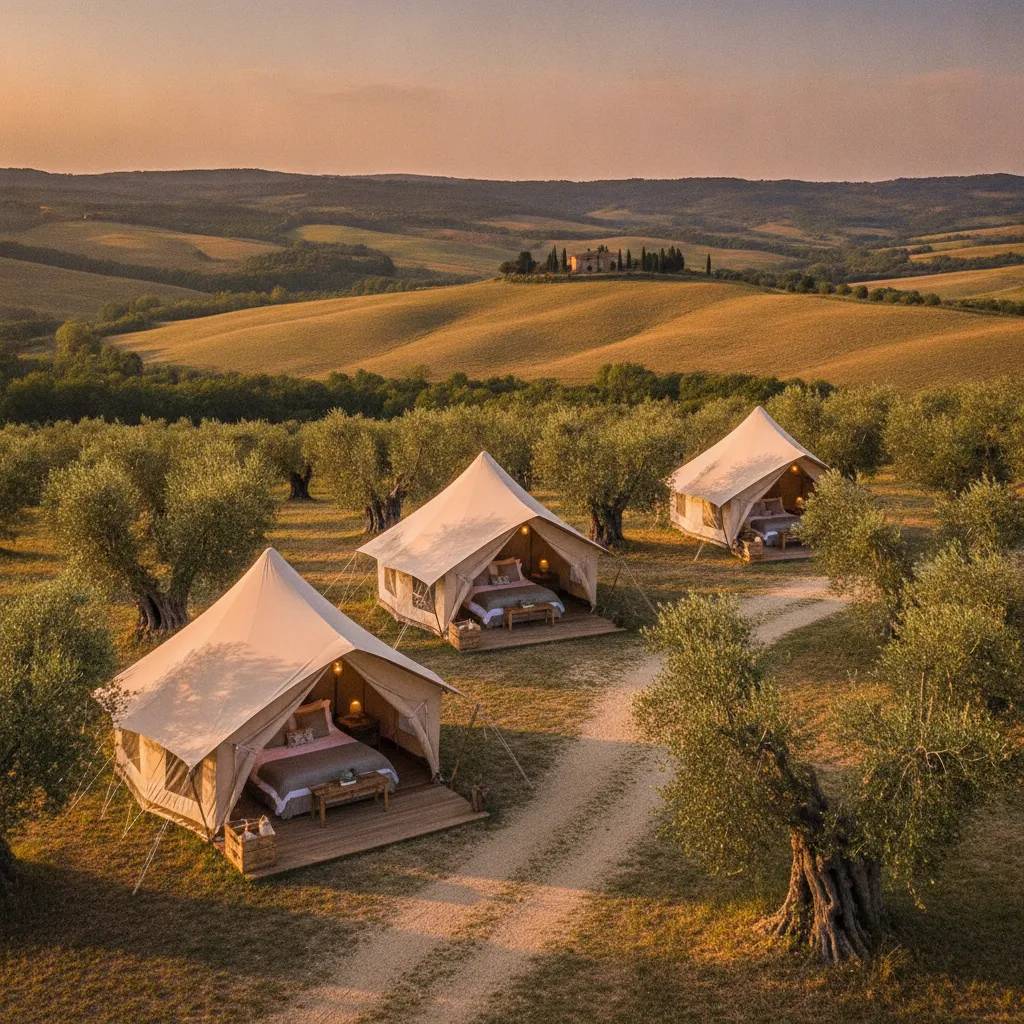
Agricultural land (terreni agricoli) attracts many buyers for its significantly lower prices compared to building plots, particularly in rural regions such as Le Marche, Tuscany, and Puglia, where open countryside is still abundant. However, its use is strictly regulated under Italian law, and it is essential to understand the limitations before investing.
Only professional farmers (Imprenditore Agricolo Professionale – IAP) or those whose primary occupation is agricultural activity can obtain building permission on this type of land. The building density index is extremely low — on average 0.03 m³/m² — meaning that one hectare (10,000 m²) allows for no more than a house of approximately 100 m².
Tiny houses, timber cabins, and lightweight structures are no exception: even without foundations, they are considered permanent constructions if intended for residential use. Installing them on agricultural land without a permit is therefore illegal and can result in significant fines or even forced demolition.
In some rural areas, you may find houses already built on agricultural land where the original farming activity has since been abandoned. Although these properties can seem appealing due to their price, they may cause difficulties when reselling or seeking administrative regularisation, as their status does not always comply with current regulations.
This is why it is strongly recommended to work with bilingual professionals — a lawyer, a land surveyor (geometra) — who can verify the planning status of the property, the validity of titles, and any applicable legal restrictions. This support is essential to avoid legal pitfalls and invest safely in agricultural land in Italy.
THEY TALK ABOUT US
Maisons & Jardins · Le Figaro · Challenges
« Built on solid hands-on experience and an in-depth knowledge of Italian procedures. »
Jessica Colpin, co-founder — Maisons & Jardins France, Jan.–Feb. 2026
Building land in Italy
Building plots in Italy (terreni edificabili) are the only type of land on which it is legally permitted to build. Their price, generally higher than that of agricultural land, reflects the legal certainty and freedom to build they offer, within the framework of the municipality's General Regulatory Plan (PRG). Before any purchase, it is essential to request from the local council a Urban Destination Certificate (Certificato di Destinazione Urbanistica – CDU), a document that specifies the buildable surface area, permitted uses (residential, commercial, craft activity), and any environmental or landscape restrictions. This information must always be verified by a professional before signing a preliminary agreement or purchase deed.
Even on a building plot, certain restrictions may apply: protected zones, seismic zones requiring reinforced construction standards, right-of-way easements, or specific rules regarding building height, setback distances, and maximum footprint. These constraints vary by municipality and can affect project feasibility. To obtain building permission, it is mandatory to submit a building permit application (Permesso di Costruire) to the local council. This process can only be carried out by a qualified land surveyor (geometra), an architect (architetto), or a structural engineer (ingegnere) authorised to sign and submit the technical file. These professionals are also responsible for site supervision, compliance with safety standards, and ensuring the works match the approved plans. The permit processing time is generally between 60 and 120 days, while construction works typically take between 8 and 18 months, depending on the scale and type of project.
In Italy, the law protects the future owner through several legal guarantees. The most important is the ten-year structural warranty (garanzia decennale postuma), which is mandatory for new builds: it covers structural defects that could compromise the integrity of the building for ten years. In addition, there is a two-year warranty covering finishes and installations, as well as the builder's civil liability for defects or latent faults. These protections, which can be supplemented by additional insurance (covering delays, cost overruns, or construction defects), provide genuine security for the buyer.
That said, buying a building plot and constructing a house in Italy requires a thorough understanding of local administrative and technical procedures. The involvement of a land surveyor or architect is not only legally required for the permit application, but also indispensable to avoid technical errors, ensure works comply with approved plans, and secure the final certificate of habitability (certificato di agibilità). For foreign buyers, it is therefore strongly advisable to work with bilingual professionals — a lawyer, notary, land surveyor, and architect — who can coordinate the process and safeguard every stage of the project. This support enables you to carry out a real estate investment in Italy with full confidence, in complete compliance with local rules and building standards.
Aller en Italie
French expatriation expert · since 2020
4.9
73 verified reviews
1,500+ expats supported
50+ services with French-speaking professionals
20 regions covered
Local consultants based in Italy
Free appointment · 15 min · in French · no commitment
Book an appointmentTaxation on land in Italy
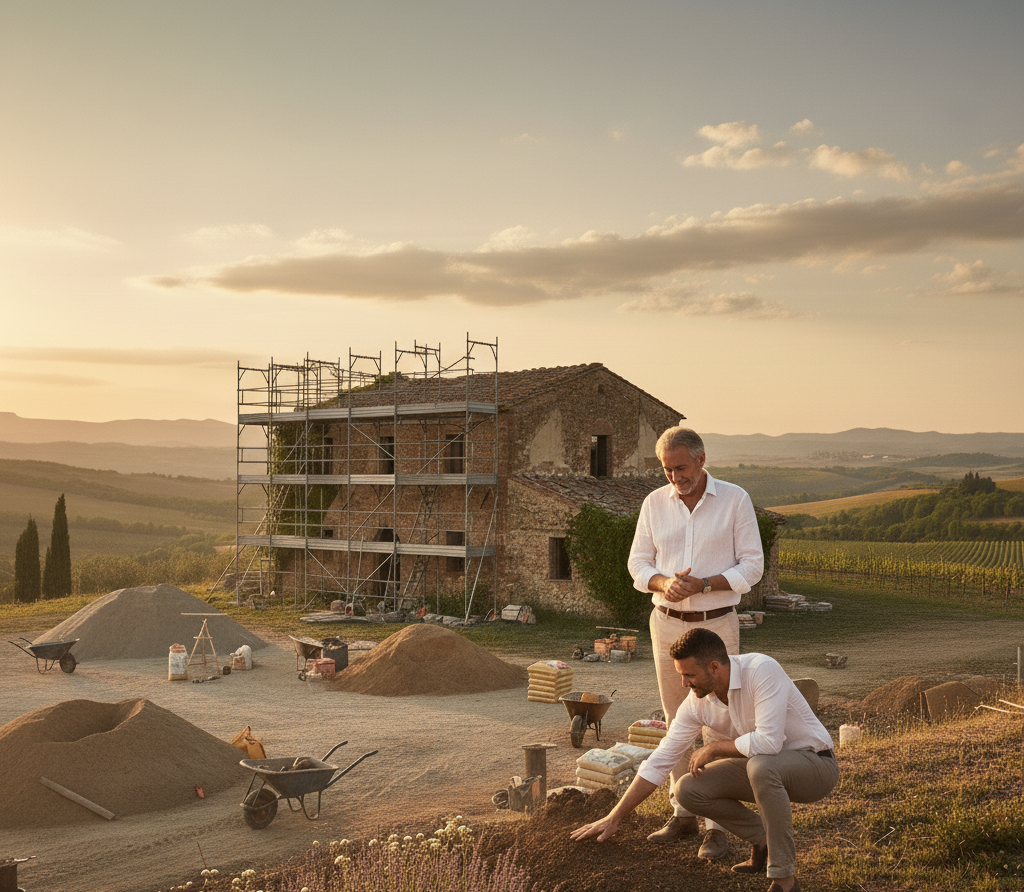
Buying land in Italy requires a clear understanding of the specific tax rules that apply, both at the time of purchase and during ownership. The taxes, levies, and incentives vary depending on the type of land (agricultural or building), the nature of the project, and the buyer's status.
When purchasing a building plot, private buyers are subject to a registration tax (imposta di registro) of 9% on the cadastral value, plus a fixed mortgage tax and cadastral tax of €50 each. If the land is purchased from a VAT-registered company, VAT applies at 22% on the sale price. For agricultural land, the tax burden is lighter: some transactions benefit from reductions or exemptions, particularly when purchased by professional farmers (IAP).
Once you become an owner, you are liable for the annual property tax (IMU – Imposta Municipale Unica), which applies to both building plots and agricultural land, with certain exceptions for specific rural areas. The tax rate varies by municipality, generally between 0.76% and 1.06% of the cadastral value.
In terms of incentives, Italy offers several tax incentives that may apply to construction or property improvement projects. These schemes can be used for builds on building plots, provided the relevant technical criteria and statutory limits are met.
Given the complexity of Italian tax law, it is strongly recommended to consult a bilingual tax adviser or lawyer before any purchase, in order to identify available incentives, tax obligations, and the most effective filing strategies to optimise your property investment in Italy.
FAQs
1 — Can you build freely on agricultural land in Italy?
No. In Italy, construction on agricultural land is strictly regulated. Only professional farmers (IAP) or those whose primary occupation is agricultural activity can obtain building permission. Even a tiny house or a timber structure requires a building permit, as these structures are considered permanent buildings once intended for residential use.
2 — What documents should you check before buying land in Italy?
Before any purchase, it is essential to request from the local council the Urban Destination Certificate (CDU) to find out the permitted uses, buildable surface area, and land constraints. You should also check the General Regulatory Plan (PRG), any existing easements, and confirm cadastral and legal compliance with the help of a land surveyor or lawyer.
3 — Is it better to buy land or an existing house in Italy?
It depends on your project. Buying land allows you to design a fully custom home, but involves longer timelines, complex permits, and often significant construction costs. Buying an existing property, on the other hand, offers a faster and sometimes more cost-effective solution, especially if it qualifies for renovation incentives.
4 — How long does it take to obtain a building permit in Italy?
The average processing time is 60 to 120 days from the date of a complete application submission. The file must be prepared and signed by a qualified land surveyor, architect, or structural engineer. The timeline may be longer if the land is located in a protected zone (historical, landscape, or seismic), requiring additional authorisations.