Living in Trentino-Alto Adige: Complete Guide 2026
Everything you need to know to live in Trentino-Alto Adige: cost of living, housing, climate, transport, taxation and the steps to settle in Trento or Bolzano.

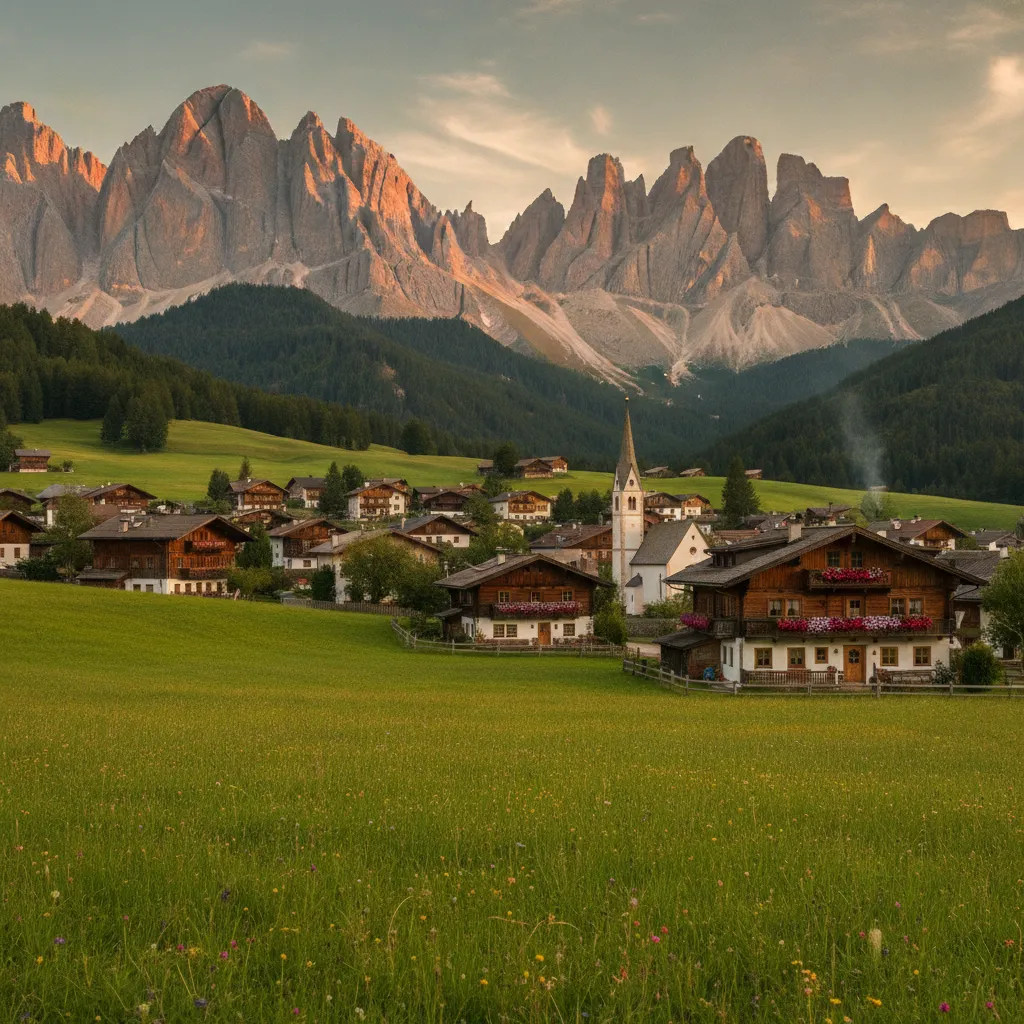
Living in Trentino-Alto Adige means choosing one of Italy's most preserved and prosperous regions. Nestled between the Dolomites and the Alps, this autonomous region in northern Italy — bordering Austria and Switzerland — offers an exceptional quality of life, some of the country's best public services, and a unique cultural identity at the crossroads of the Latin and Germanic worlds. With over one million residents spread across two autonomous provinces, Trento in the south and Bolzano (Alto Adige / Südtirol) in the north, it attracts a growing number of expats each year who are drawn by nature, quality of life, and economic stability.
Aller en Italie
Relocation experts · since 2020
4.9
How many steps separate you from Italy?
A tailored offer based on your needs — in 3 min, no commitment
Tell us about your project
Profile, area, buying or renting
We select your services
From 50+ services in English
Receive your quote
Clear, detailed, personalized
*Indicative and customizable quote, no contractual commitment.
Free · 3 min · in English · no commitment
Create my offerTrento or Bolzano: where to settle in Trentino-Alto Adige?
The first question most expats face is choosing between the two provincial capitals. They are very different cities, and your personal profile will largely determine which suits you best.
Living in Trento: an authentically Italian city
Trento is the capital of the autonomous province of the same name, roughly 100 km north of Verona and 200 km south of Innsbruck. With around 120,000 inhabitants, it is a human-scale city with a vibrant atmosphere, driven by a university ranked among Italy's best — which welcomes a large number of international Erasmus students every year. Daily life is conducted in Italian, the atmosphere is decidedly Mediterranean despite the alpine setting, and prices are somewhat more affordable than in Bolzano.
In 2025–2026, the average purchase price in Trento is around €3,088/m², with an average rent of €12.7/m² — roughly €1,016/month for an 80 m² flat in the city centre. A room in a shared flat can go as low as €350–550/month. For a single person including rent, utilities, food, and transport, budget around €1,500–1,900 per month.
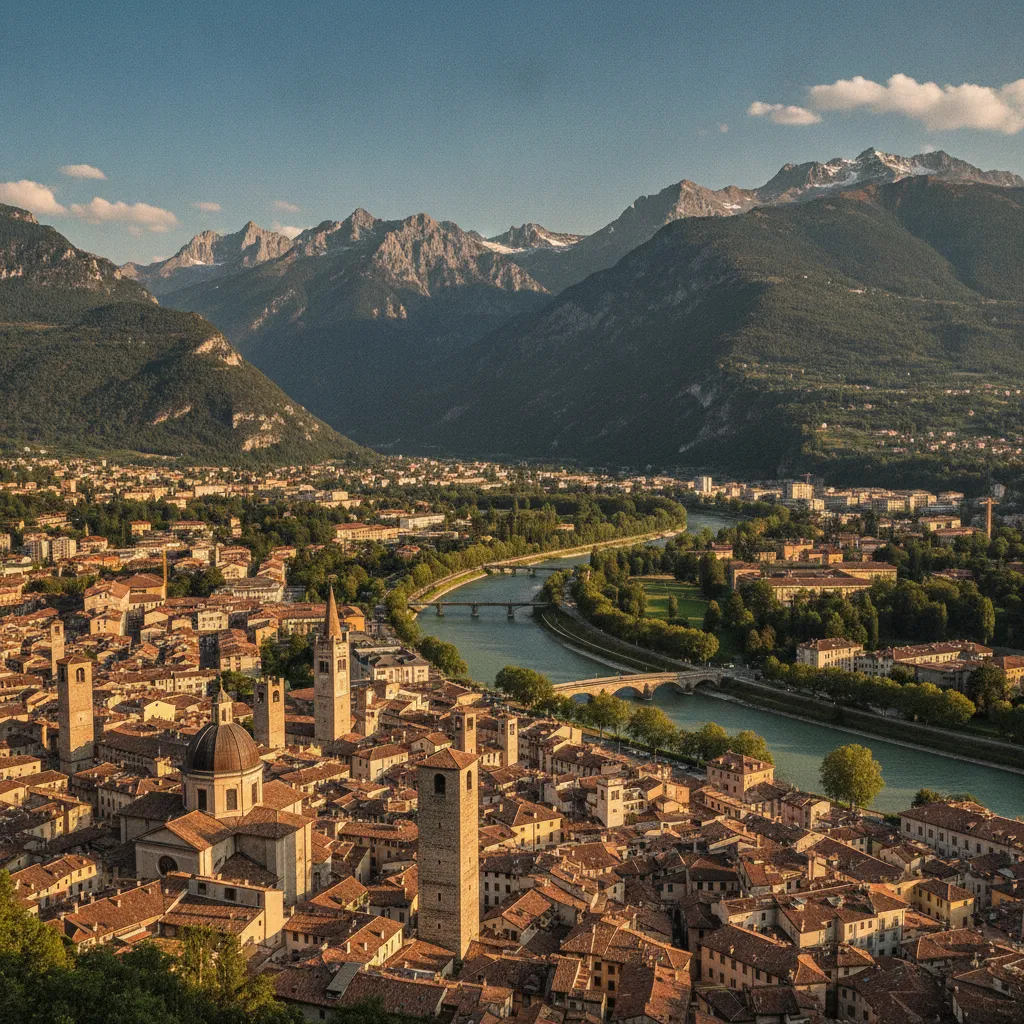
Trento is particularly well suited to families, remote workers, and retirees who want to immerse themselves fully in Italian culture while enjoying easy access to the mountains. At Aller en Italie, we regularly support clients relocating here who appreciate exactly this balance between a lively university city and quick access to the Dolomites.
Living in Bolzano: an alpine and multicultural experience
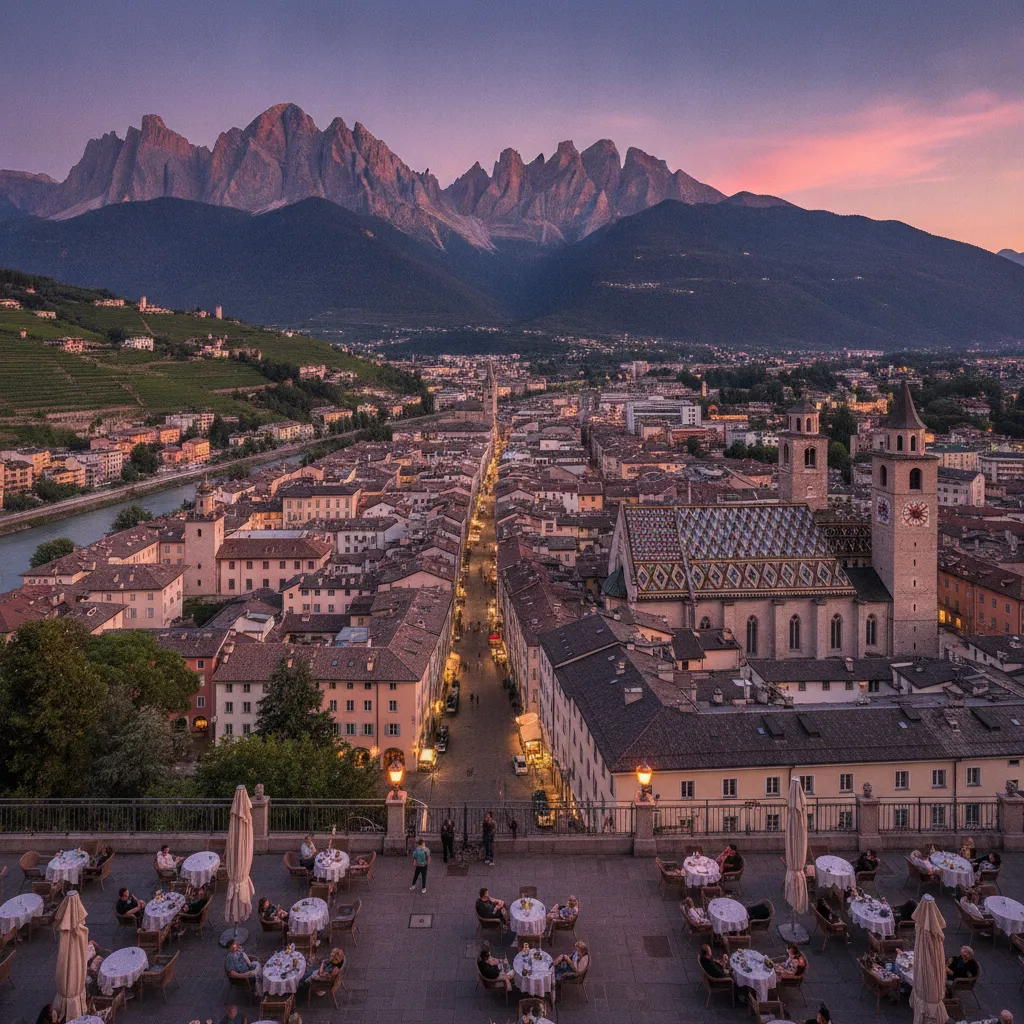
Bolzano (Bozen) is the capital of the autonomous province of Bolzano, at the heart of Alto Adige (Südtirol). It is a smaller city but extraordinarily well connected — to Austria, the alpine valleys, and major European routes via the Brenner corridor. Its defining characteristic? Three official languages: German, Italian, and Ladin, with approximately 70% of the population German-speaking and 25% Italian-speaking.
Bolzano is generally more expensive than Trento. The average purchase price reached €4,685/m² at the end of 2025, and rents range between €835 and €1,200/month for a one-bedroom flat in the city centre. A single person should budget €1,800–2,000/month all-inclusive. In return, salaries are above the Italian average and the quality of public services is remarkable.
For an international expat settling in Bolzano, it is ideally helpful to have a good command of Italian and, ideally, German — especially if you are aiming for a position in the public sector, where a provincial bilingualism examination is often required. For the private sector, international roles, or remote work, however, the city remains very accessible.
Merano, the lakes, and the valleys: other options worth considering
Beyond the two capitals, the region offers some very appealing alternatives. Merano, 30 km from Bolzano, is known for its mild microclimate, thermal baths, and quiet residential atmosphere — highly popular with retirees and well-off families. The Dolomite valleys (Val Gardena, Val di Fassa, Val Pusteria) attract mountain lovers and sports enthusiasts, with authentic alpine villages but often very high property prices. Finally, the northern shore of Lake Garda — partly within the province of Trento — offers a Mediterranean setting just a short drive from ski slopes, ideal for families who want the best of both worlds.
Map of Trentino-Alto Adige: location of Trento, Bolzano, Merano, and the main alpine valleys relative to Austria, Veneto, and Lombardy.THEY TALK ABOUT US
Maisons & Jardins · Le Figaro · Challenges
« Founded on solid field experience and an in-depth knowledge of Italian procedures. »
Jessica Colpin, co-founder — Maisons & Jardins France, Jan.–Feb. 2026
Everyday life: climate, transport, healthcare, and schools
A varied alpine climate
Trentino-Alto Adige has a continental climate with alpine nuances and, in some lower valleys, near-Mediterranean influences. In Trento, winters are cold (temperatures regularly below freezing from December to February) and summers are warm and sunny. In Bolzano, situated in the Adige valley at low altitude, summers can be very hot — temperatures frequently exceed 30 °C in July and August, with heatwaves pushing above 35 °C — while winters remain cold and dry. This often surprises newcomers: Bolzano can actually be hotter than Milan in summer!
Transport: a well-connected region
Both cities lie on the strategic Brenner corridor, one of Europe's most important routes between northern Italy and Austria. Rail connections are frequent to Verona, Milan, Innsbruck, and Vienna. At the regional level, a network of buses and trains serves the alpine valleys with impressive efficiency — particularly by comparison with other Italian regions. Within the cities, getting around is mainly done on foot, by bicycle, or by bus; both cities are well designed for sustainable mobility.
Healthcare: among Italy's best services
The provincial healthcare system (Servizio Sanitario Provinciale) of Trentino-Alto Adige consistently ranks among the best in Italy for quality of care and patient satisfaction. Both Trento and Bolzano have modern general hospitals, efficient emergency services, and a good density of specialists. In Bolzano, public health services are provided in both Italian and German, in accordance with the autonomous status. For expats, registering with a local GP (medico di base) after obtaining residency is the key step to accessing the public health system.
Schools and bilingualism
The school system is managed at the autonomous province level, giving it distinct characteristics. In Trento, schools are primarily Italian-medium, with solid technical secondary schools and high schools. The University of Trento is one of Italy's best in its category. In Bolzano and the province of Bolzano, the system is unique: there are separate Italian-medium, German-medium, and Ladin-medium public schools, assigned according to the family's linguistic affiliation. The region's educational indicators are among the highest in Italy. For children whose home language is not Italian, integration into an Italian-medium school in Trento, or the Italian-medium schools in Bolzano, is the most natural path.
Aller en Italie
French expatriation expert · since 2020
4.9
71 verified reviews
1,500+ expats supported
50+ services with French-speaking professionals
20 regions covered
Local consultants on the ground in Italy
Free appointment · 15 min · in French · no commitment
Book an appointmentCost of living in Trentino-Alto Adige in 2026
Trentino-Alto Adige is clearly one of Italy's most expensive regions — something worth knowing in advance, as the higher costs come with a quality of life and level of services well above the national average.
| Expense | Trento (2025–2026) | Bolzano (2025–2026) |
|---|---|---|
| 1-bedroom flat, city centre (rent) | €800–1,130/month | €835–1,200/month |
| 3-bedroom flat, city centre (rent) | €1,300–1,750/month | €1,500–2,000/month |
| Average purchase price | ~€3,088/m² | ~€4,685/m² |
| Simple restaurant meal | ~€17 | ~€19 |
| Dinner for two (mid-range restaurant) | €60–100 | €77–80 |
| Coffee / cappuccino | €1.80–2.50 | €1.80–2.50 |
| Monthly utilities (80 m²) | ~€200 | €190–210 |
| Monthly budget, single person | €1,500–1,900 | €1,800–2,000 |
| Monthly budget, family of 4 | €3,000–3,500 | €3,500–4,000 |
In summary, Trento offers a high but slightly more affordable cost of living, with a more distinctly "Italian" feel. Bolzano is considerably more expensive for housing and dining, but salaries are also higher, which partially offsets costs for working residents. In both cases, the region remains competitive compared with major Western European cities once quality of life is factored in.
To compare with other Italian destinations, our guide on living in Veneto offers useful insight into the neighbouring region, and our article on living in Lombardy provides a comparison with Milan and its surroundings.
Moving to Trentino-Alto Adige: procedures and residency
Settling in Trentino-Alto Adige follows the same steps as elsewhere in Italy, with a few specificities linked to the region's autonomous status.
Key steps for relocating to the region
The first step is obtaining the codice fiscale (Italian tax identification number), which is essential for all administrative, banking, and property-related procedures. You can request it from the Italian consulate in your home country before you leave, or directly from the Agenzia delle Entrate once you are in Italy. The next step is registering with the anagrafe (municipal population register) in your chosen municipality — Trento, Bolzano, or elsewhere — which formally establishes your administrative residency in Italy.
This registration has significant consequences: it creates a strong presumption of Italian tax residency. Under Article 2 of the TUIR (Italian Consolidated Income Tax Act), any person present in Italy for more than 183 days per year — or who has their domicile, habitual residence, or anagrafe registration there — is considered an Italian tax resident and must declare all worldwide income in Italy.
The Italy–France tax treaty of 1989 (in force since 1992) provides mechanisms to avoid double taxation. In mixed situations, it applies successive tie-breaker criteria to determine tax residency: first, the permanent home; then the centre of vital interests (closest personal and economic ties); then habitual abode; and finally nationality. An individual who lives and works primarily in Trento or Bolzano will generally be considered an Italian tax resident, with an obligation to file tax returns in Italy.
For more detail on these matters, our guides on how to obtain residency in Italy and on the Italy–France tax treaty cover everything you need to know.
Opening a bank account and arranging insurance
An Italian bank account is virtually essential for paying rent, utilities, and local taxes. The process can seem complicated from abroad, but it is entirely manageable with good preparation. You should also think about health coverage: before you are registered with the public system, an international health insurance policy will protect you during the transition period.
Buying property in Trentino-Alto Adige
If your plans go beyond renting and you are considering purchasing a property in the region — whether a primary residence in Trento, a flat in Bolzano, or a chalet in the Dolomites — the market is attractive but requires a solid understanding of local specificities. Prices are high by Italian standards (up to €4,685/m² in Bolzano), and certain areas of Alto Adige have specific planning regulations linked to the autonomous status.
Our comprehensive guide on buying property in Trentino-Alto Adige covers prices by area, the purchase process, notary fees, and the legal particularities you need to be aware of. Neighbouring regions also make for interesting comparisons: see our guide on buying property in Veneto or our article on buying property in Lombardy.
In our experience supporting expats with property purchases in Trentino-Alto Adige, the projects that go most smoothly are those prepared several months in advance, with a clear understanding of the local market and professional support on the ground. If you would like step-by-step guidance, our team is available through our support services page.
Exploring the neighbouring regions
Trentino-Alto Adige borders several remarkable regions. Veneto, with Venice, Verona, and the Belluno Dolomites, is directly accessible to the south-east. Lombardy and Lake Garda stretch out to the south-west. If you are considering several alpine options before making your decision, our guides on living in Veneto and living in Lombardy will be valuable resources. For other mountainous regions of Italy, you may also find our articles on living in Friuli and the Aosta Valley useful — two alpine destinations that share a distinctive cross-border identity with France and Switzerland.
FAQ — Living in Trentino-Alto Adige
Do you need to speak German to live in Trentino-Alto Adige?
It depends on the province. In the province of Trento, Italian is more than sufficient for daily life, administrative procedures, and work in the private sector. In the province of Bolzano (Alto Adige / Südtirol), both German and Italian are official languages and approximately 70% of the population is German-speaking. To work in the public sector in Bolzano, a provincial bilingualism examination is often required. For the private sector, remote work, or freelance professions, Italian alone is generally sufficient — but a good command of German opens up significantly more opportunities.
What is the cost of living in Trento compared to Bolzano?
Trento is slightly more affordable than Bolzano. In 2025–2026, the estimated monthly budget for a single person (rent, utilities, food, transport) is €1,500–1,900 in Trento, versus €1,800–2,000 in Bolzano. The average purchase price is around €3,088/m² in Trento and €4,685/m² in Bolzano. In both cases, Trentino-Alto Adige is among Italy's most expensive regions — but the higher costs come with a quality of life, public services, and infrastructure that are well above the national average.
Can EU citizens easily obtain residency in Trentino-Alto Adige?
Yes, absolutely. As an EU citizen, you have the right to move and settle freely in Italy. The main step is registering with the anagrafe (municipal population register) in your chosen municipality — Trento, Bolzano, or another. You will need to present a valid identity document, proof of address, and in some cases proof of sufficient financial means. This registration formalises your administrative residency and triggers access to public services (healthcare, schools, etc.).
What are the tax implications of moving to Trentino-Alto Adige?
If you reside in Italy for more than 183 days per year and are registered with the anagrafe, you will in principle become an Italian tax resident and must declare all your worldwide income there. The Italy–France tax treaty of 1989 includes provisions to avoid double taxation: it allocates tax residency based on the permanent home, then the centre of vital interests (family, work, assets). An individual whose primary life is in Trento or Bolzano will generally be considered an Italian tax resident. It is strongly advisable to consult a tax specialist familiar with both countries before finalising your move.
Is Trentino-Alto Adige a good place for families with children?
Yes, it is a region particularly well suited to families. State schools are of good quality, with educational indicators among the best in Italy. In Trento, the school system is Italian-medium and accessible to children who are learning Italian. In Bolzano, there are separate Italian-medium, German-medium, and Ladin-medium school streams. The region offers a safe living environment, with nature all around, a wide range of outdoor activities (skiing, hiking, cycling), and quality family-oriented infrastructure. The main consideration for families is the housing budget, which is noticeably higher than in most other parts of Italy.
Is it easy to find work in Trentino-Alto Adige as a foreigner?
The job market in Trentino-Alto Adige is one of Italy's most dynamic, with a very low unemployment rate. Key sectors include alpine tourism, agri-food (wine, apples, cheese), industry, healthcare, and education. Remote work for an employer based abroad is entirely feasible from the region. For local positions, a good command of Italian is essential, and German is a significant asset in Bolzano. Salaries are above the Italian average, particularly in the province of Bolzano.
Are there grants for moving to small villages in Trentino?
Yes, the province of Trento has introduced schemes to encourage repopulation of certain mountain villages. Grants of up to €100,000 have been reported, combining a renovation subsidy (up to €80,000) and a purchase grant (up to €20,000), on the condition of residing there for at least 10 years or renting the property at an affordable rate. These schemes vary by municipality and budget cycle; it is advisable to contact the relevant local authorities directly to find out the current terms and conditions.