Living in Lombardy: Everything You Need to Know Before Moving to Northern Italy
Living in Lombardy offers a dynamic and innovative environment, ideal for expats seeking quality of life and professional opportunities in Italy.


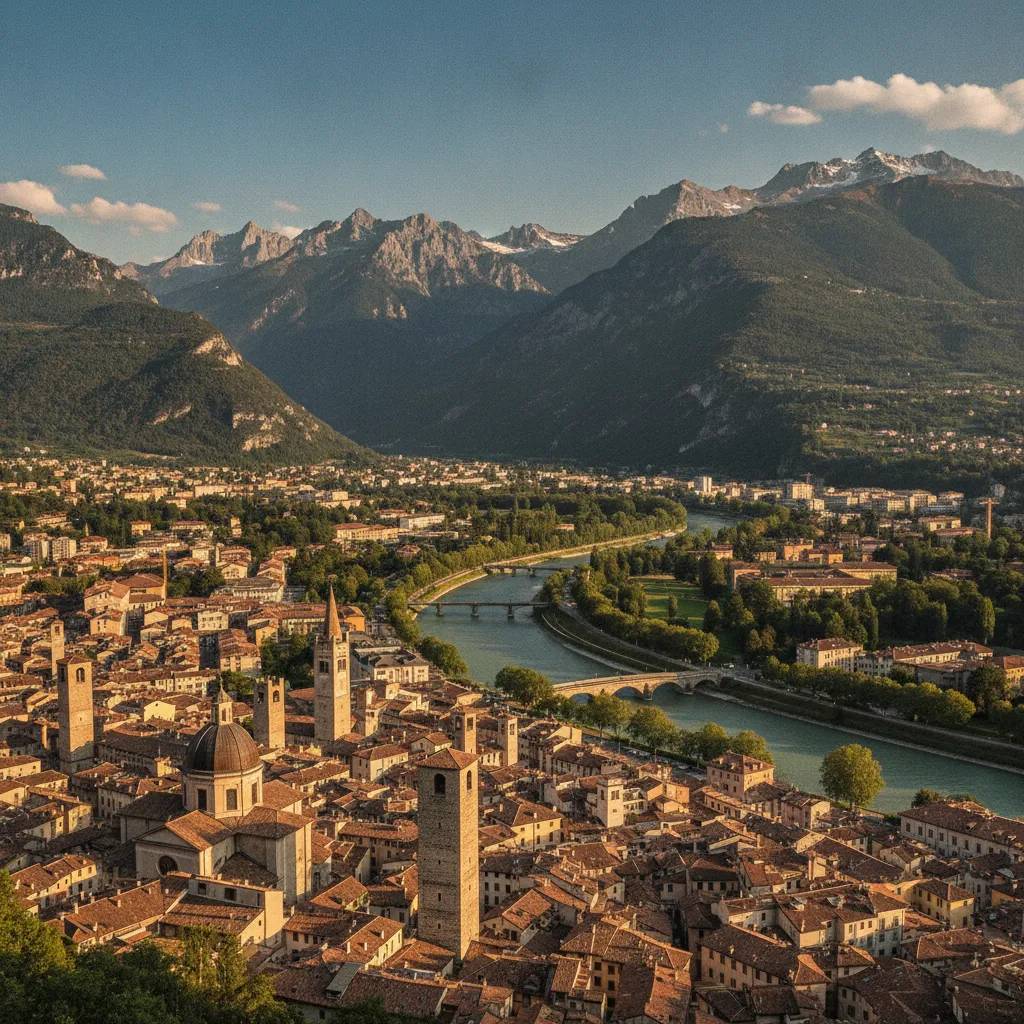
Living in Lombardy means choosing a region that is dynamic, innovative, and deeply Italian. From the majestic Alps and the tranquil shores of its famous lakes to vibrant cities like Milan and Bergamo, Lombardy is attracting a growing number of international residents looking for a new quality of life.
In this guide, we explore why so many people choose to move to Lombardy, which areas are best to settle in, how to rent or buy property, find work, and understand the cost of living. We also cover the essential administrative steps and the outstanding healthcare and services that make Lombardy one of Italy's highest-performing regions.
Aller en Italie
Relocation experts · since 2020
4.9
How many steps separate you from Italy?
A tailored offer based on your needs — in 3 min, no commitment
Tell us about your project
Profile, area, buying or renting
We select your services
From 50+ services in English
Receive your quote
Clear, detailed, personalized
*Indicative and customizable quote, no contractual commitment.
Free · 3 min · in English · no commitment
Create my offerWhy choose to live in Lombardy?

Living in Lombardy means choosing a region at the heart of Italy's economic energy while enjoying an exceptional quality of life. Located in northern Italy, Lombardy stands out for its unique balance of innovation, nature, and culture. With Milan as its regional capital — the country's financial, industrial, and creative engine — Lombardy draws both expats seeking professional opportunities and families looking to settle in a safe, well-organised environment.
The region is home to some of Italy's largest domestic and international companies, offering diverse employment opportunities in finance, fashion, healthcare, research, and technology. But living in Lombardy is about more than work: it also means enjoying spectacular landscapes, from the lakes of Como, Garda, and Maggiore to the Lombard Alps and the wine-covered hills of Franciacorta. Its strategic location, close to Switzerland and well connected across Europe, makes it an ideal choice for those who want to move to Italy without sacrificing modern comfort.
THEY TALK ABOUT US
Maisons & Jardins · Le Figaro · Challenges
« Founded on solid field experience and an in-depth knowledge of Italian procedures. »
Jessica Colpin, co-founder — Maisons & Jardins France, Jan.–Feb. 2026
Where to settle in Lombardy?
Choosing where to live in Lombardy depends primarily on your lifestyle and priorities. If you are looking for a dynamic urban environment, Milan is the obvious choice.
For a quieter pace of life while staying close to Milan, cities such as Monza, Bergamo, Brescia, and Varese offer an excellent balance between employment, quality of life, and accessibility. These areas benefit from strong transport links (train, motorway, airport) and more affordable rents.
Nature lovers and those seeking peace and quiet will find the lake districts particularly appealing — especially Lake Como, Lake Garda, and Lake Maggiore, which are ideal for combining remote work with a stunning setting. In the south of the region, around Cremona, Lodi, and Mantua, life is calmer, property prices are lower, and the atmosphere is more authentically Italian.
Aller en Italie
French expatriation expert · since 2020
4.9
71 verified reviews
1,500+ expats supported
50+ services with French-speaking professionals
20 regions covered
Local consultants on the ground in Italy
Free appointment · 15 min · in French · no commitment
Book an appointmentEssential steps for moving to Lombardy

Before settling in Lombardy, it is important to prepare your move by completing the required Italian administrative steps. The first step is obtaining an Italian tax code (codice fiscale), which is essential for virtually every procedure: renting a property, signing an employment contract, opening a bank account, or purchasing real estate. You can apply for it free of charge at the Agenzia delle Entrate in Italy or at the Italian consulate in your home country.
Once you are settled on a long-term basis, you will need to register your residency (residenza) with the local municipality. This registration gives you access to a wide range of rights: public healthcare, local taxation, vehicle registration, and more. If you work or reside in Italy for more than three months, this step is mandatory.
It is also advisable to open an Italian bank account and to familiarise yourself with local council services (waste collection, parking, public transport).
To navigate these often complex processes in Italian, it can be very helpful to work with a bilingual team specialising in relocation to Italy, able to translate, verify, and manage administrative documents so your move to Lombardy goes smoothly.
Renting an apartment in Lombardy

Renting in Lombardy offers plenty of options depending on the lifestyle you are looking for. While Milan remains the region's economic hub — with one-bedroom apartments in the centre typically ranging from €1,200 to €1,800 per month — there are excellent alternatives in well-connected suburban towns. Commuter-friendly towns such as Saronno, Caronno Pertusella, Legnano, and Monza allow pendolari (commuters) to reach Milan in 30 to 40 minutes while enjoying a more relaxed environment, with rents often between €600 and €900 per month.
Before signing a lease, it is worth knowing that rental conditions in Italy are relatively standardised. The most common contract is the “4+4” agreement — a 4-year term that automatically renews for a further 4 years, unless either party gives notice. Tenants can vacate the property by giving 6 months' notice. For shorter stays, there is also the contratto transitorio, designed for a period of 1 to 18 months, which is commonly used by expats and students.
When signing the contract, landlords typically require a security deposit (deposito cauzionale) equivalent to 2 or 3 months' rent, which is returned at the end of the tenancy provided no damage has occurred. Some agencies may also charge one month's rent as a service fee for managing the contract.
Buying a house in Lombardy
Buying a property in Lombardy represents an excellent opportunity for those looking to invest or settle in a region that combines economic vitality, cultural heritage, and quality of life. It is one of the most sought-after areas in northern Italy, offering a wide range of properties to suit all budgets.
Property prices vary significantly by location: around Milan and the major lakes (Como, Garda, Maggiore), prices can reach €4,000 to €7,000 per m² for modern apartments or lakeside villas. By contrast, in the more rural provinces such as Pavia, Cremona, and Lodi, it is still possible to find renovated farmhouses or country homes from as little as €1,000 to €1,400 per m², often surrounded by nature and peace.
The Lombard property market is distinguished by its stability and its appeal to foreign buyers, thanks in part to the strength of the regional economy and proximity to Switzerland. Buyers will find both renovation projects and move-in-ready properties, with strong rental potential — particularly around tourist hotspots and industrial zones.
Before purchasing, it is essential to verify the planning and cadastral compliance of the property — a step that foreign buyers often overlook. Working with a bilingual professional (lawyer, surveyor, or property consultant with expertise in Italy) helps avoid common pitfalls, understand the tax implications, and ensure a secure purchase.
Working in Lombardy

Working in Lombardy offers real opportunities for expats, as the region is the economic engine of Italy. Accounting for more than a quarter of national GDP, it is home to major international companies as well as a dense network of high-performing small and medium-sized businesses. The sectors with the most hiring include finance, fashion, design, logistics, manufacturing, food and agriculture, and information technology. Milan concentrates most service-sector jobs, while cities like Brescia, Bergamo, and Cremona remain strong in manufacturing, engineering, and exports.
In terms of pay, salaries in Lombardy are among the highest in Italy. On average, an employee earns between €1,600 and €2,000 net per month, compared to a national average of around €1,550. Managers and specialist profiles can earn €2,500 to €3,500 net, particularly in technology and finance. Skilled trades and tourism roles typically start around €1,200 to €1,400, but often offer good prospects for progression.
To find a job in Lombardy, it is worth checking platforms such as Indeed, recruitment agencies, and building a LinkedIn profile in Italian that is clear and tailored to the local market. A good command of Italian remains a major asset for professional integration, but many internationally-oriented companies also recruit bilingual candidates.
Cost of living in Lombardy
The cost of living in Lombardy is higher than in most other Italian regions, but this is justified by the quality of its infrastructure, cultural richness, and economic dynamism. Unsurprisingly, Milan ranks among the most expensive cities in Italy: a single person can expect to spend an average of €1,800 to €2,200 per month, including rent. In medium-sized cities such as Bergamo, Brescia, Monza, and Pavia, daily life is considerably more affordable, with an average monthly budget of €1,200 to €1,500.
Housing is the biggest expense. In Milan, a one-bedroom apartment rents for between €1,200 and €1,800, compared to €700 to €900 in other Lombard provinces. Public transport is well organised and relatively affordable: a monthly pass costs around €40 to €55 depending on the city.
For groceries, the average monthly food budget for one person is around €250 to €350, with significant savings possible by shopping at local markets. As for leisure, Lombardy offers a wide range of cultural and outdoor activities — museums, concerts, hiking, and water sports on the lakes — generally at prices well below those found in major European capitals.
The cost of living in Lombardy depends greatly on where you live and your lifestyle, but it is offset by higher-than-average salaries and an excellent quality of life.
Healthcare and services in Lombardy
Lombardy is widely regarded as Italy's best-performing region for public healthcare and infrastructure. Its modern and well-distributed hospital network provides rapid access to high-quality care in most cities, whether for emergencies, outpatient appointments, or specialist treatment.
The region is home to several world-class institutions recognised across Italy and Europe. In Milan, the Ospedale San Raffaele, the Istituto Europeo di Oncologia (IEO), and the Policlinico di Milano rank among the country's most reputed hospitals for medical innovation and research. In Bergamo, the Papa Giovanni XXIII hospital is a leading centre for surgery and emergency care, while in Brescia, the Spedali Civili are recognised for their excellence in cardiology and paediatrics.
Lombardy is also at the forefront of digital health services. The regional app “Salutile” allows users to check in real time how many patients are waiting at nearby hospitals so they can choose the least busy facility. This is a particularly useful innovation for saving time and improving the quality of care received.
Finally, the region benefits from one of Italy's best transport networks, efficiently connecting major cities by train (Trenord), metro, tram, and motorway. The airports of Milan Malpensa, Linate, and Orio al Serio (Bergamo) make international travel straightforward, further enhancing the region's appeal.
The international expat community in Lombardy

In 2025, Lombardy remains the Italian region with the largest number of registered foreign residents. According to the most recent data from Tuttitalia, more than 8,000 French nationals are officially registered as residents in the region — representing more than a quarter of the entire French community in Italy. This strong presence reflects the region's economic attractiveness and its geographical proximity to France, Switzerland, and Belgium, which facilitates professional and cultural exchanges.
Most foreign residents settle in the greater Milan area, a true international crossroads that is also home to large communities of Swiss, Belgian, Canadian, and Luxembourgish expats. The areas of Varese, Monza-Brianza, and Bergamo also host active expat communities, often made up of managers, entrepreneurs, and families who have relocated for work or lifestyle reasons.
This international presence is reflected in everyday life: French grocery shops, Belgian chocolate boutiques, French-language schools, and even a French-language library in Milan all contribute to a vibrant francophone cultural scene in Lombardy. Local associations and cultural events further strengthen ties between expats and Italians, creating a genuine international hub in the heart of northern Italy.
Moving to Lombardy means choosing a modern, welcoming Italy full of possibilities. With good preparation, the right support, and a realistic approach to the local market, this move can become a truly rewarding personal and professional experience.
FAQs
1- Do I need to speak Italian to live in Lombardy?
Speaking Italian greatly helps with integration, but in large cities like Milan, many people speak English, and there is a sizeable international community. That said, learning the language gradually remains a valuable asset in daily life.
2- What is the cost of living in Lombardy?
The cost of living varies by city. Milan is one of the most expensive in Italy, particularly for housing, while cities like Brescia, Bergamo, and Pavia offer excellent value for money. On average, living costs are 10 to 20% above the national average.
3- How do I find housing in Lombardy?
You can begin your search online through the main Italian property portals. To avoid unpleasant surprises, it is recommended to work with a bilingual professional or a local expert familiar with Italian administrative procedures.
4- What are the main advantages of Lombardy for expats?
Lombardy stands out for its efficient transport network, world-class hospitals, well-regarded universities, and dynamic job market. It is an ideal region for those who want to combine professional opportunities, quality of life, and easy access to the rest of Europe.