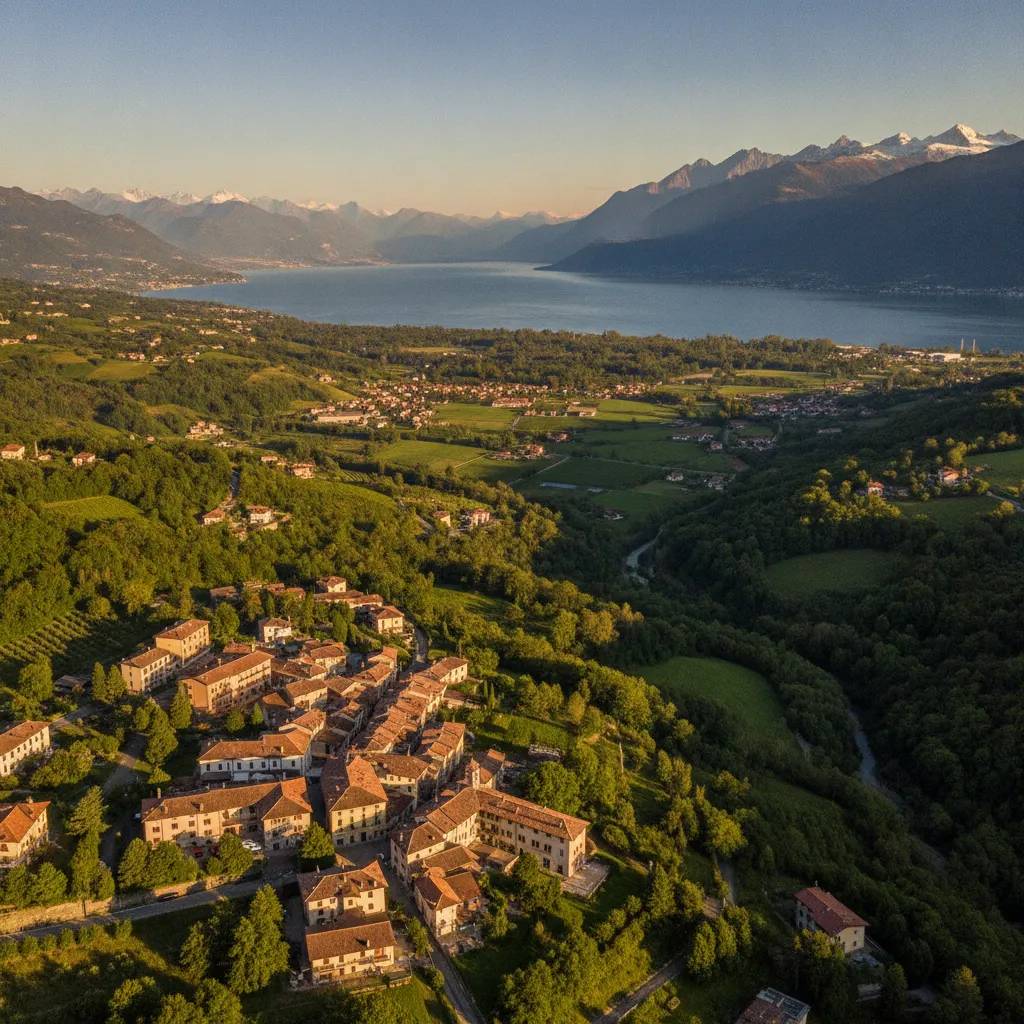
Mistakes to Avoid When Buying a House in Italy
Avoid costly mistakes when buying a house in Italy: practical advice to help you purchase with confidence and peace of mind.


Buying a house in Italy is far more than a straightforward property transaction: for many, it is the realisation of a dream — a life in the sun, lived at the pace of the dolce vita, in an authentic and inspiring setting.
Yet between the excitement, the administrative steps, the cultural differences, and the specific features of the Italian property market, it is easy to make mistakes that can complicate the buying process.
Every country has its own rules, practices, and legal nuances. What seems straightforward in one country can work very differently in Italy. And a simple misunderstanding can sometimes lead to delays, unexpected costs, or difficult situations to manage.
At Allerenitalie, we guide people through their property journey every day and have identified the most common mistakes to avoid when buying a house in Italy.
In this article, we share practical, straightforward advice to help you anticipate, understand, and avoid them — so you can move forward in your project with confidence, clarity, and peace of mind.
Aller en Italie
Relocation experts · since 2020
4.9
How many steps separate you from Italy?
A tailored offer based on your needs — in 3 min, no commitment
Tell us about your project
Profile, area, buying or renting
We select your services
From 50+ services in English
Receive your quote
Clear, detailed, personalized
*Indicative and customizable quote, no contractual commitment.
Free · 3 min · in English · no commitment
Create my offerNot visiting the property in person

Many people looking to buy a house in Italy would prefer to delegate property viewings to a trusted contact or a professional, to avoid making the trip themselves. This is entirely understandable: organising travel, especially from abroad, takes time, availability, and a certain budget.
It is perfectly possible to entrust an initial pre-selection to a trusted representative — for example, our team — who can visit the most promising properties on your behalf, take photos, record videos, and write up a detailed report. This saves time and helps eliminate options that do not meet your criteria.
However, once a property has been shortlisted, it is essential to visit in person.
Not only because a physical visit reveals things no photo can capture — natural light, ambient noise, the view, traffic, and the overall sense of space — but also because in Italy, it is not possible to sign a preliminary contract or a deed of sale without having seen the property beforehand.
Italian law requires that the buyer have direct knowledge of the property before committing. This step protects both buyer and seller, and ensures that the transaction is based on a fully informed decision.
THEY TALK ABOUT US
Maisons & Jardins · Le Figaro · Challenges
« Built on solid hands-on experience and an in-depth knowledge of Italian procedures. »
Jessica Colpin, co-founder — Maisons & Jardins France, Jan.–Feb. 2026
Misreading the property listing
When reading a property listing in Italy, it is easy to be drawn in by the descriptions or to assume that certain terms are equivalent to those used in your home country. Yet Italian property terminology has its own specific codes, and a misinterpretation can lead to major disappointment.
Words like "rustico", "da ristrutturare", or "semi-indipendente" may sound charming, but they often describe properties that are in need of full renovation or are partially semi-detached.
You should also pay close attention to the cadastral category (categoria catastale), always stated in the listing. For example, a property classified as C2 is legally considered a non-residential space (cellar, attic, warehouse), even if it is advertised as a renovated studio flat.
Another important point: the commercial floor area stated in listings often includes walls, balconies, and shared spaces, which reduces the actual liveable surface area.
Working with experienced, bilingual professionals gives you a clear and honest reading of listings, helps you avoid unpleasant surprises, and allows you to move forward in your property project with transparency and confidence.
Aller en Italie
French expatriation expert · since 2020
4.9
73 verified reviews
1,500+ expats supported
50+ services with French-speaking professionals
20 regions covered
Local consultants based in Italy
Free appointment · 15 min · in French · no commitment
Book an appointmentNot reviewing the property documentation

Buying a house in Italy should never be done without a thorough review of the official documents. This step is often overlooked by foreign buyers, yet it is fundamental to securing the transaction.
Before signing anything, it is essential to request and review:
-
the cadastral floor plan (planimetria catastale), to verify that the plan matches the actual layout of the property;
-
the energy performance certificate (APE);
-
the service charge statement if the property is part of a building with shared ownership;
-
the building permit and any planning or renovation authorisations;
-
and confirmation that there are no outstanding debts or mortgages.
In Italy, it is the buyer's responsibility to verify these elements before making an offer, because the purchase proposal (proposta d'acquisto) is legally binding.
Once accepted by the seller, it commits both parties and may require the immediate payment of a deposit.
If certain checks cannot be completed at this stage, it is essential to include conditional clauses in the offer — for example, in the event that planning, cadastral, or legal irregularities are discovered.
These simple precautions help you avoid committing to a property that does not meet expectations or that has legal issues.
A bilingual professional support team (lawyer, surveyor, property consultant) will help you analyse the documentation, draft a solid offer, and protect your interests from the very first steps of your property purchase in Italy.
Underestimating the administrative steps

Buying a house in Italy goes beyond finding the ideal property: you also need to plan ahead for the many administrative and financial steps that come with the transaction. Many foreign buyers underestimate this phase, yet it has a direct impact on how smoothly the project progresses.
Key steps to anticipate include:
-
obtaining a codice fiscale (Italian tax identification number), required to sign any official document;
-
opening an Italian bank account, which helps avoid notary deposit fees, simplifies international transfers, and makes it easier to manage property-related payments (taxes, bills, direct debits);
-
understanding your local tax obligations, such as registration taxes, property tax (IMU), and residency-related duties.
It is also crucial to plan your financing in advance: understanding how Italian banks work, what documents are required, and how long it takes to obtain a mortgage or transfer funds.
In Italy, the purchase process takes on average between 3 and 6 months — longer than in many other European countries. This is due to the coordination required between the notary, bank, estate agent, and seller, as well as mandatory administrative and cadastral checks.
Being well prepared from the outset, with support from a bilingual professional or a specialist consultant, helps avoid hold-ups, saves time, and allows you to move forward smoothly through to the final signing.
Overlooking the additional costs
When browsing property listings in Italy, it is important to understand that the listed price is never the total cost. Several additional fees must be added on top of the sale price, which can significantly increase your overall budget.
Agency fees in Italy are not included in the sale price and are generally split between buyer and seller. As a rule, each party typically pays 3 to 4% of the sale price to cover these fees. The exact amount may vary depending on the agency, but it is essential to factor this into your budget from the outset.
In addition to agency fees, you should also budget for:
-
notary fees, required to formalise the sale,
-
registration taxes, calculated as a percentage of the purchase price,
-
professional fees for document verification and property assessments,
-
and potential renovation costs, which may be necessary depending on the condition of the property.
Anticipating these expenses from the very start of your property project in Italy will help you avoid unpleasant surprises at the time of signing and manage your budget more effectively. It is therefore essential to keep in mind that the listed price does not cover all the costs involved in completing the purchase.
Overlooking legal support

When buying property in Italy, engaging a lawyer specialised in Italian property law is an essential step to protect your investment. The lawyer verifies the legality of the transaction, ensures all documents are in order, and checks that there are no disputes or legal issues that could jeopardise the sale.
One crucial contribution a lawyer can make from the moment of the purchase offer is the inclusion of conditional clauses in your contract. These clauses are essential to protect your interests, particularly if a problem arises after you have committed. For example, without a conditional clause, it becomes very difficult to withdraw from the sale without losing your deposit or advance payments.
We have had clients who, in certain cases, lost their deposits because they were unable to secure financing, and others who, faced with non-compliance issues in the documents or the condition of the property, wished to withdraw from the sale. However, without conditional clauses in place, they found themselves in a difficult situation, as the sale process had already begun and the deposit had been paid.
The role of the notary in buying property in Italy is often misunderstood. Although the notary formalises the signing of the deed of sale, they do not guarantee the compliance of the property. Their role is limited to validating the deed based on the documents provided — they do not carry out an in-depth review of the legal aspects of the property.
This is where a lawyer comes in: as an independent external expert, they protect your interests and ensure you can legally withdraw from the sale if a problem arises. They help you include conditional clauses from the offer stage, thereby safeguarding your legal security throughout the entire process.
Many of our clients tell us how much reassured they feel having a reliable professional by their side, especially when they are not fluent in Italian or familiar with the specifics of Italian property law. A lawyer allows you to negotiate with confidence, knowing that your rights are protected and your investment is secure.
Buying property in Italy can seem complex, especially for those unfamiliar with the local rules and the legal steps involved. Overlooking the stages of the purchase process — such as the proposta d'acquisto, the compromesso, and the rogito — can lead to costly mistakes. Furthermore, without a solid understanding of the legal obligations and conditional clauses, you could find yourself having already committed funds with no way to withdraw if a problem arises.
This is why it is essential to not go through this process alone. Surrounding yourself with experienced and bilingual professionals is a key step in ensuring your purchase goes smoothly and securely. A specialist lawyer and a local consultant will guide you at every stage, translate documents, and help you anticipate the administrative and cultural specifics of the Italian property market.
In short, understanding the process, planning for additional costs, and above all, working with the right experts will allow you to negotiate with confidence, protect your interests, and avoid unwelcome surprises. With the right support, you will be well positioned to complete your property project in Italy under the best possible conditions, with full peace of mind.
FAQs
1- Why is it important to have a lawyer when buying a house in Italy?
A lawyer specialised in Italian property law verifies the legality of the transaction, includes conditional clauses, and oversees every stage of the process.
Unlike the notary, they protect your interests and ensure everything is in order before you sign.
2- What additional costs should I budget for when buying property in Italy?
The listed price in property advertisements does not cover all costs. You should budget for agency fees, notary fees, registration taxes, and potentially renovation costs. These fees can amount to 10–15% of the purchase price. It is essential to plan for them in advance to avoid any unpleasant surprises.
3- What are the steps involved in buying property in Italy?
The process is divided into several stages: the proposta d'acquisto (purchase offer), the compromesso (preliminary contract), and the rogito (notarial deed).
Each stage has legal implications and may financially commit the buyer. It is crucial to understand each one and to work with experienced professionals to avoid mistakes.
4- What are conditional clauses and why are they important?
Conditional clauses allow the buyer to withdraw from the sale without losing their deposit if a problem arises during the verification process. They are essential for securing the transaction, especially given the complex nature of the Italian property market.
They can take many different forms, depending on the situation: relating to property remediation, clearance works, settlement of arrears, or obtaining financing.
Every project is unique, and these clauses must be tailored to each specific case to ensure comprehensive legal protection before the final signing.
Without them, it can be very difficult to pull out of a purchase without losing funds.