Living in Abruzzo: Cost of Living, Housing & How to Settle In
Abruzzo offers an unspoilt lifestyle at an affordable cost — ideal for those seeking peace, nature, and new professional opportunities.


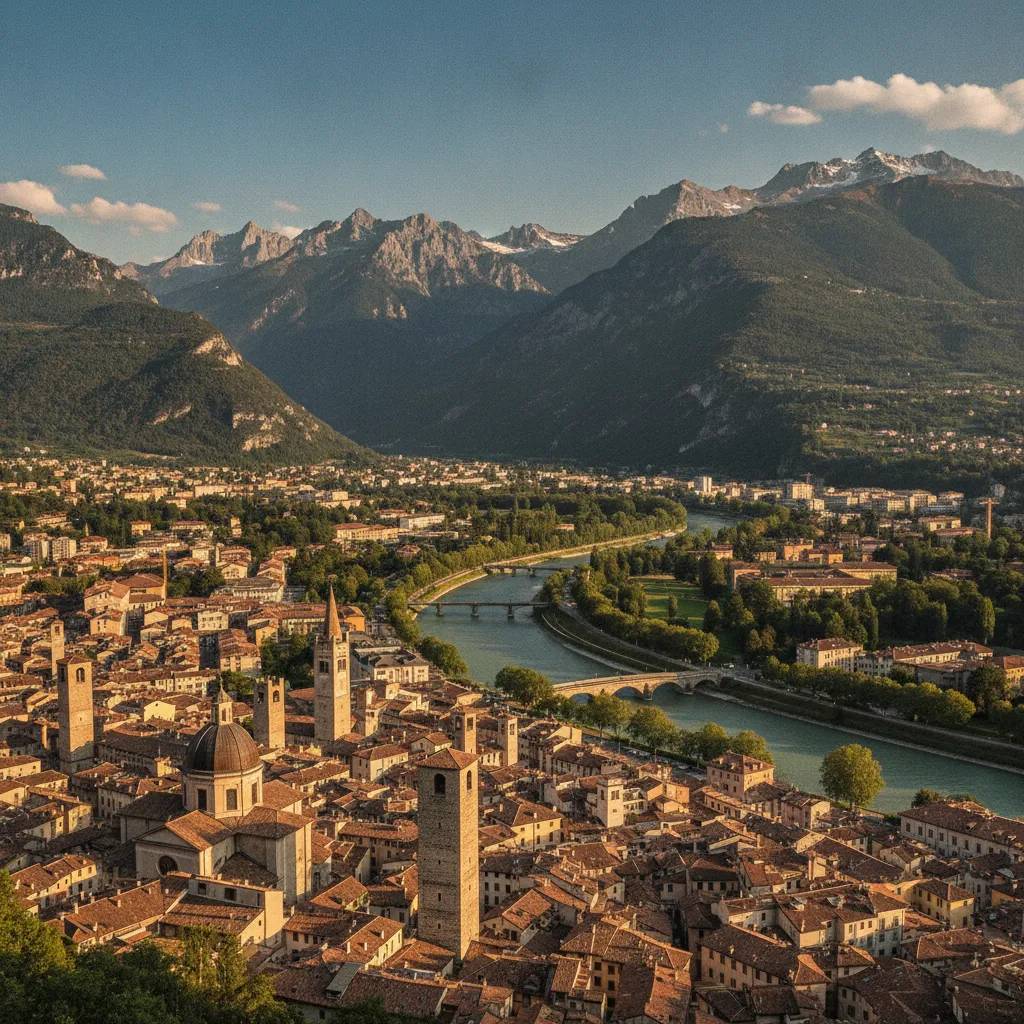
Living in Abruzzo means choosing a region that has remained largely unspoilt, where quality of life, closeness to nature, and a genuine sense of welcome take centre stage. Situated between Rome and the Adriatic coast, the region offers a rare balance of mountains, national parks, historic villages, and coastline, attracting a growing number of international residents in search of a quieter, more grounded way of life away from large cities.
Abruzzo appeals through its affordable cost of living, still-accessible property prices, and the variety of people it welcomes: families, retirees, remote workers, and those with tourism or hospitality projects. The region allows you to put down lasting roots while remaining well connected to major hubs and essential services.
In this guide, we offer a comprehensive picture of life in Abruzzo: why it is worth moving here, which areas suit different lifestyles, how to rent or buy a home, work locally or remotely, and plan your day-to-day budget. We also cover the key administrative steps to prepare, as well as access to services and healthcare, to help you plan your move to Abruzzo with confidence and clarity.
Aller en Italie
Relocation experts · since 2020
4.9
How many steps separate you from Italy?
A tailored offer based on your needs — in 3 min, no commitment
Tell us about your project
Profile, area, buying or renting
We select your services
From 50+ services in English
Receive your quote
Clear, detailed, personalized
*Indicative and customizable quote, no contractual commitment.
Free · 3 min · in English · no commitment
Create my offerWhy choose to live in Abruzzo?

Choosing to live in Abruzzo means opting for a more balanced way of life — one where everyday living becomes simpler without sacrificing what truly matters. The region stands out for its ability to offer space, time, and genuine human connection, qualities increasingly sought by those looking to settle in Italy for the long term.
Abruzzo attracts a wide range of people thanks to an environment well suited to putting down lasting roots: accessible housing, human-scale towns, local services, and a community fabric that remains very much alive. This makes integration easier and allows you to build a coherent life project — whether family-oriented, personal, or professional.
The region also benefits from a strategic location, keeping you connected to major economic centres while enjoying a calmer setting. This proximity opens up possibilities, particularly for remote workers or those whose work involves occasional travel.
Living in Abruzzo ultimately means choosing a region where well-being goes beyond the surroundings — it is expressed in the pace of life, in human relationships, and in a sense of belonging to a territory that remains genuinely authentic. A solid and lasting alternative for those who want to live in Italy differently, with more meaning and more freedom.
THEY TALK ABOUT US
Maisons & Jardins · Le Figaro · Challenges
« Founded on solid field experience and an in-depth knowledge of Italian procedures. »
Jessica Colpin, co-founder — Maisons & Jardins France, Jan.–Feb. 2026
Where to settle in Abruzzo?
Deciding where to live in Abruzzo depends first and foremost on your lifestyle goals and everyday priorities. The region offers great territorial diversity, making it possible to combine tranquillity, accessibility, and quality of life.
If you are looking for a structured urban environment with full services, cities such as Pescara or L'Aquila make strong base options. Pescara stands out for its energy, its proximity to the sea, and its rail and road connections, while L'Aquila offers a more institutional and university-oriented setting, currently undergoing a remarkable post-earthquake revival.
For a quieter pace of life while still staying well connected, many mid-sized towns and residential communities around Chieti, Teramo, or Sulmona offer an excellent compromise. These areas provide easy access to essential services, more affordable housing costs, and a calmer rhythm of life that is particularly appreciated by families and remote workers.
Those in search of peace, open space, and nature will naturally be drawn to the inland and rural areas, particularly around Gran Sasso, the Majella massif, or the national parks. These territories are ideal for a primary or secondary residence, as well as for tourism or wellness-oriented projects. Finally, the Adriatic coastline, with its quieter seaside towns, suits those who want to combine proximity to the sea with services and quality of life, without the pressure of heavily touristed areas.
Aller en Italie
French expatriation expert · since 2020
4.9
71 verified reviews
1,500+ expats supported
50+ services with French-speaking professionals
20 regions covered
Local consultants on the ground in Italy
Free appointment · 15 min · in French · no commitment
Book an appointmentEssential steps for moving to Abruzzo

Before settling in Abruzzo, it is essential to plan ahead for certain key administrative steps in order to establish yourself in Italy smoothly. The first step is obtaining your Italian tax code (codice fiscale), which is required for virtually every official process: renting or buying a property, signing an employment contract, opening a bank account, or subscribing to essential services. This document can be requested free of charge from the Agenzia delle Entrate in Italy, or through the Italian consulate in your country of residence.
If you are relocating on a long-term basis, you will then need to complete the residency registration (residenza) at the town hall (comune) of your municipality in Abruzzo. This registration is compulsory after three months of continuous residence and gives you access to fundamental rights, including enrolment in the public health system, local taxation arrangements, and various day-to-day administrative procedures.
It is also advisable to open an Italian bank account to simplify the payment of rent, bills, and local services, and to familiarise yourself with the municipal services specific to your commune: waste management, parking, public transport, or local subscriptions.
These steps can vary slightly from one municipality to another in Abruzzo and can prove complex without a good command of Italian. Being supported by a bilingual team specialised in relocation to Italy saves time, helps you avoid costly mistakes, and allows you to approach your move to Abruzzo with greater confidence right from the start.
Renting an apartment in Abruzzo

Renting a home in Abruzzo offers a wide range of options depending on the lifestyle you are looking for, with rents significantly more affordable than in Italy's northern regions. Coastal and urban centres such as Pescara, Chieti, and Teramo attract a good share of rental demand, thanks to their services, universities, and good rail connections. In Pescara, a one-bedroom apartment typically rents for between €600 and €900 per month, depending on location and proximity to the sea.
For those who prefer a quieter setting, inland towns and villages around Sulmona, Avezzano, or Lanciano offer an excellent balance between tranquillity and accessibility. In these areas, comfortable homes can be found for between €400 and €650 per month, while remaining within reasonable distance of urban centres and essential services. These locations are particularly popular with families, retirees, and remote workers.
Before signing a lease, it is important to understand the rules governing rental agreements in Italy, which apply equally in Abruzzo. The most common contract is the "4+4" — an initial four-year term that renews automatically for a further four years unless terminated. Tenants may leave at any time by giving generally six months' notice. For shorter-term needs, the contratto transitorio, lasting between 1 and 18 months, is frequently used by expats, students, or those in the process of settling in.
When signing the contract, the landlord will typically require a security deposit (deposito cauzionale) equivalent to two or three months' rent, returned at the end of the tenancy subject to the condition of the property. If you use a letting agency, agency fees of around one month's rent may also apply.
Buying a house in Abruzzo
Buying a property in Abruzzo represents a particularly attractive opportunity for those who wish to settle or invest in an Italian region that remains accessible, authentic, and offering an excellent quality of life. Less exposed to speculation than other regions, Abruzzo stands out for the diversity of its property market and its generally more affordable prices.
Property values vary considerably by area. Along the Adriatic coastline, particularly around Pescara, Montesilvano, and Vasto, recently built or well-located apartments are generally priced between €1,800 and €2,800/m², with strong demand for properties close to the sea or local amenities. These areas are valued for their rental potential and their activity throughout the year.
Inland, in the provinces of L'Aquila, Teramo, and Chieti, the market remains considerably more accessible. It is still possible to find village houses, properties to renovate, or detached homes from as little as €600 to €1,200/m², offering real opportunities for primary residences, holiday homes, or long-term renovation projects in a calmer, more natural setting.
The Abruzzo property market is distinguished by its stability and by the growing interest of foreign buyers looking for a sustainable life project or a considered investment. The region attracts families, retirees, and those with tourism projects alike, drawn by the value for money and the potential of territories that are still largely under the radar.
Before purchasing, it is essential to carefully verify the planning and cadastral status of the property, particularly for older or renovation-ready homes, which are common in Abruzzo. Being supported by a bilingual professional with knowledge of the local market helps secure every stage of the process, anticipate the true costs of the project, and approach buying property in Abruzzo with confidence and clarity.
Working in Abruzzo

Working in Abruzzo offers a different experience from Italy's major industrial regions in the north, but can be a meaningful choice for expats seeking a better balance between professional life and quality of life. The regional economy is built mainly on a fabric of SMEs, craft businesses, and specialised sectors, complemented by a growing tourism and agricultural industry.
The most active sectors for employment in Abruzzo include tourism, hospitality and catering, food and agri-food industries, logistics, healthcare, education, and parts of light manufacturing. The region is also home to specific industrial clusters, particularly in aerospace and mechanical engineering, especially around Pescara, Chieti, and the Val di Sangro, where several national and international companies are established.
Salary levels in Abruzzo are generally more moderate than in northern Italy. On average, an employee earns between €1,200 and €1,500 net per month, depending on sector and experience. Skilled, technical, or specialist profiles can command higher earnings, particularly in industry or healthcare. This income level remains consistent with a lower cost of living, allowing for a comfortable standard of day-to-day life.
To find work in Abruzzo, it is recommended to use platforms such as Indeed, the websites of local recruitment agencies, and to build a professional network on LinkedIn, ideally with a profile written in Italian. A good command of Italian remains a key factor for professional integration, even though some employers — particularly in tourism or internationally oriented companies — do value bilingual or multilingual profiles.
Cost of living in Abruzzo
The cost of living in Abruzzo is noticeably lower than in many Italian regions, particularly those in the north. This affordability is one of the region's main draws for people looking to settle in Italy long term while keeping a clear handle on their finances. Abruzzo offers a strong balance between everyday expenses, quality of life, and access to essential services.
In the main cities such as Pescara, Chieti, and Teramo, a single person can live comfortably on a moderate monthly budget, housing included. In smaller towns and rural areas, expenses are even lower, thanks to more affordable rents and service costs that fall below the national average.
Housing remains the main expense, but it stays far more accessible than in Italy's major cities. Rents vary according to location, proximity to the sea or local services, yet remain contained overall. Utility costs and local taxes are also lighter, which contributes to better financial predictability.
Transport is relatively affordable, particularly for local journeys. In many municipalities, having a car is common, with reasonable parking and fuel costs. Regional bus networks and rail connections also make it easy to travel between the main towns without significant expense.
When it comes to food and groceries, the monthly budget remains moderate, with real savings possible through local markets, nearby producers, and a strong culture of fresh produce. Leisure — hiking, nature, outdoor activities, local events — is plentiful and often low-cost, enhancing quality of life without straining the budget.
Abruzzo also offers a significant tax advantage for certain profiles, as the region is among the territories eligible for the flat tax scheme for foreign retirees. This Italian tax regime allows, under certain conditions, for a flat 7% tax rate on foreign-source income, provided you settle in a municipality of fewer than 20,000 inhabitants located in an eligible southern or central-southern Italian region — which includes Abruzzo. The scheme is designed to attract new residents and revitalise smaller communities.
In practice, this flat tax simplifies your tax situation and significantly reduces the tax burden for eligible retirees, while allowing you to enjoy the Italian way of life. Combined with an attractive cost of living, it makes Abruzzo a particularly compelling option for a considered, sustainable, and financially sound relocation project.
The cost of living in Abruzzo varies depending on where you settle and your lifestyle, but it remains broadly very competitive. Combined with a well-preserved environment, a more relaxed pace of life, and favourable tax arrangements, it makes settling in Italy here an excellent proposition — without excessive financial pressure.
Healthcare and services in Abruzzo
Abruzzo has a solid public healthcare system that is well distributed across the region, guaranteeing adequate access to care in both the main cities and more rural areas. The region relies on a network of public hospitals and local health facilities capable of meeting everyday needs, handling emergencies, and covering a range of medical specialities, all within a human-scale setting.
Among the key establishments, the Ospedale Civile in Pescara is one of the largest in the region, recognised for its specialist services and its central role in hospital care. In L'Aquila, the San Salvatore hospital plays a key role, particularly in university medicine and medical research, while the hospitals in Chieti and Teramo provide effective healthcare coverage for their respective areas. These facilities deliver quality care, generally with shorter waiting times than in Italy's major cities.
In terms of infrastructure and transport, Abruzzo benefits from a functional network connecting the main cities by rail and road. The Adriatic railway line links Pescara efficiently to Italy's major cities, while the motorway network allows you to reach Rome quickly — a major asset for accessing complementary services or top-level specialist hospitals when needed. Pescara Airport also facilitates domestic and international travel.
Abruzzo therefore offers a reassuring environment in terms of healthcare and mobility, particularly appreciated by families, retirees, and those looking to settle long term in a region of Italy that is accessible, well-equipped, and on a human scale.
International expats in Abruzzo

In 2025, the foreign expat presence in Abruzzo remains modest and broadly stable, with a slight decrease of around 3% compared to the previous year.
The distribution of foreign residents is relatively balanced across the region. The province of Chieti accounts for the largest share of the expat community (just over a third), followed by Teramo (around a quarter), then Pescara and L'Aquila, each home to roughly a fifth of foreign residents. Changes remain moderate, with slight variations by province and no major shift in the overall expat landscape.
This measured presence reflects a deliberate and considered approach to relocation, often driven by a personal life project rather than concentrated professional opportunities. Those who move to Abruzzo are predominantly families, retirees, remote workers, and those running tourism or artisan projects, drawn by a more affordable cost of living and an authentic setting.
Unlike Italy's major regions, Abruzzo does not have well-developed international expat institutions or organised foreign communities. This situation, however, encourages more direct integration into local life, close human relationships, and a deeper immersion in everyday Italian culture.
Moving to Abruzzo means choosing an expat experience that is low-key, human, and lasting — a region that draws you in through affinity and values rather than trend. With the right preparation and appropriate support, this can become a genuinely enriching life experience, at the heart of an Italy that remains beautifully unspoilt.
FAQs
1- Do you need to speak Italian to live in Abruzzo?
A working knowledge of Italian is strongly recommended for life in Abruzzo. Unlike larger cities, English is not widely spoken here, particularly in smaller towns and villages. Speaking Italian makes administrative processes, daily life, and local integration considerably easier. That said, learning progressively is entirely feasible and is warmly appreciated by locals.
2- What is the cost of living in Abruzzo?
The cost of living in Abruzzo is below the national average. Housing, services, and food are more affordable than in northern Italy. Expenses vary depending on whether you settle on the coast or inland, but the region remains broadly attractive for families, retirees, and remote workers.
3- How do you find accommodation in Abruzzo?
Your search can begin online through the main Italian property portals. However, many properties are offered locally, sometimes without being listed on major platforms. Being supported by a professional with knowledge of the Abruzzo market helps you identify opportunities, avoid the pitfalls associated with older properties, and secure the process effectively.
4- What are the advantages of Abruzzo for expats?
Abruzzo appeals through its quality of life, its unspoilt natural environment, and its affordable cost of living. The region offers a calmer pace, genuine human connections, and good links to Rome and the rest of Italy. It is an ideal destination for those seeking an authentic relocation experience, away from the pressures of large cities, while still enjoying a good standard of comfort.