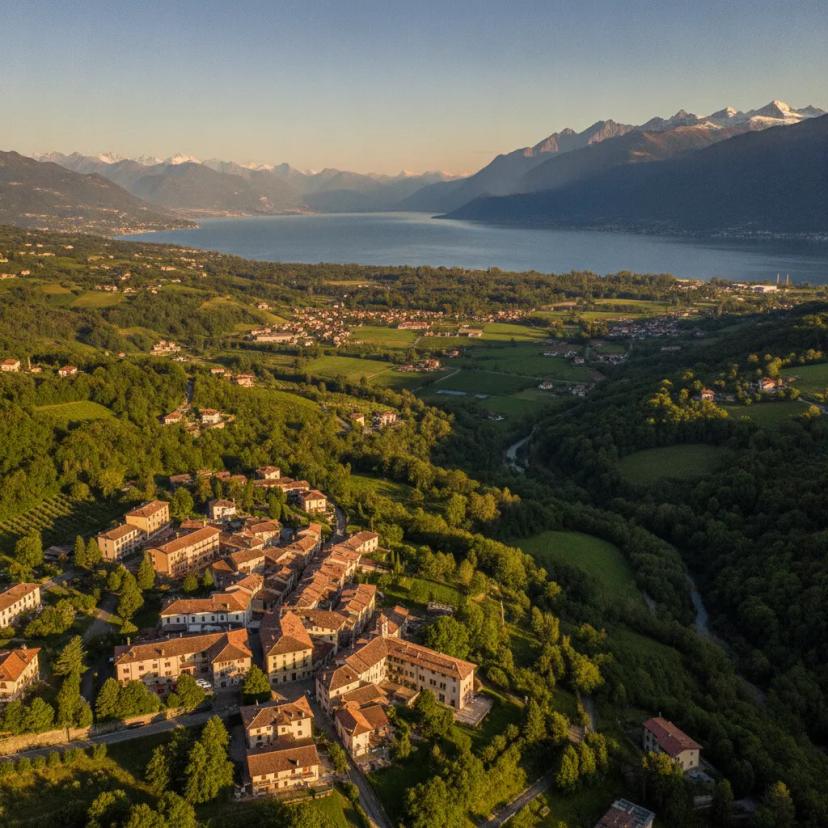
Real Estate in Lombardy Cities: Mantua, Pavia and Lodi
Compare real estate in Mantua, Pavia and Lodi in Lombardy: price per m², buyer profiles, accessibility and tips for buying outside Milan in 2026.

Lombardy is Italy's most dynamic real estate region, driven by Milan, the lakes, and a dense economic fabric. But the Milanese market, which peaks at over 3,700 €/m² in 2026, remains out of reach for many international buyers. Fortunately, several mid-sized cities in the region offer significantly more accessible prices, genuine quality of life, and solid rental potential.
This article focuses on Mantua (Mantova), Pavia, and Lodi — three complementary markets for buying a primary residence or an affordable rental investment in Lombardy. For Brescia and Cremona, each of which has its own dedicated guide, go directly to Buying a house in Brescia and Buying a house in Cremona. Bergamo also has its own property guide.
Aller en Italie
Relocation experts · since 2020
4.9
How many steps separate you from Italy?
A tailored offer based on your needs — in 3 min, no commitment
Tell us about your project
Profile, area, buying or renting
We select your services
From 50+ services in English
Receive your quote
Clear, detailed, personalized
*Indicative and customizable quote, no contractual commitment.
Free · 3 min · in English · no commitment
Create my offerOverview of the Lombardy property market outside Milan
The regional average for Lombardy sits at around 2,380 to 3,350 €/m² for residential sales, with annual growth of roughly +0.7 to +2.1% depending on the source. These averages, however, mask enormous disparities: Milan dominates at over 3,700 €/m², while the provinces of Mantua, Pavia, and Lodi fall between 1,131 and 1,545 €/m² at the provincial level.
These mid-sized cities attract three types of buyer: those seeking an authentic lifestyle at affordable prices, rental investors targeting students or commuters, and first-time buyers looking to purchase without straying too far from the Milan metropolitan area. For a regional overview, see our guide Buying a house in Lombardy.

THEY TALK ABOUT US
Maisons & Jardins · Le Figaro · Challenges
« Built on solid hands-on experience and an in-depth knowledge of Italian procedures. »
Jessica Colpin, co-founder — Maisons & Jardins France, Jan.–Feb. 2026
Comparison table: Mantua, Pavia, and Lodi
| City | Average purchase price | Annual change | Buyer profile | Access to Milan |
|---|---|---|---|---|
| Mantua | ≈ 1,149–1,232 €/m² | Stable, moderate growth | Heritage buyer, long-term, art city | ~2h (train/car) |
| Pavia | ≈ 1,131–2,362 €/m²* | +5.5% (2025) | Student, young professional, rental | ~30 min (train) |
| Lodi | ≈ 1,345–1,984 €/m²* | +4.4% (Q1 2026) | Commuter, first-time buyer | ~25 min (train) |
* Range between provincial price and municipal or historic centre price. Sources: Idealista, market data 2025–2026.
Aller en Italie
French expatriation expert · since 2020
4.9
73 verified reviews
1,500+ expats supported
50+ services with French-speaking professionals
20 regions covered
Local consultants based in Italy
Free appointment · 15 min · in French · no commitment
Book an appointmentProperty in Mantua: Lombardy's most affordable art city
Mantua is a Renaissance gem listed as a UNESCO World Heritage Site. Its Gonzaga palaces, Mincio lakes, and timeless atmosphere make it a sought-after destination for those seeking quality of life at reasonable prices. With an average purchase price of around 1,149 to 1,232 €/m², it is the least expensive province in all of Lombardy in 2026.
The Mantua market is characterised as a heritage market: stable volumes, moderate growth, and properties that are often older and full of character. You will find apartments in the historic centre, detached houses in outlying municipalities (San Benedetto Po, Roncoferraro…), and sometimes properties to renovate at very attractive prices. Average rents stand at around 8.36 €/m²/month.
Mantua is particularly well suited to buyers looking for a long-term primary residence or an investment focused on seasonal cultural tourism. Its liquidity is lower than in major cities, but price stability reassures cautious buyers who want to escape the pace of Milan.
Property in Pavia: a university city 30 minutes from Milan
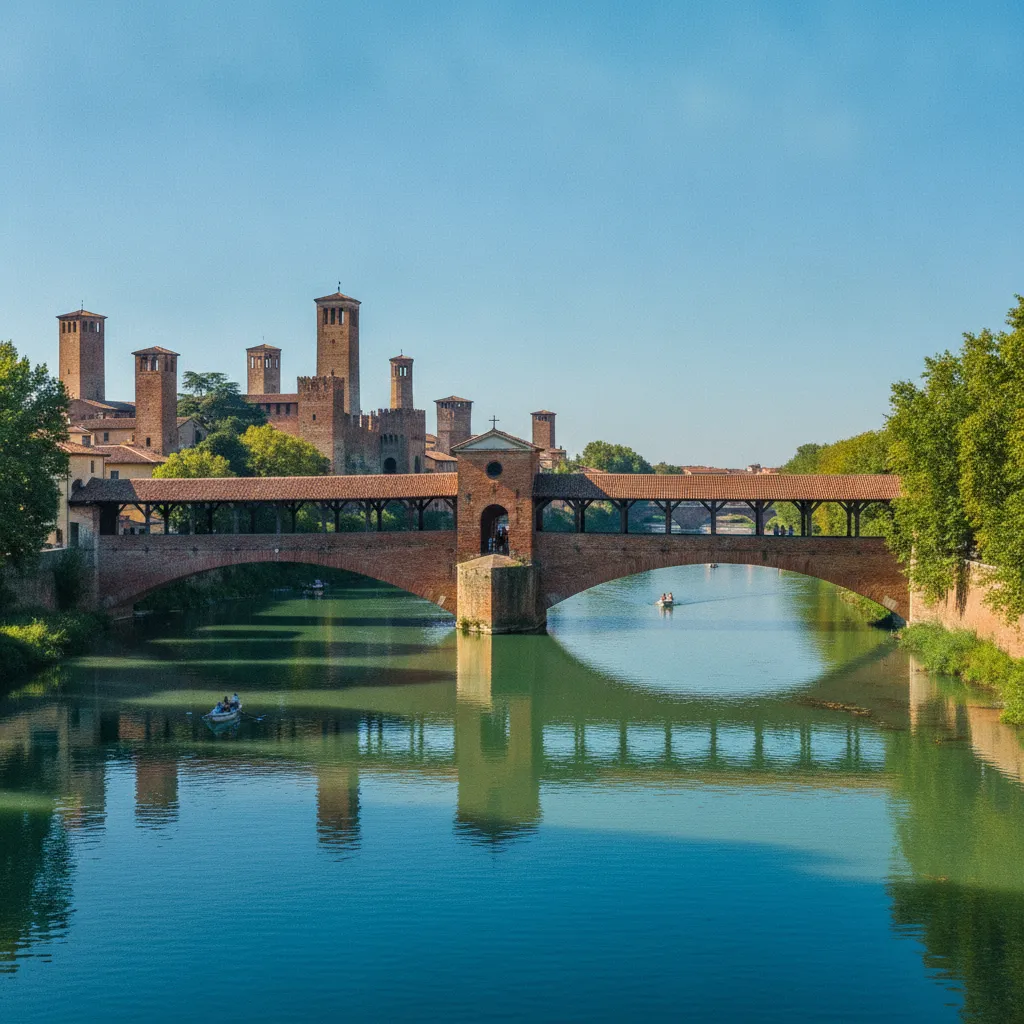
Pavia combines a rich medieval heritage — its Ponte Coperto, the Certosa di Pavia, and a university founded in 1361 — with a lively student scene that structurally supports rental demand. It is one of the smartest alternatives for investing in Lombardy without paying Milan prices.
The average price at the provincial level is around 1,131 €/m², but the municipality shows an average of 2,362 €/m² (March 2025, +5.54% year-on-year). Internal disparities are significant: the historic centre exceeds 2,938 €/m² while peripheral neighbourhoods such as Cassinino or Mirabello remain around 1,843 €/m². Average municipal rents are around 11.01 €/m²/month (+6.27% year-on-year).
Student rental demand is structurally solid, making it an interesting market for small units (studios, one- and two-bedroom flats) and shared accommodation. The fast rail connection to Milan (around 30 minutes) also attracts commuters looking to cut their housing costs while staying within Milan's economic orbit.
Property in Lodi: the best-connected catch-up market
Lodi offers the best balance between accessible entry prices and connectivity to Milan (around 25 minutes by train). Its market recorded growth of +4.37% year-on-year at the start of 2026, making Lodi one of the most dynamic catch-up markets in Lombardy.

The average sale price in the municipality stands at 1,984 €/m², with variations by neighbourhood: the Centro Storico approaches 2,357 €/m² while areas such as Revellino or Campo Marte remain around 1,807 €/m². Average rents are around 10.47 €/m²/month.
Lodi primarily attracts first-time buyers and Milan commuters looking to purchase at a lower cost without sacrificing their connection to the city. Rental demand is active, driven by local workers and resident families. Neighbourhoods such as San Fereolo, Albarola, and Faustina offer a good level of amenities at prices below the historic centre.
Key points to watch when buying in these cities
- Acquisition costs: budget 7 to 10% of the purchase price for resale properties (registration tax, notary fees, agency commission), and 3 to 5% for new builds.
- Energy performance certificates (APE): mandatory in Italy; an energy-inefficient property represents a significant hidden cost, especially in older historic centres.
- Planning and cadastral compliance: verify the cadastral status and any irregularities before signing a preliminary contract.
- Properties to renovate: very common in Mantua and Pavia; assess actual renovation costs before committing. The Italian renovation bonus can help reduce costs.
- Rental strategy: Pavia and Lodi have structural rental demand (students, commuters); Mantua lends itself more to seasonal cultural tourism.
Explore other Lombardy property markets
- Complete guide: buying a house in Lombardy
- Property in Bergamo — UNESCO historic city, mid-range prices
- Property in Brescia — dynamic market, close to Lake Garda
- Property in Cremona — heritage market, affordable prices
- Buying on Lake Como — premium segment, strong international demand
- Buying on Lake Maggiore — holiday homes, lakeside atmosphere
- Property near the Swiss border (Varese) — ideal for cross-border workers
- Living in Lombardy — daily life, admin steps, and settling in
Frequently asked questions — Property in Lombardy's cities
Which is the cheapest city in Lombardy to buy a house?
At the provincial level, Mantua (Mantova) has the lowest average price in Lombardy, at around 1,149 to 1,232 €/m² in 2026. Pavia follows at approximately 1,131 €/m² at the provincial level, and Cremona sits at around 1,191 €/m². All three cities are significantly more affordable than Milan (over 3,700 €/m²) or lakeside areas such as Como (2,084 €/m²) or Brescia (2,093 €/m²). If you are looking for a heritage property with a low entry cost, Mantua remains the benchmark for budget-conscious buyers in Lombardy.
Is it better to buy in Pavia or Lodi for a rental investment?
Pavia benefits from strong student rental demand thanks to its centuries-old university, which structurally supports small units (studios, one- and two-bedroom flats) and shared housing in the city centre. Municipal rents average 11.01 €/m²/month, with growth of +6.27% year-on-year in 2025. Lodi, on the other hand, is better positioned to capture Milan commuters (25 minutes by train) and working families: average rents are around 10.47 €/m²/month, with a market rising +4.4% in Q1 2026. For an investment targeting students, Pavia comes out ahead; for a rental market aimed at families and employees, Lodi offers an excellent balance of affordability and yield.
What additional costs should you budget for on top of the purchase price in Lombardy?
In Italy, acquisition costs for resale properties typically amount to between 7 and 10% of the sale price: registration tax (around 9%, calculated on the cadastral value or the declared price depending on the tax regime), notary fees (1 to 2%), and estate agency commission (generally 3 to 4% including VAT, shared or not with the seller). For new builds, costs are reduced to 3–5%. The Prima Casa Bonus can significantly reduce the tax burden if you are buying as your primary residence and establish residency in Italy within 18 months of signing the deed.
Can a non-resident foreigner buy a house in Mantua?
Yes, any foreign national can buy property in Italy without a prior residency requirement. The key steps are: obtaining an Italian tax code (codice fiscale, available free of charge from a consulate or the Agenzia delle Entrate), opening an Italian bank account for transfers, and engaging a notary (notaio) to sign the final deed of sale (rogito). It is also strongly advisable to have legal and planning checks carried out by a professional before signing the preliminary contract (compromesso). Specialist advisers with multilingual support can guide you through the entire process from property search to key handover.
Is Mantua a good option for a holiday home or second property?
Mantua is an excellent option for a second property, provided you are comfortable with a less liquid market than Milan or the lakes. Its Renaissance setting, UNESCO World Heritage status, cultural festivals (including the renowned Festivaletteratura), and proximity to Lake Garda make it a genuinely charming and authentic destination. From a tax perspective, buying a second home in Italy means paying IMU (annual property tax) on the property's cadastral value, without the benefits of the Prima Casa Bonus, which is reserved for primary residences. Retirees relocating to Italy may also be eligible for the flat-rate 7% tax regime available in certain qualifying municipalities. See our guide on property taxes in Italy for more details.
Will property prices continue to rise in Lodi and Pavia?
Both markets are in a catch-up phase relative to Milan, which suggests continued growth in the medium term. Lodi recorded +4.37% year-on-year in Q1 2026, and Pavia +5.54% in 2025 — rates well above the Lombardy average (+0.7 to +2.1%). This growth is driven by strong demand from Milan commuters looking to reduce housing costs, good rail connections, and a more limited housing stock than in Milan's immediate suburbs. No outcome is guaranteed, but the underlying fundamentals — employment, demographics, and connectivity — remain solid for both cities in 2026.
Do you need to use an estate agent in Italy to buy a property?
There is no legal requirement to use an estate agent (mediatore immobiliare), but it is strongly recommended, especially for foreign buyers. The agent facilitates viewings, price negotiation, drafting of the preliminary contract, and basic cadastral checks. Their commission (mediazione) is generally 2 to 4% including VAT, payable by the buyer and/or seller depending on local practice. To avoid unpleasant surprises, it is advisable to engage an independent lawyer or bilingual adviser to review all documents before signing anything. See our guide on property scams in Italy for the key pitfalls to watch out for.